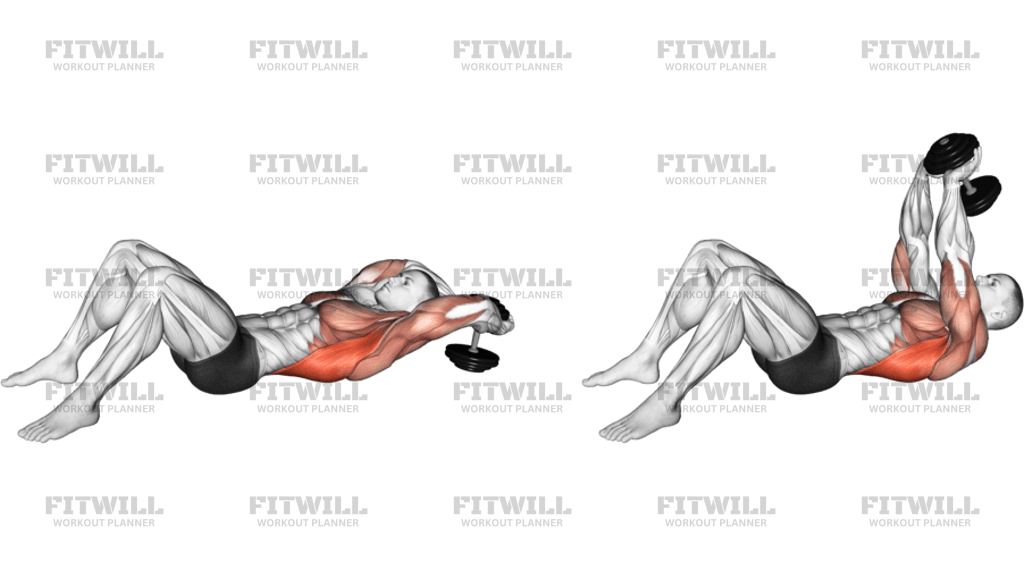
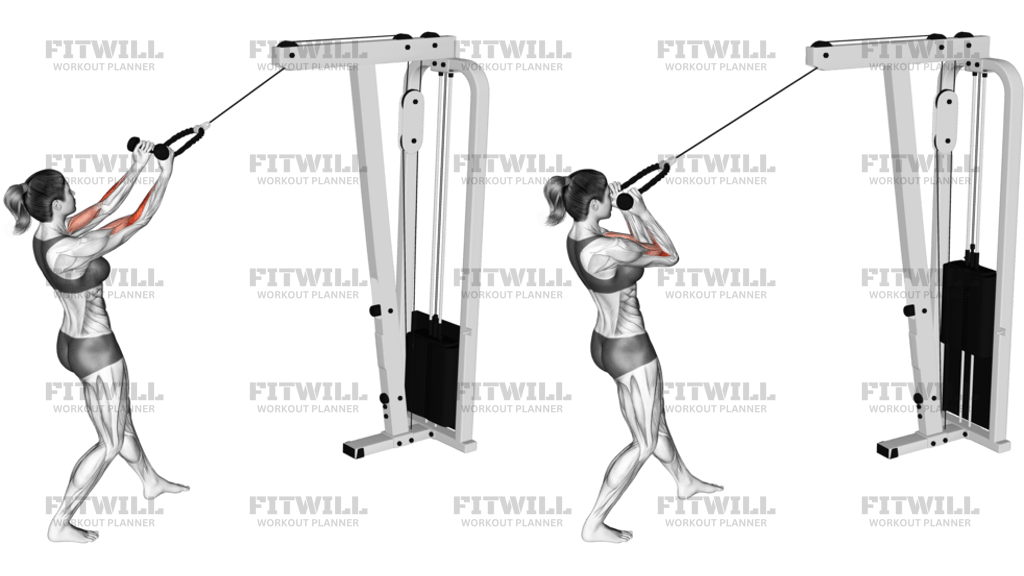
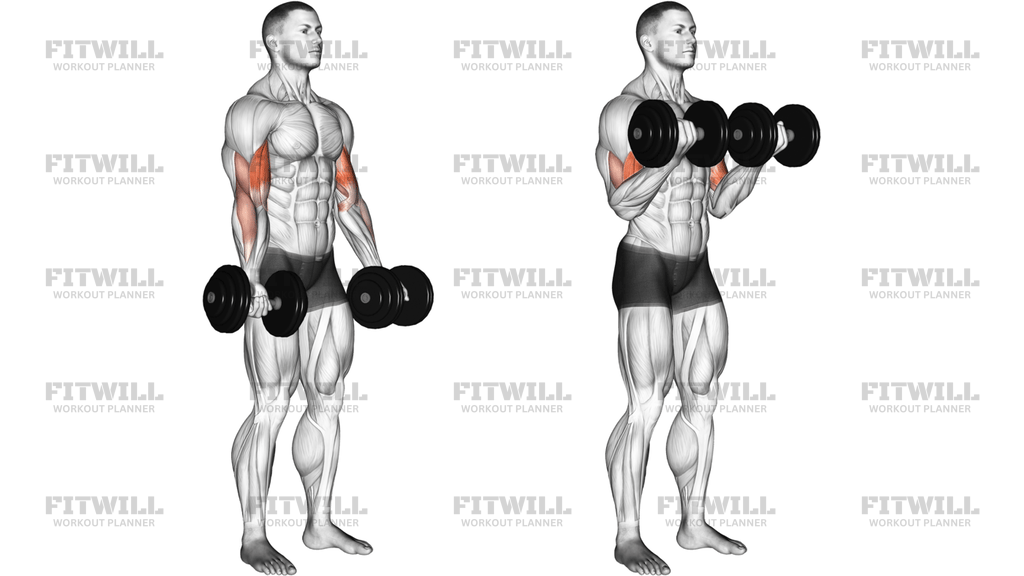
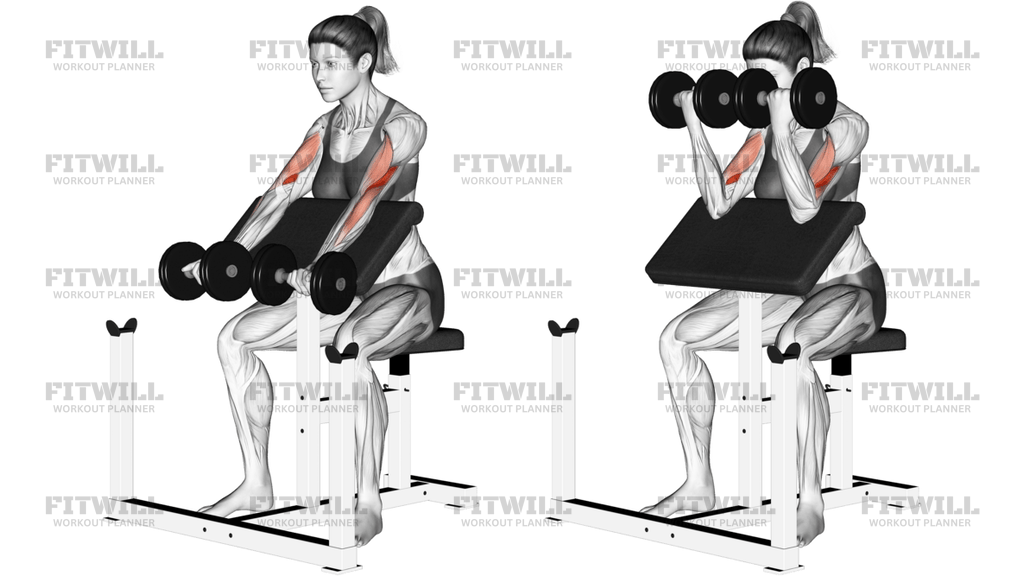
Dumbbell One-Arm Seated Bicep Curl On Exercise Ball
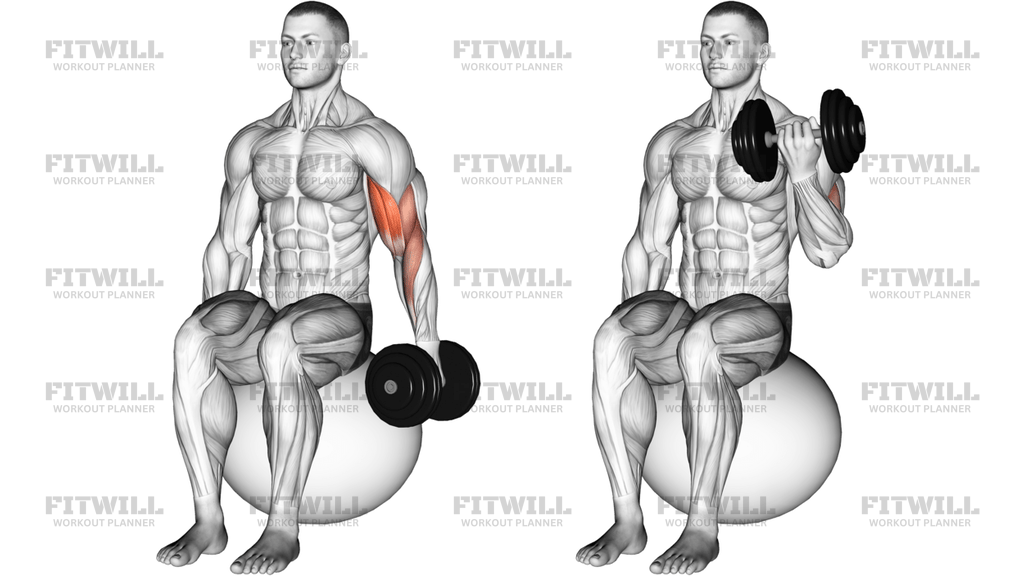
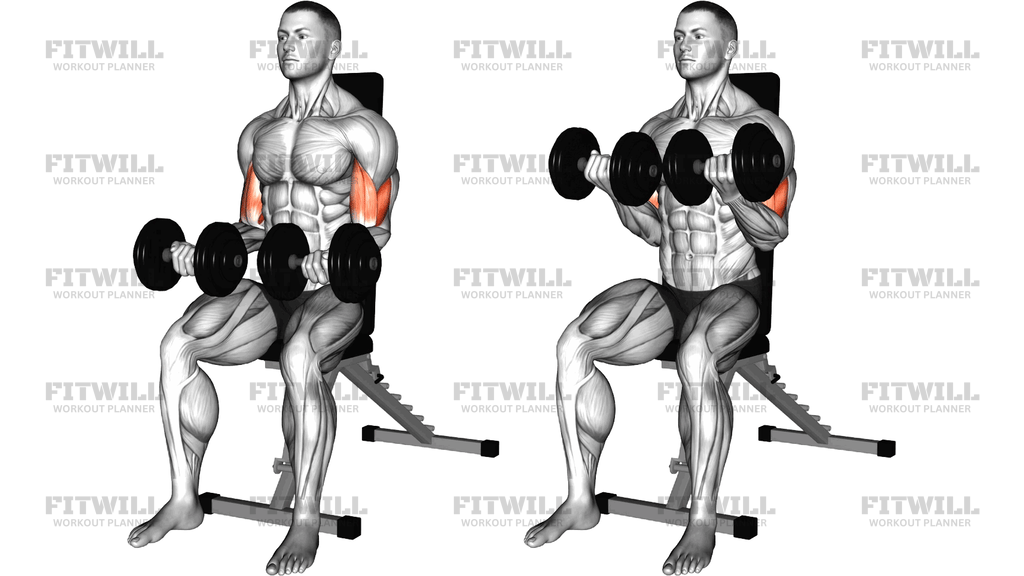
Dumbbell One-Arm Seated Bicep Curl On Exercise Ball is a strict single-arm curling movement that places most of the work on the biceps while asking the rest of the body to stay quiet. Sitting on the exercise ball adds just enough instability to expose sloppy reps, so the exercise works best when the goal is clean arm strength, better unilateral control, and honest biceps tension rather than heavier loading.
The seated ball position changes the feel of the curl in a useful way. You have to keep your feet planted, torso tall, and shoulder centered while the elbow bends, which makes it harder to swing the dumbbell or lean back through the rep. That extra stability demand is why lighter loads often produce better results here than the same weight would in a standing curl.
Start by sitting near the middle of the ball with both feet flat and the working arm hanging naturally at your side. From there, keep the upper arm still and curl the dumbbell by bending only at the elbow, then lower it slowly until the arm is almost straight again. If the shoulder rolls forward, the ball shifts under you, or the torso starts drifting to one side, the load is too heavy or the setup is off.
Dumbbell One-Arm Seated Bicep Curl On Exercise Ball is useful as accessory work in arm sessions, upper-body sessions, or any program that benefits from one side working at a time. It is also a good option when you want to reduce cheating compared with a standing curl and keep tension on the biceps through a controlled range. Because the ball adds instability, it rewards deliberate breathing, a steady tempo, and a grip that stays stacked over the forearm.
For best results, keep each rep smooth and repeatable. The goal is not to rock on the ball or drive the dumbbell upward with the shoulder, but to keep the elbow as the hinge and the biceps as the limiter. Done well, this exercise gives a clear arm-focused stimulus while also teaching you how to hold posture under load.
Beginners can use Dumbbell One-Arm Seated Bicep Curl On Exercise Ball safely if they start light and learn to stay balanced before they try to chase fatigue. It is a straightforward movement, but the ball makes compensation obvious, so the quality of the setup matters more than the size of the dumbbell. Treat it as a strict curl with added balance demands, and it becomes a very useful arm-builder.
Fitwill
Log Workouts, Track Progress & Build Strength.
Achieve more with Fitwill: explore over 9600 exercises with images and videos, access built-in and custom workouts, perfect for both gym and home sessions, and see real results.
Start your journey. Download today!




Instructions
- Sit on the middle of an exercise ball with both feet flat and spaced about hip-width apart.
- Hold a dumbbell in one hand with your arm hanging straight down beside the ball and your palm facing forward.
- Sit tall with your ribs stacked over your hips, shoulders level, and your free hand resting lightly on your thigh or at your side.
- Keep your working elbow close to your torso and set your wrist straight before you begin the curl.
- Curl the dumbbell by bending only at the elbow until the weight reaches near shoulder height.
- Pause briefly at the top without letting your shoulder roll forward or your torso tip back.
- Lower the dumbbell slowly until your arm is almost straight and the biceps stay under tension.
- Breathe out as you curl up, breathe in as you lower, and keep the ball still under you.
- Finish the set by lowering the dumbbell to your side, then place it down carefully before standing up.
Tips & Tricks
- Choose a lighter dumbbell than you would for a standing curl; the ball makes cheating easier to notice and harder to control.
- Keep your upper arm pinned near your ribs so the shoulder does not turn the rep into a front-delt lift.
- If the ball slides or your torso rocks backward, shorten the range and reduce the load before adding more reps.
- Keep the wrist stacked over the forearm instead of letting it bend back at the top of the curl.
- Lower the weight slowly enough that you can feel the biceps lengthen instead of dropping straight to the bottom.
- Let the free hand stay relaxed; pushing off the thigh or ball makes the set less strict.
- Stop just short of a hard elbow lockout if full extension pulls your shoulder forward or dumps tension off the biceps.
- A slight pause near the top helps keep momentum out of the lift and makes each side work on its own.
- Use the same setup on both sides so one arm does not get an easier range because the ball moved.
Frequently Asked Questions
What muscles does Dumbbell One-Arm Seated Bicep Curl On Exercise Ball work most?
The biceps do most of the work, with the brachialis and brachioradialis helping during elbow flexion. Your forearms also help hold the dumbbell steady.
Is Dumbbell One-Arm Seated Bicep Curl On Exercise Ball good for beginners?
Yes, as long as the dumbbell is light enough to keep your torso still on the ball. Beginners should first learn to sit balanced before adding more load.
How high should I sit on the exercise ball for this curl?
Sit near the middle of the ball so both feet can stay flat and your hips are not tipping forward or backward. If your knees are much higher than your hips, you are probably too low or too far back.
Should I curl with my palm up the whole time?
A palm-up grip is the simplest option and matches the exercise best. Keep the wrist neutral and let the elbow do the work instead of twisting the shoulder.
Why use an exercise ball instead of a bench?
The ball adds instability, which makes it harder to lean back or swing the dumbbell. That usually makes the curl stricter and more honest for each arm.
What is the most common mistake in Dumbbell One-Arm Seated Bicep Curl On Exercise Ball?
The biggest error is using the torso or shoulder to swing the weight up. If your chest pops forward or the ball shifts under you, the load is too heavy.
Can I alternate arms or should I finish one side first?
Either works, but finishing one side first keeps the setup consistent and makes it easier to compare sides. Alternating is fine if you can reset your posture every rep.
What should I do if my shoulder starts moving forward at the top?
Reduce the weight and stop the curl a little lower until you can keep the upper arm quiet. The shoulder should stay stacked while the elbow bends.