Dumbbell One-Arm Standing Curl
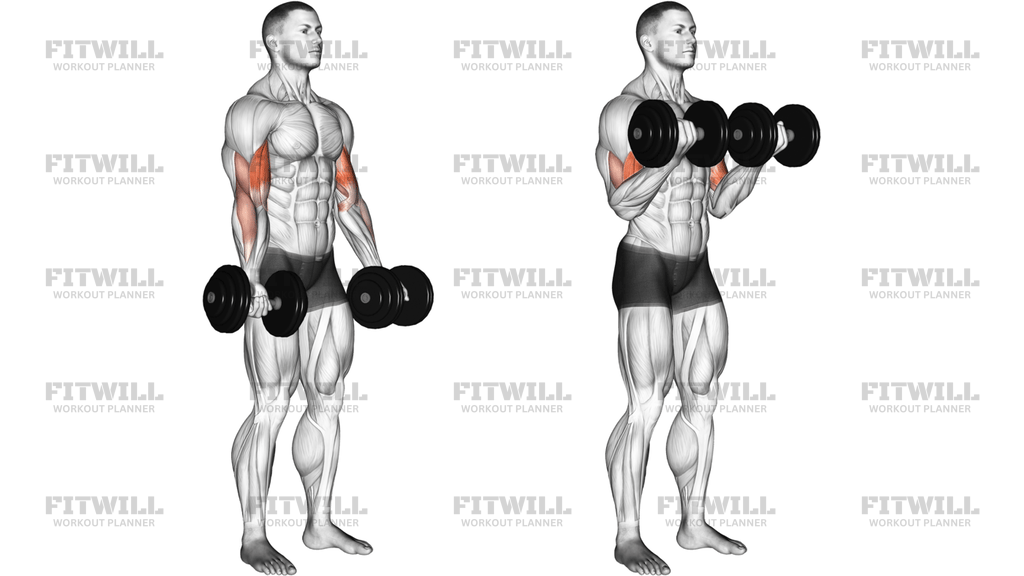
The Dumbbell One-Arm Standing Curl is a strict biceps exercise performed one arm at a time with a dumbbell hanging by your side. It is a simple-looking movement, but the setup matters because the curl is easy to turn into a shoulder lift, a torso swing, or a half rep if the elbow drifts forward and the wrist loses position. Done well, it gives you direct elbow-flexion work, helps expose left-to-right strength differences, and keeps the biceps under clean tension without needing machines or a bench.
The primary target is the biceps brachii, with the brachialis and brachioradialis contributing strongly through the middle and lower part of the curl. The forearm flexors also work to hold the handle steady, especially if the dumbbell is challenging enough to test grip and wrist control. Because only one arm is moving, you can focus on symmetry, tempo, and a consistent path from side to side instead of letting the stronger arm dominate the set.
Set up in a tall stance with the working foot planted, ribs stacked over the pelvis, and the dumbbell hanging fully extended beside the thigh. Keep the upper arm close to the torso, turn the palm forward, and let the shoulder stay quiet instead of rolling ahead. The first inch of the curl should begin at the elbow, not with a body lean. That setup keeps the line of force where it belongs and prevents the rep from turning into a front-delt raise.
As you curl, keep the elbow mostly fixed beside the body and bring the handle toward the front of the shoulder with a smooth, upward arc. Squeeze hard near the top without jamming the shoulder forward, then lower the dumbbell under control until the arm is fully extended again. A controlled descent is important here because the lowering phase is where many lifters lose shape, bounce the weight, or let the wrist collapse backward.
This exercise fits well in arm-focused sessions, upper-body accessory work, or any program that needs straightforward elbow-flexion strength with low setup complexity. It is also useful for beginners because the line of motion is easy to learn, but the unilateral format still reveals cheating quickly. Keep the rep clean, finish each side with the same range, and stop the set if your torso starts to rock or the elbow keeps drifting forward to force the last few reps.
Fitwill
Log Workouts, Track Progress & Build Strength.
Achieve more with Fitwill: explore over 9600 exercises with images and videos, access built-in and custom workouts, perfect for both gym and home sessions, and see real results.
Start your journey. Download today!




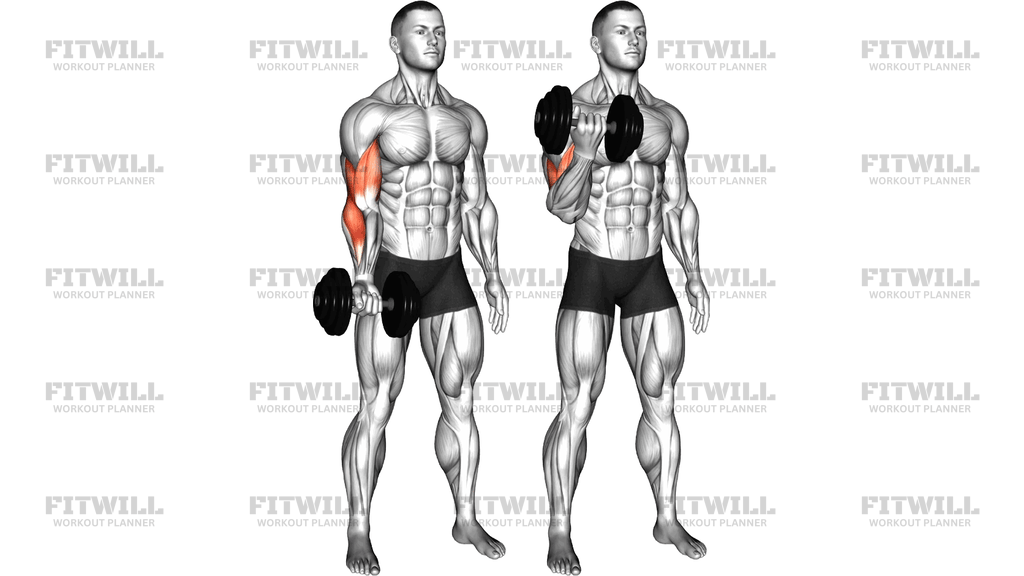
Instructions
- Stand tall with one dumbbell hanging at your side, feet about hip-width apart, palm facing forward, and the other arm relaxed.
- Keep the working elbow close to your torso and lock in a neutral wrist before the first rep.
- Set your shoulder down and back so the upper arm stays quiet while the forearm moves.
- Curl the dumbbell upward by bending only at the elbow, bringing it toward the front of the shoulder in a smooth arc.
- Keep the elbow from drifting forward or flaring outward as the dumbbell rises.
- Squeeze the biceps briefly at the top without shrugging or leaning back.
- Lower the dumbbell slowly until the arm is fully extended and the biceps is stretched again.
- Exhale as you curl up, inhale on the way down, then switch arms only after the full set on one side is complete.
Tips & Tricks
- Start with the weaker arm so the stronger side does not set the pace for every set.
- Keep the palm turning up throughout the rep; if the wrist bends back hard, the forearm is taking over too much.
- Let the elbow stay close to the ribcage, but do not pin it so hard that the shoulder rolls forward.
- Use a tempo that makes the lowering phase noticeably slower than the lifting phase.
- If the last few reps require a torso swing, the dumbbell is too heavy for a strict standing curl.
- A full elbow extension at the bottom matters; cutting the bottom short reduces the stretch on the biceps.
- Keep the non-working hand relaxed instead of bracing on the thigh or reaching for balance.
- Stop the set when the dumbbell starts to travel across the body instead of straight up.
Frequently Asked Questions
What does the Dumbbell One-Arm Standing Curl train?
It mainly trains the biceps, with the brachialis, brachioradialis, and forearm flexors helping through the lift and lowering phase.
Should my elbow move during the curl?
A small natural drift is normal, but the elbow should stay close to your side and not shoot forward to finish the rep.
How far should I curl the dumbbell up?
Curl until the handle is near the front of the shoulder and the biceps is fully shortened, but stop before the shoulder starts shrugging or rolling.
Why use one arm at a time instead of both arms together?
Single-arm curls make it easier to control the path, compare side-to-side strength, and keep the weaker arm from being hidden by the stronger one.
What are the most common mistakes on this exercise?
The biggest errors are swinging the torso, letting the elbow drift forward, and turning the curl into a shoulder movement instead of an elbow-flexion movement.
Is this a good beginner biceps exercise?
Yes. The movement is easy to learn, and a light dumbbell makes it simple to practice strict elbow bending and controlled lowering.
Should I rotate my wrist as I curl?
Keep the palm facing forward and the wrist stacked over the forearm; avoid excessive wrist twisting or letting the hand fold back.
What should I do if I feel it in my shoulders?
Reduce the load, keep the upper arm quiet, and avoid leaning back. If the shoulders still take over, shorten the set and reset your stance.