Dumbbell One-Arm Standing Hammer Curl
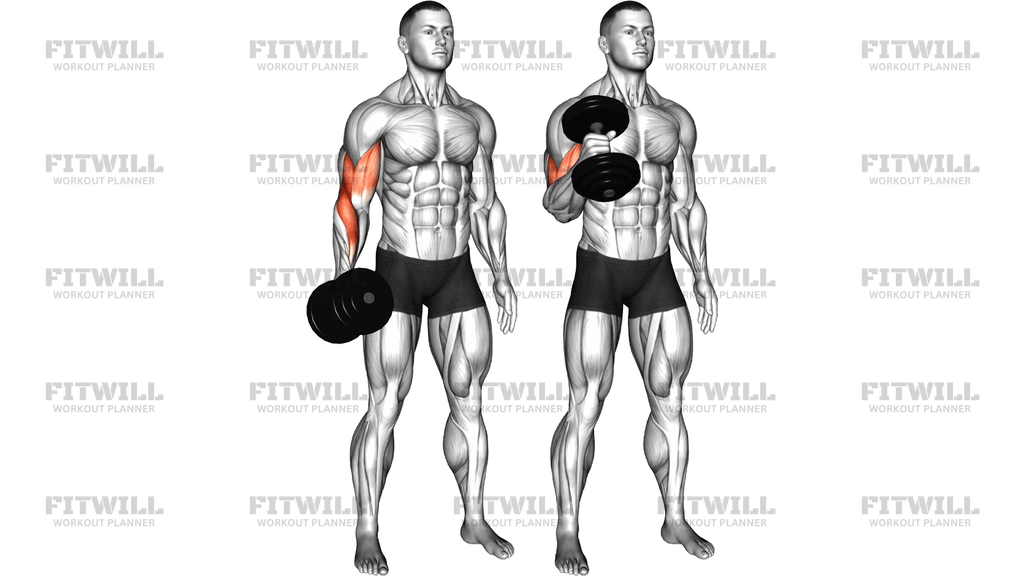
Dumbbell One-Arm Standing Hammer Curl is a strict unilateral arm exercise that uses a neutral grip to load the elbow flexors without forcing the wrist to turn palm-up. It is especially useful when you want direct work for the biceps, brachialis, brachioradialis, and forearm flexors while also making the torso stay honest under load. Because you curl one side at a time while standing, the exercise also reveals side-to-side differences and any tendency to sway or lean.
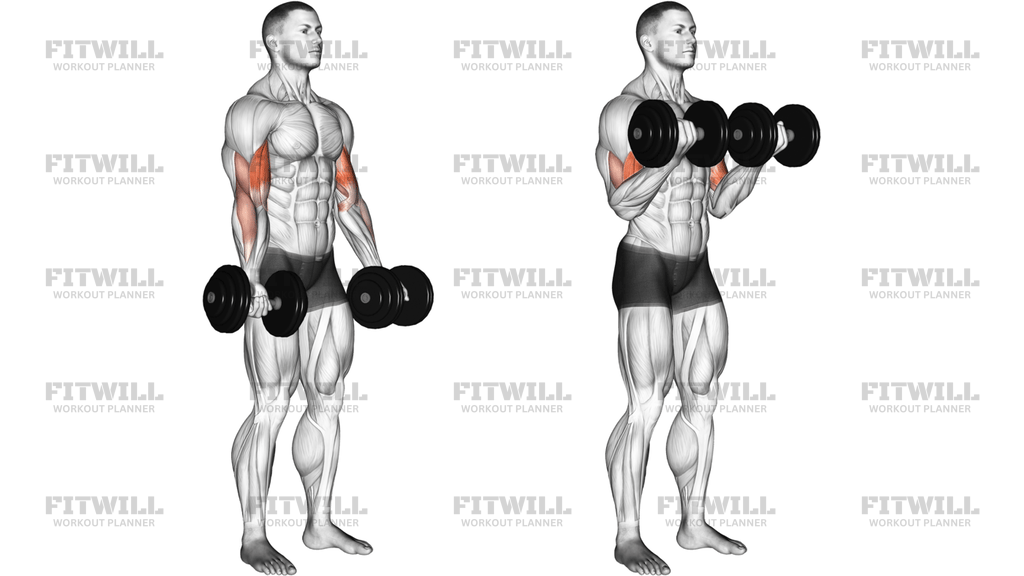
The neutral hand position is what makes this version different from a standard curl. Keep the dumbbell beside your thigh with your palm facing in, wrist stacked, and shoulder relaxed before the first rep. That setup lets the elbow do the work instead of the shoulder rolling forward or the wrist bending back to help the lift.
From there, curl the dumbbell in a smooth arc toward the same-side shoulder while keeping the upper arm close to your ribs. The elbow should stay almost fixed in space, and the forearm should travel by bending at the elbow rather than twisting through the hand. A short squeeze near the top is enough; the goal is a clean elbow-flexion pattern, not a dramatic shoulder raise or body swing.
Lower the weight under control until the arm is nearly straight and tension is still present in the arm. That controlled return matters as much as the lift because it keeps the target muscles working through the full range and helps you avoid dropping into a loose, momentum-driven rep. Breathing should stay simple: exhale as you curl, inhale as you lower.
This movement fits well as accessory work on upper-body days, arm-focused sessions, or as a beginner-friendly curl variation when a fully supinated grip feels awkward at the wrist. Use a load that lets you keep the torso quiet and the dumbbell path clean. If you have to lean back, shrug, or fling the weight upward, the set is too heavy for the purpose of this exercise.
[ Workout Log & Planner ]
Put your next workout in Fitwill
Keep your plan and training log ready when you are.


Instructions
- Stand tall with your feet about hip-width apart and hold one dumbbell at your side in a neutral grip, palm facing in.
- Keep your chest stacked over your pelvis, let the free arm hang naturally or rest lightly at your side, and set the working shoulder down away from your ear.
- Start with the dumbbell beside the thigh and the working elbow close to your ribs, with the wrist straight and the knuckles lined up with the forearm.
- Brace gently through your midsection so your torso stays still before the first curl begins.
- Curl the dumbbell upward toward the same-side shoulder by bending only at the elbow.
- Keep the upper arm quiet and avoid letting the shoulder roll forward or the elbow drift away from your body.
- Pause briefly near shoulder height, then squeeze the arm without twisting the wrist into a palm-up curl.
- Lower the dumbbell slowly until the arm is nearly straight again, keeping tension on the arm instead of dropping the weight.
- Reset your posture, switch arms if you are alternating sides, and repeat for the planned number of reps.
Tips & Tricks
- Choose a dumbbell that lets you keep the elbow pinned instead of turning the rep into a shoulder shrug.
- Think about pulling your knuckles toward your shoulder, not swinging the weight with your body.
- Keep the wrist stacked over the forearm; if it bends back, the load is too heavy.
- A slower lowering phase makes this variation more effective because the neutral grip can otherwise feel easy to rush.
- If the free side starts to sway, shorten the set and clean up the torso position before adding load.
- Do not rotate the hand into a full supinated curl at the top unless you intentionally want a different variation.
- A small pause near the top helps keep tension on the arm and reduces the temptation to heave the dumbbell.
- Stop a rep short of ugly lockout if the elbow snaps open or the shoulder starts to roll forward.
- Use a lighter load than you would for a two-arm curl; unilateral standing reps expose cheating faster.
Frequently Asked Questions
What muscles does Dumbbell One-Arm Standing Hammer Curl work most?
It emphasizes the biceps, but the neutral grip also brings in the brachialis, brachioradialis, and forearm flexors.
Is the neutral grip important in Dumbbell One-Arm Standing Hammer Curl?
Yes. Keeping the palm facing in is what makes it a hammer curl and shifts more emphasis onto the brachialis and brachioradialis.
Why does my torso want to lean during this curl?
That usually means the dumbbell is too heavy or the elbow is drifting forward. Reduce the load and keep your ribs stacked over your pelvis so the arm does the work.
Should the dumbbell turn over at the top of the rep?
No, not for this variation. Keep the wrist neutral from bottom to top so it stays a hammer curl rather than becoming a standard supinated curl.
Can beginners do Dumbbell One-Arm Standing Hammer Curl?
Yes, it is beginner-friendly if the weight is light enough to keep the elbow still and the trunk from swinging.
What should I do if my wrist bends back during the rep?
Lower the weight and keep the knuckles aligned with the forearm. A stacked wrist is safer and keeps the force where it belongs.
Is one arm at a time better than both arms together?
One arm at a time makes it easier to spot side-to-side differences and limits momentum, so it is a good choice for strict arm work.
What is a good substitute if this bothers my wrist or elbow?
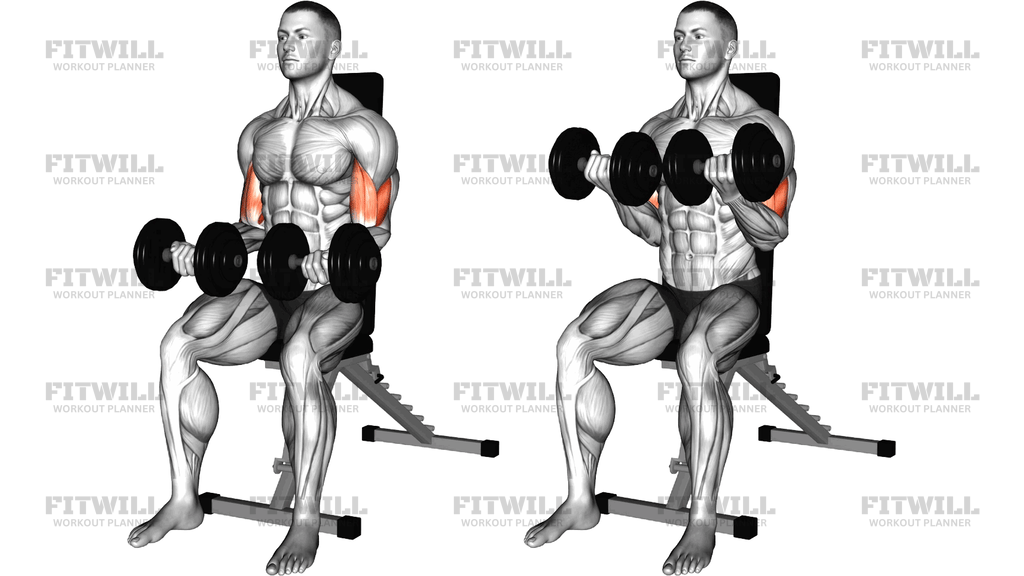
A seated hammer curl with lighter load or a cable hammer curl can feel smoother because they reduce the need to stabilize the torso as much.