Dumbbell Prone Incline Hammer Curl
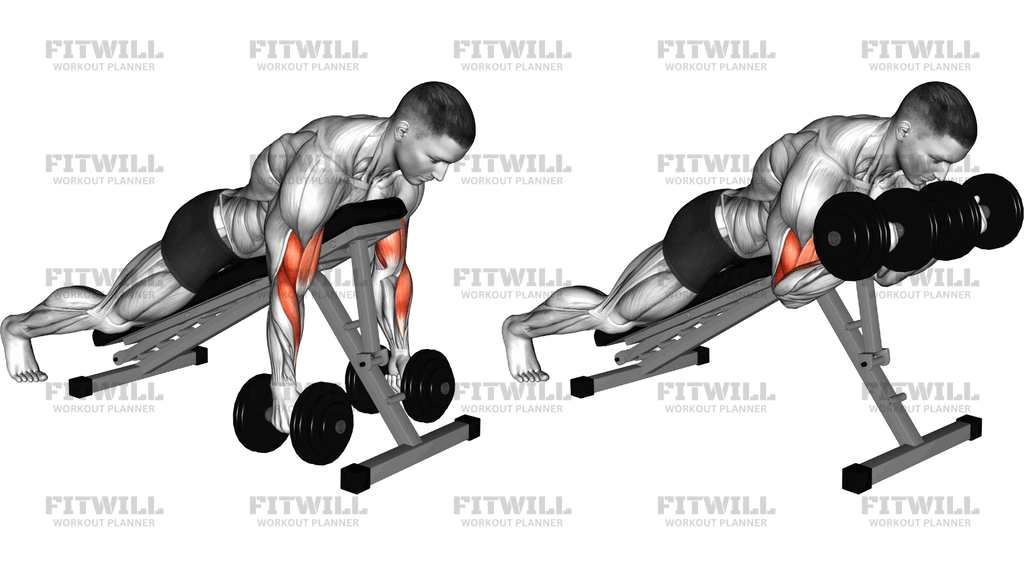
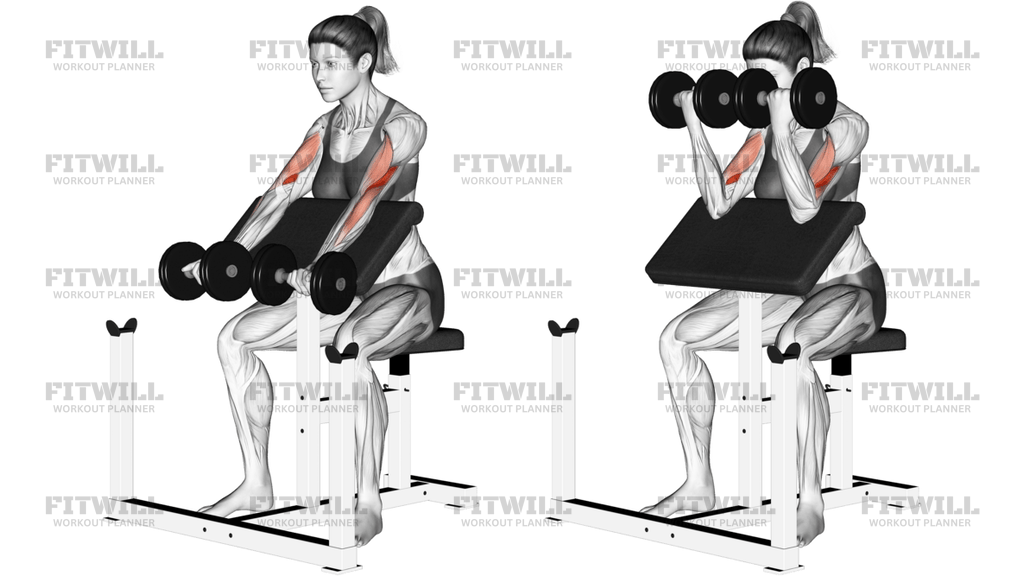
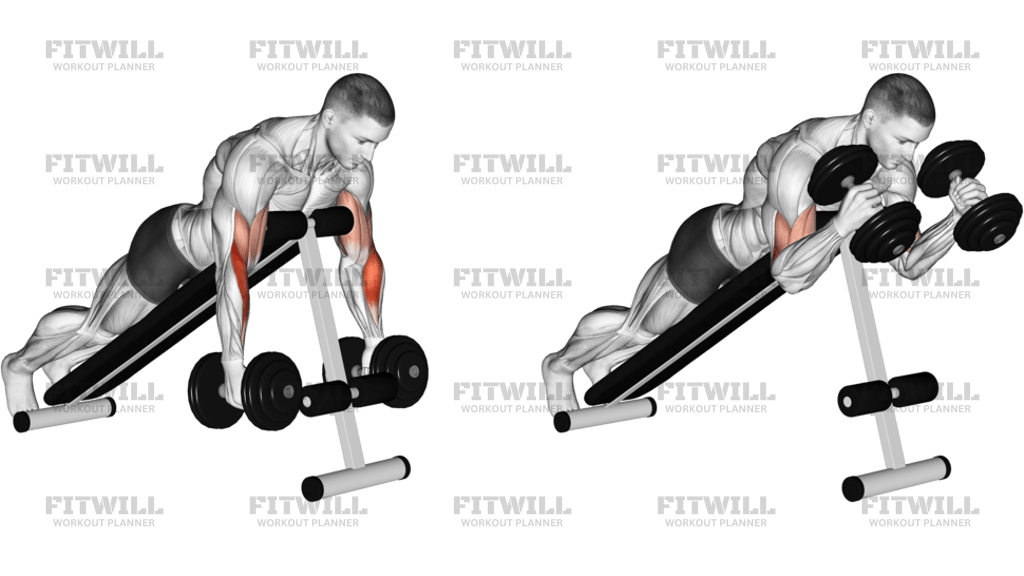
Dumbbell Prone Incline Hammer Curl is a chest-supported arm exercise performed face down on an incline bench with a neutral dumbbell grip. The bench support removes most of the body swing that often turns curls into a back-and-shoulder cheat, so the arms have to do the work through a cleaner path. It is especially useful when you want strict elbow flexion with a stable torso and a consistent shoulder position.
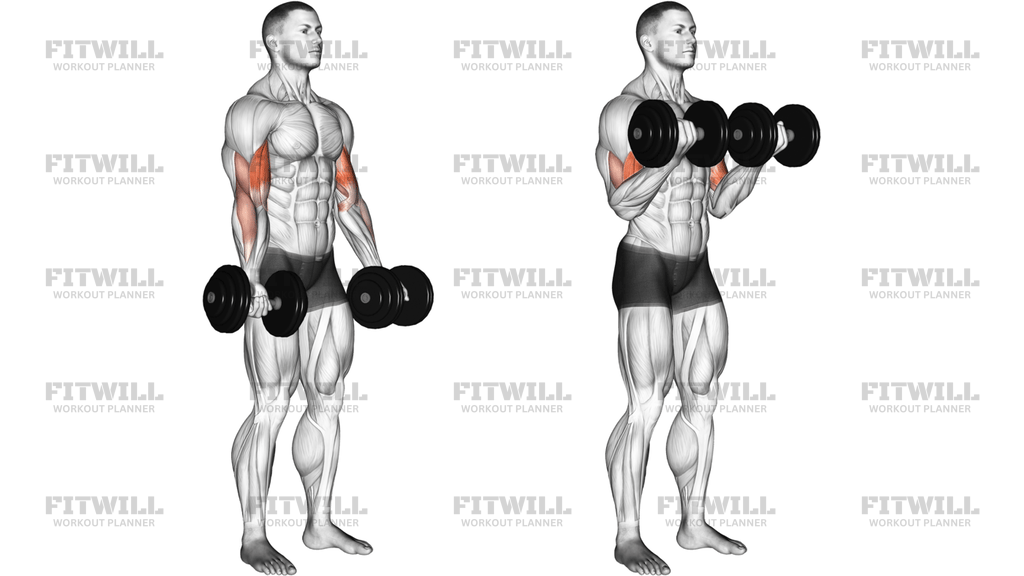
The neutral grip changes the emphasis compared with a supinated curl. Biceps still contribute strongly, but the brachialis and brachioradialis are asked to work harder, which makes this a valuable choice for building upper-arm thickness and forearm-adjacent strength. Because the chest is supported, the rep quality usually depends more on elbow position, wrist control, and tempo than on how much you can hoist with your trunk.
Bench angle matters. A moderate incline usually gives the arms enough room to hang without putting the shoulders in an awkward position, while still keeping the torso pinned to the pad. If the bench is too steep, the movement starts to resemble a standing curl; if it is too low, the dumbbells can become cramped near the floor. The goal is to let the arms travel freely while the chest, hips, and legs stay anchored.
Each repetition should start with the dumbbells hanging straight down under control, palms facing each other. Curl by bending the elbows and lifting the weights toward the front of the shoulders without rolling the wrists or letting the elbows drift forward. Keep the upper arms quiet against the bench, pause briefly near the top, then lower the dumbbells slowly until the elbows are almost straight again.
This is a good accessory movement for upper-body days, arm-focused sessions, or any program that needs strict elbow flexion with less lower-back involvement. It also works well for lifters who struggle with cheating on standing curls or who want a biceps variation that is easier to keep honest. Use a load that lets every rep look the same, and stop the set when the shoulders start to take over or the dumbbells stop moving in a smooth arc.
[ Workout Log & Planner ]
Put your next workout in Fitwill
Keep your plan and training log ready when you are.


Instructions
- Set an incline bench to a moderate angle and lie chest-down with your sternum and upper abdomen supported by the pad.
- Hold a dumbbell in each hand with a neutral grip, letting your arms hang straight toward the floor and your palms face each other.
- Plant your feet firmly and keep your hips, ribs, and chest glued to the bench before the first rep.
- Brace lightly, keep your neck long, and let the dumbbells start just outside your shoulders with the elbows nearly straight.
- Curl both dumbbells by bending the elbows, keeping the upper arms close to the bench as the weights travel up and slightly forward.
- Stop when the dumbbells reach about shoulder height or when the forearms are almost vertical, whichever comes first with control.
- Squeeze briefly at the top without turning the wrists or shrugging the shoulders.
- Lower the dumbbells slowly until the arms are almost straight again, then repeat for the planned reps.
Tips & Tricks
- Keep the palms facing each other the entire rep; twisting into a supinated curl changes the exercise and usually invites shoulder movement.
- If your elbows slide forward off the bench, reduce the load and keep the upper arms pinned to the pad.
- Use a bench angle that lets the dumbbells hang freely without the plates touching the floor at the bottom.
- Think about lifting with the elbows rather than swinging the hands upward; the wrists should stay stacked over the forearms.
- Pause for a beat near the top so the set stays strict instead of bouncing through the hardest range.
- Lower the dumbbells more slowly than you lift them to keep tension on the biceps and brachialis.
- Keep your chest on the bench and your ribs down so the lower back does not arch to finish the curl.
- Choose a weight that allows both dumbbells to match; if one side starts drifting, the load is too heavy.
Frequently Asked Questions
What muscle does Dumbbell Prone Incline Hammer Curl target most?
The biceps are the main mover, but the neutral grip also puts strong emphasis on the brachialis and brachioradialis.
Why is the bench set face down instead of standing?
The chest-supported position removes most body swing, so the curl stays strict and the arms do the work instead of the torso.
Should my palms turn up during the curl?
No. Keep a neutral hammer grip from start to finish so the exercise stays focused on the upper arm and forearm line.
How high should the dumbbells come up?
Stop around shoulder height or just before the forearms become vertical. Higher usually means the shoulders are taking over.
Can I use a very steep incline bench for this curl?
A steep bench usually makes the movement less comfortable and more shoulder-dominant. A moderate incline is usually the better choice.
What should I do if my shoulders start lifting off the pad?
Lower the load and keep your chest pressed into the bench. If the shoulders keep moving, the set is too heavy or too fast.
Is this better than a standing hammer curl?
It is not better for everything, but it is stricter. Use it when you want less cheating and more controlled arm tension.
Can beginners use this exercise safely?
Yes, as long as the weight is light enough to keep the chest on the bench and the elbows from drifting.