Assisted Lying Gluteus Maximus Stretch
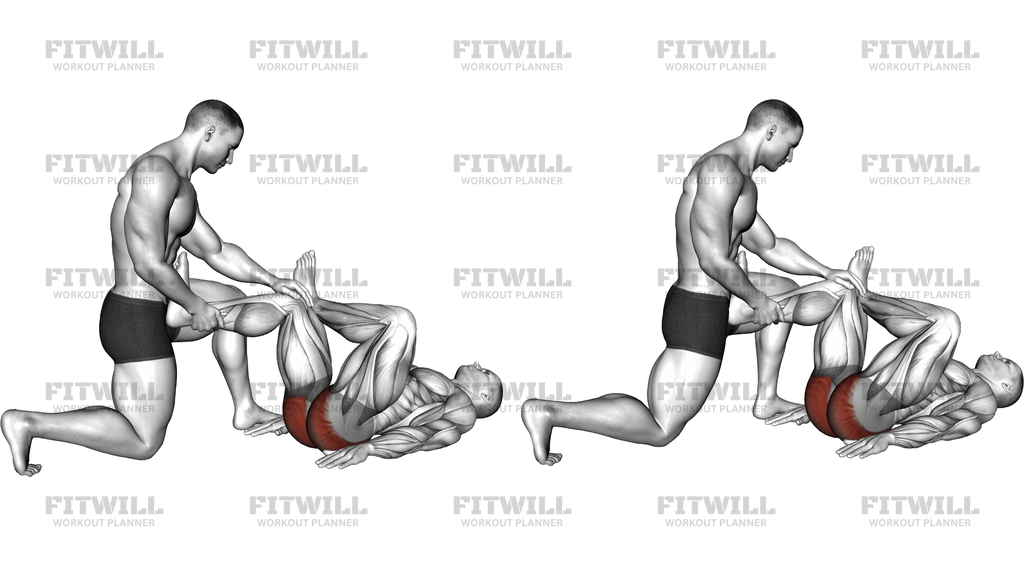
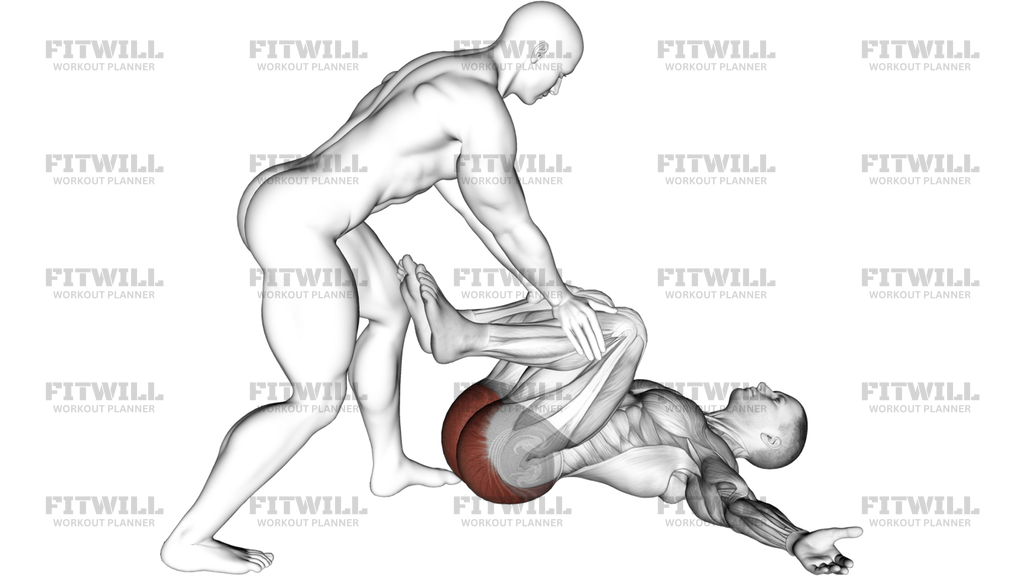
Assisted Lying Gluteus Maximus Stretch is a partner-assisted floor stretch for the back of the hip. The person being stretched lies on their back on a mat while the assistant supports one leg and gently brings the bent knee toward the chest and slightly across the body as needed. The goal is not to force a dramatic range, but to create a steady, repeatable stretch in the glute of the lifted-leg side while the pelvis stays quiet and the lower back stays relaxed.
The mat matters because this stretch works best when the body can settle. The extended leg stays long on the floor, the shoulders rest down, and the neck stays relaxed so the hip can open without the torso twisting or the spine arching to steal the movement. When the setup is clean, the stretch will feel deeper in the back and outer hip instead of being dumped into the knee, groin, or low back.
A good assisted stretch uses the partner as a guide, not as a lever to crank on the joint. The assistant should support the thigh or shin and move slowly with the exhale, stopping as soon as the stretch becomes strong but still controllable. That keeps the focus on the gluteus maximus and nearby hip tissues rather than irritating the knee or compressing the low back.
This is a useful cooldown or mobility drill after lower-body training, long periods of sitting, or any session where the hips feel tight. It is also a practical warm-up option before squats, lunges, or running if the hip flexion is limited and you need a gentle opening rather than active strengthening. The stretch should feel calm and controlled, never bouncy or painful.
If the pelvis starts to roll, the ribcage lifts, or the assistant has to press harder to keep the leg moving, the range is too large. Back off, breathe, and let the hip soften gradually. The best repetitions are the ones that leave the hip looser without creating strain in the knee or low back.
[ Workout Log & Planner ]
Put your next workout in Fitwill
Keep your plan and training log ready when you are.


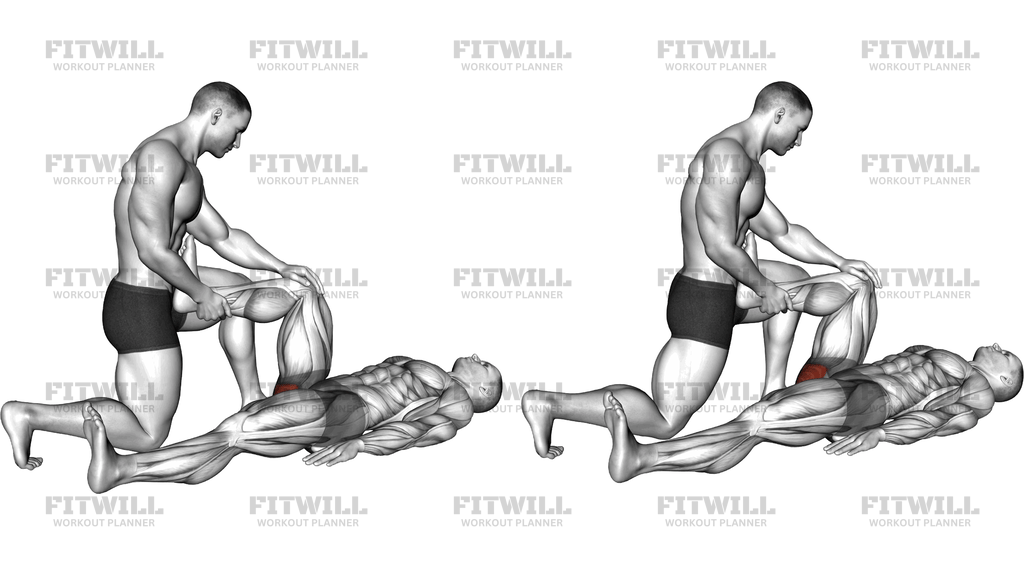
Instructions
- Lie flat on your back on the mat with both shoulders down and one leg extended straight along the floor.
- Bend the working-side hip and knee so the assistant can support the thigh or shin without pulling on the knee joint.
- Keep the pelvis square and the lower back relaxed before the stretch begins.
- Have the assistant slowly guide the bent knee toward the chest and slightly across the body until you feel a deep stretch in the back of the hip.
- Keep the non-working leg long and relaxed so the pelvis does not twist or arch.
- Exhale as the stretch deepens, then hold the position with steady, quiet breathing.
- Let the assistant ease off if the stretch moves into the knee, groin, or low back instead of the glute.
- Release the leg slowly, reset the spine and pelvis, then repeat on the other side.
Tips & Tricks
- The stretch should live in the back and outer hip, not in the knee or low back.
- Let the extended leg stay heavy on the floor; lifting it usually tips the pelvis and reduces the glute stretch.
- A long exhale often lets the assistant take the knee a little farther without forcing it.
- If the low back starts to arch, reduce the range before the assistant adds more pressure.
- Keep the assistant's pressure smooth and steady; bouncing turns a stretch into a crank on the joint.
- A slight outward turn of the working thigh can help find the glute, but avoid twisting the knee.
- Use a thicker mat if your tailbone or spine feels pressure while lying flat.
- Stop short of numbness, tingling, or pinching around the hip or knee.
Frequently Asked Questions
What does Assisted Lying Gluteus Maximus Stretch target most?
It mainly targets the gluteus maximus on the bent-leg side, with some stretch also felt through the deeper hip rotators and nearby glute tissues.
Is this a partner-assisted stretch or an active exercise?
It is mostly a passive partner-assisted stretch. The person on the floor stays relaxed while the assistant controls the range.
Where should I feel the stretch?
You should feel it deep in the back or outer part of the hip on the lifted-leg side, not as a sharp pull in the knee.
What is the biggest setup mistake?
Letting the pelvis roll or the lower back arch to chase more range is the most common mistake. Keep the spine heavy and let the hip open gradually.
Can I do this without a partner?
A partner makes the movement clearer and easier to control, but a strap or towel can be used if you need to approximate the same supine hip stretch on your own.
How long should I hold the stretch?
A controlled hold of about 15 to 30 seconds is typical. Repeat for a few rounds if the hip relaxes without pain or guarding.
When is this stretch most useful?
It works well after squats, deadlifts, runs, or long sitting periods when the back of the hip feels tight and you want a calm reset.
Should the assistant push harder if I do not feel much stretch?
No. First adjust the hip angle, pelvis position, and breathing. If the stretch is still too mild, only increase pressure a little at a time.