Assisted Oblique Glute Minimus And Medius Stretch
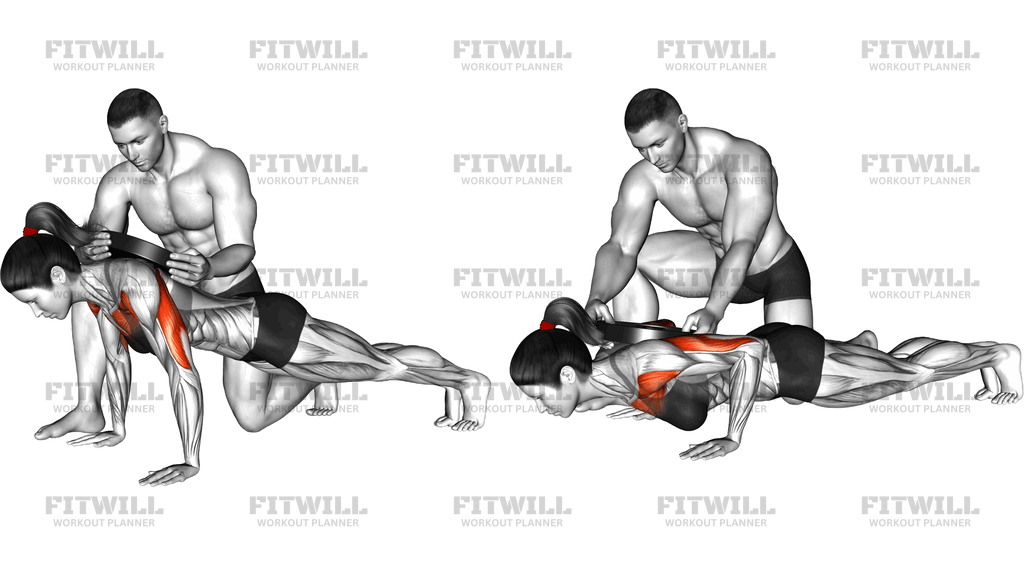
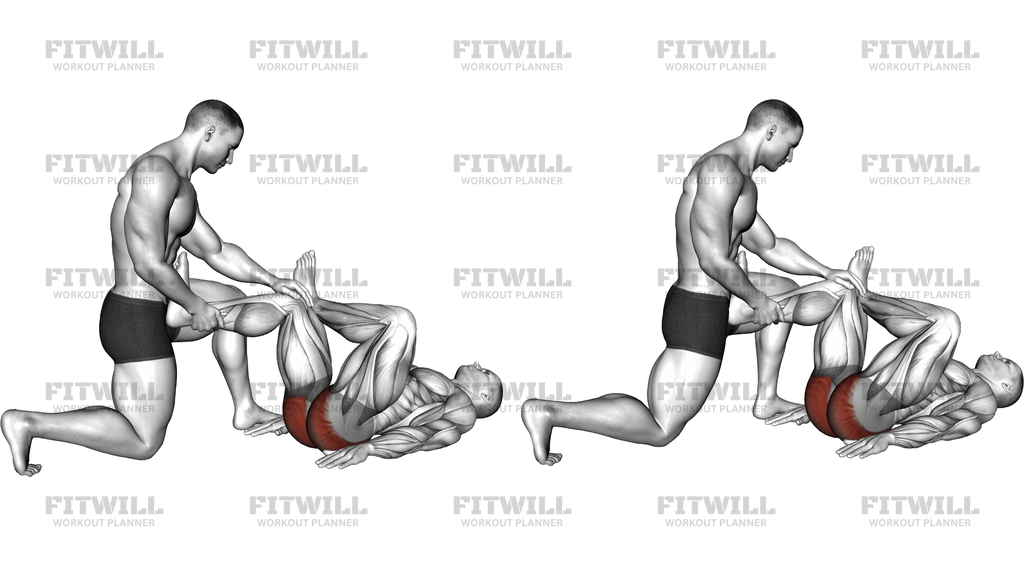
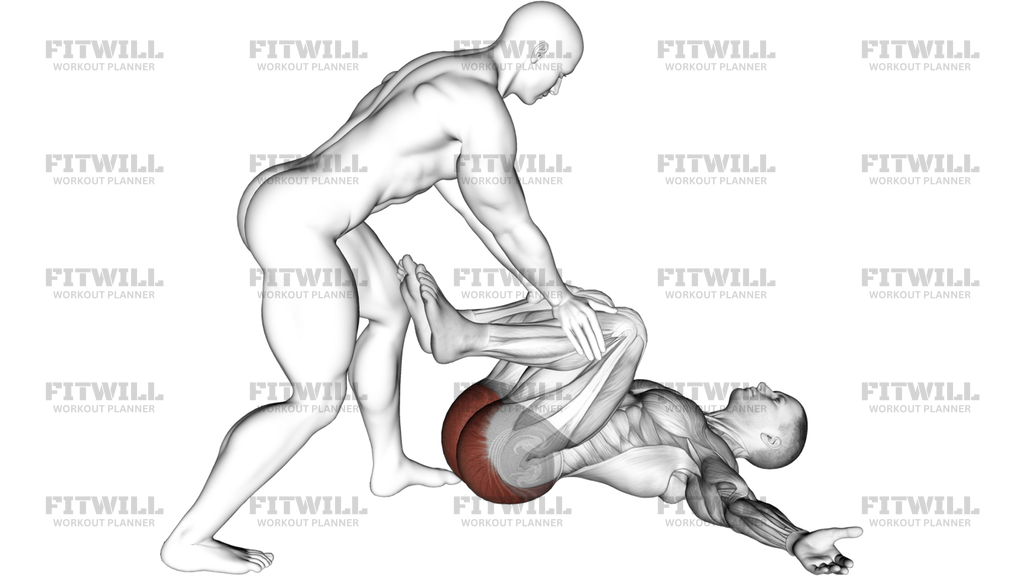
Assisted Oblique Glute Minimus And Medius Stretch is a partner-assisted floor stretch that combines hip rotation, gentle cross-body pressure, and trunk control to open the outer hip and side waist on the working side. In the image, the athlete lies on a mat with one leg extended and the other leg drawn across the body while a partner guides the knee and shoulder into a deeper but controlled stretch. That setup matters because the partner can separate the two common restrictions in this position: the hip wanting to lift off the floor and the torso wanting to twist too aggressively.
This movement is useful when the outer hip feels stiff, the glute medius and glute minimus are tight, or the obliques and surrounding tissues need a slow, supported release. It is not a strength exercise in the traditional sense, but it still benefits from deliberate setup and body awareness. The goal is to create a clear stretch through the side of the pelvis and flank without pinching the low back or cranking the knee across too far.
To do it well, the athlete should stay relaxed through the face, neck, and non-working leg while the partner applies steady pressure at the shoulder and bent thigh. The pelvis should stay heavy on the mat as long as possible, and the stretch should build gradually with each exhale. If the shoulder lifts, the knee crosses too far, or the low back twists sharply, the position has gone past the useful range and should be backed off.
Use this stretch after lower-body training, during recovery work, or as part of a mobility block when the hips feel asymmetrical from sitting, running, squatting, or rotational sport. It works best with smooth breathing and short, repeatable holds rather than aggressive forcing. A good rep should feel like a controlled opening in the outer hip and side trunk, not a sharp pull in the knee, groin, or lumbar spine.
[ Workout Log & Planner ]
Put your next workout in Fitwill
Keep your plan and training log ready when you are.


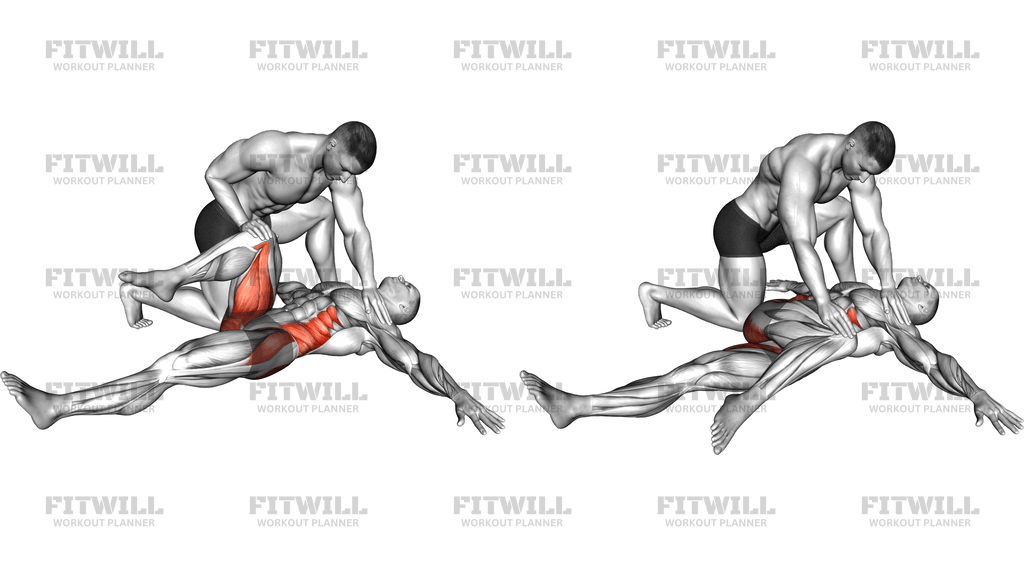
Instructions
- Lie on your back on the mat with both legs long, then bend the working knee and guide it across your body toward the opposite side.
- Keep the opposite leg extended and relaxed so the pelvis can settle into the floor instead of rolling with the stretch.
- Have your partner kneel beside you and place one hand on the near shoulder or upper chest and the other on the bent thigh or knee.
- Exhale as your partner gently increases the cross-body pressure until you feel a strong but tolerable stretch through the outer hip and side waist.
- Let the working-side shoulder stay heavy on the mat while the knee travels farther across the body only as far as the pelvis can stay controlled.
- Keep the neck long and the ribs soft; do not yank the knee or force the low back to twist.
- Hold the end position for the intended stretch time while breathing slowly into the side ribs and back of the hip.
- Ease off the pressure to come out of the stretch, reset the pelvis, and repeat on the other side if needed.
Tips & Tricks
- Think about the partner guiding two points at once: the shoulder stays down while the knee travels across, which keeps the stretch in the hip and obliques instead of the lumbar spine.
- If the pelvis starts to lift, reduce the cross-body angle before adding more pressure.
- A longer hold is usually better than a bigger shove; use steady pressure and give the tissues time to open.
- Keep the non-working leg heavy and quiet so you do not create extra rotation through the hips.
- The stretch should feel broad across the outer butt and side waist, not sharp in the knee, groin, or low back.
- Use a full exhale to let the rib cage soften before the partner adds a little more range.
- If one side is much tighter, start that side with a smaller range and a shorter hold, then revisit it after the easier side.
- Do not bounce the knee across the body; that usually moves the stress into the joint instead of the soft tissue.
- Keep the partner's pressure slow and predictable so the athlete can relax instead of bracing against it.
Frequently Asked Questions
What does Assisted Oblique Glute Minimus And Medius Stretch target?
It mainly targets the outer hip and side trunk, especially the glute minimus, glute medius, and the oblique area on the stretched side.
Why is this stretch assisted instead of solo?
The partner can control both the shoulder and the crossed knee at the same time, which makes it easier to keep the pelvis grounded and the stretch focused.
Where should I feel the stretch?
You should feel it across the side of the hip, upper glute, and side ribs or waist. A little inner-thigh sensation can happen, but the main pull should stay lateral.
What is the most common mistake with the crossed knee position?
Letting the knee travel farther than the pelvis can control usually turns the stretch into a low-back twist instead of a hip stretch.
Should the shoulder stay flat on the mat?
Yes. If the shoulder lifts, the torso is rotating too much and the stretch usually shifts away from the intended side-body line.
Can I do this stretch if my hip feels tight after running or squatting?
Yes, it is commonly used after lower-body training or running when the outer hip and side waist feel locked up.
How long should I hold each side?
Hold long enough to let the pressure settle and the breathing slow down, usually in the range of a controlled short hold rather than a fast pulse.
Can this bother my knee?
It can if the partner pulls on the lower leg or forces the knee across the body. Keep the pressure on the thigh and stop if the knee joint feels stressed.