Assisted Inverse Leg Curl
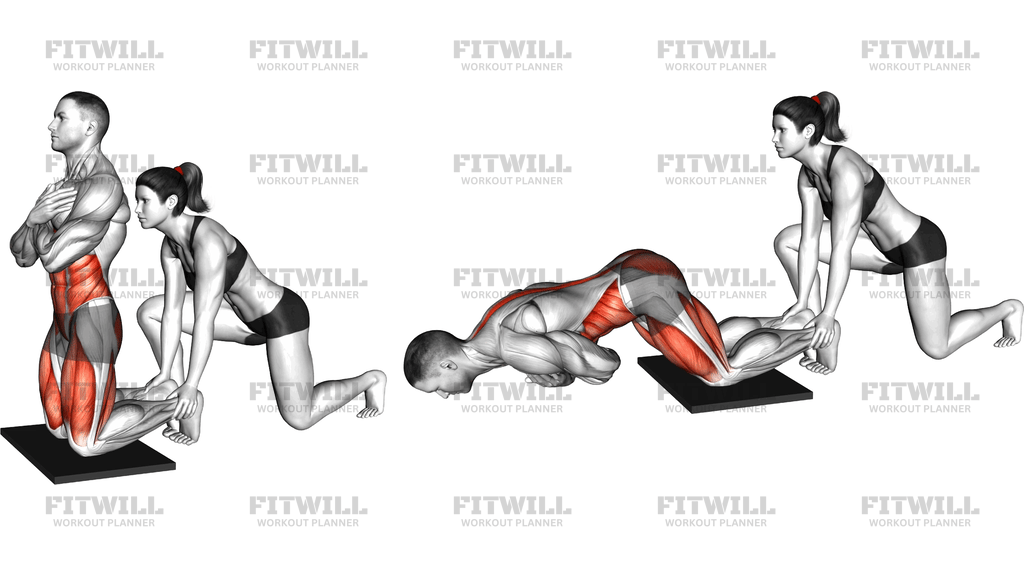
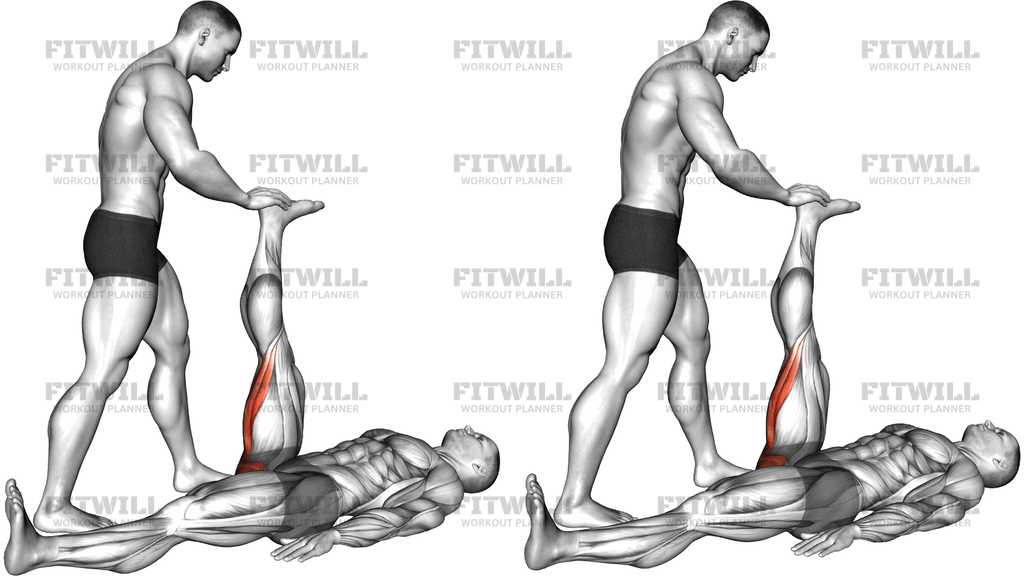
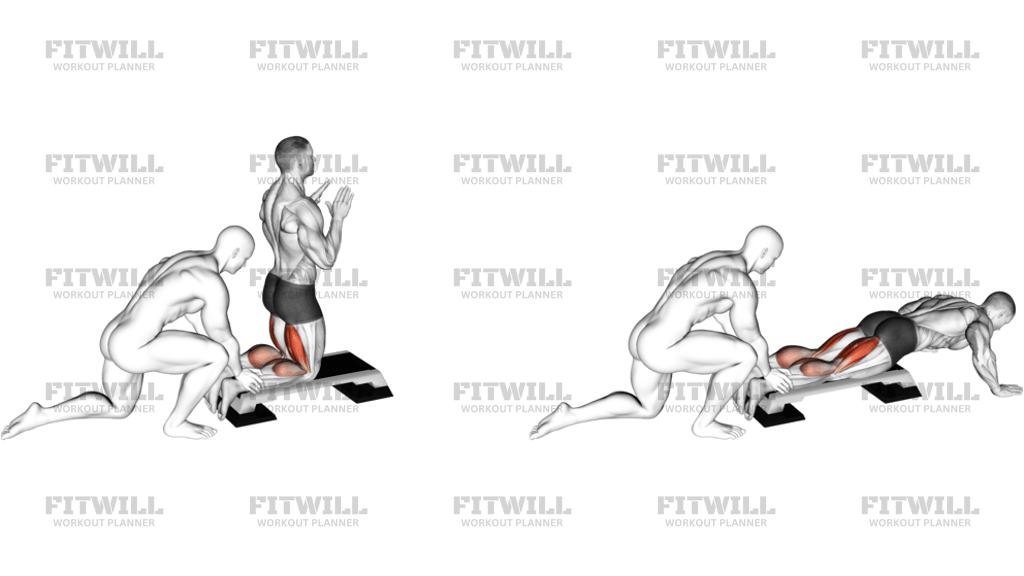
Assisted Inverse Leg Curl is a hamstring-dominant bodyweight exercise built around a controlled forward fall from a tall kneeling position. With the ankles anchored by a partner or roller and the knees cushioned on a pad, the body lowers as one long line until the hands can help catch the finish. The main training effect is eccentric hamstring strength, but the glutes, calves, and trunk have to keep the position organized as well.
The setup matters more than it looks. The knees need a stable pad, the ankles must stay fixed, and the hips should begin stacked over the knees so the first part of the descent is deliberate rather than rushed. If the anchor is too loose or the torso starts bent at the waist, the movement turns into a collapse instead of a hamstring-driven lower. A clean setup lets the hamstrings control the line from the top all the way to the catch.
On the way down, think of lowering your chest and thighs together instead of folding at the hips. Keep the trunk long, let the knees stay as the pivot, and resist the temptation to break early at the waist. The lower you go, the more the hamstrings lengthen under load, so the tempo should stay smooth and patient. Use your hands only when they are needed to assist the finish, not as a way to yank yourself through the rep.
This exercise is useful as accessory work for athletes and lifters who want stronger hamstrings, better deceleration strength, and more control in knee-dominant posterior-chain training. It often fits well after a warmup or after heavier lifts when the goal is quality tension rather than load. Beginners can use a stronger hand assist or a shorter range at first, then gradually reduce assistance as control improves.
The safest reps are the ones you can reverse without losing the line from knees to shoulders. Stop before the lower back takes over, and do not let the ankles slide or the hips pike upward to escape the eccentric. When done well, Assisted Inverse Leg Curl is a precise hamstring builder that rewards patience, tight setup, and controlled range more than raw force.
[ Workout Log & Planner ]
Put your next workout in Fitwill
Keep your plan and training log ready when you are.


Instructions
- Kneel on the pad with your ankles secured by a partner, roller, or anchored support so the lower legs cannot slide.
- Set your knees about hip-width apart, stack your hips over your knees, and keep your torso tall before you move.
- Brace your ribs down, squeeze your glutes lightly, and keep your body in one long line from knees to shoulders.
- Slowly lean forward from the knees instead of folding at the waist, letting the hamstrings control the descent.
- Lower until your hands can reach the floor or until you are just before losing control of the line.
- Use your hands only as much as needed to assist the bottom position and help guide the return.
- Pull yourself back to the tall kneeling start by reversing the same path under control.
- Reset your breathing, recheck the ankle anchor, and repeat for the planned reps without rushing.
Tips & Tricks
- A thicker knee pad can make the position more tolerable, which helps you stay honest through the full range.
- Keep your hips extended; if you pike at the waist early, the hamstrings lose tension and the rep becomes a fold.
- Treat the lowering phase as the main work and make it slow enough that you can feel the hamstrings lengthen.
- Use the floor touch as an assist, not a launch point; if your hands are doing most of the rep, the set is too hard.
- Ask the partner or anchor to hold the ankles firmly at the same height on every rep so the path stays consistent.
- Stop the set when the line from knees to shoulders breaks, even if you could force another rep with your back.
- Keep the chin neutral and look slightly ahead of the floor rather than reaching the head forward as you descend.
- Reduce range before reducing control; a shorter, clean inverse leg curl is better than a full-range collapse.
Frequently Asked Questions
What muscle does Assisted Inverse Leg Curl target most?
The hamstrings are the main target, with the glutes, calves, and trunk helping to keep the body line controlled.
Do I need a partner to do Assisted Inverse Leg Curl?
A partner helps, but a Nordic bench, ankle roller, or other secure anchor can also work if it keeps the ankles from sliding.
Where should my knees and ankles be on the pad?
Keep the knees centered on the pad with the ankles locked in place behind you so the knees stay the pivot point.
Why do my hands touch the floor at the bottom?
That touch is the assist point. Use it only when you need help controlling the bottom and guiding the return.
Should my hips bend during the descent?
No. Keep the hips extended and let the whole body lower as one line from the knees instead of folding at the waist.
Is Assisted Inverse Leg Curl suitable for beginners?
Yes, if you use strong assistance and a short range at first. Beginners should prioritize control over depth.
What should I do if my lower back takes over?
Shorten the range and keep your ribs stacked over your pelvis so the hamstrings stay in charge of the descent.
How do I progress this movement?
Use less hand assistance, slow the lowering phase, and gradually extend the range while keeping the ankle anchor solid.