Suspension Hip Hinge
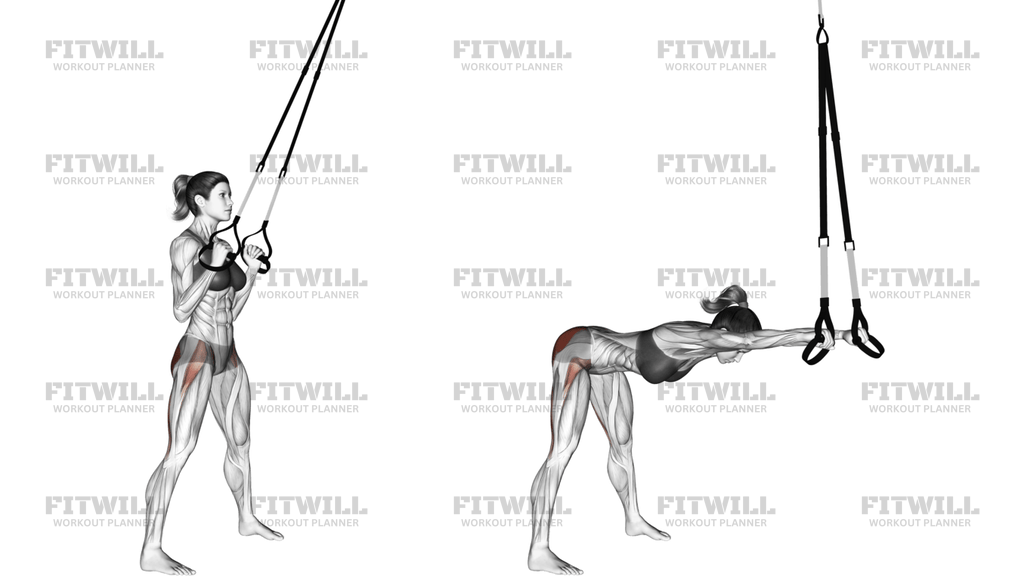
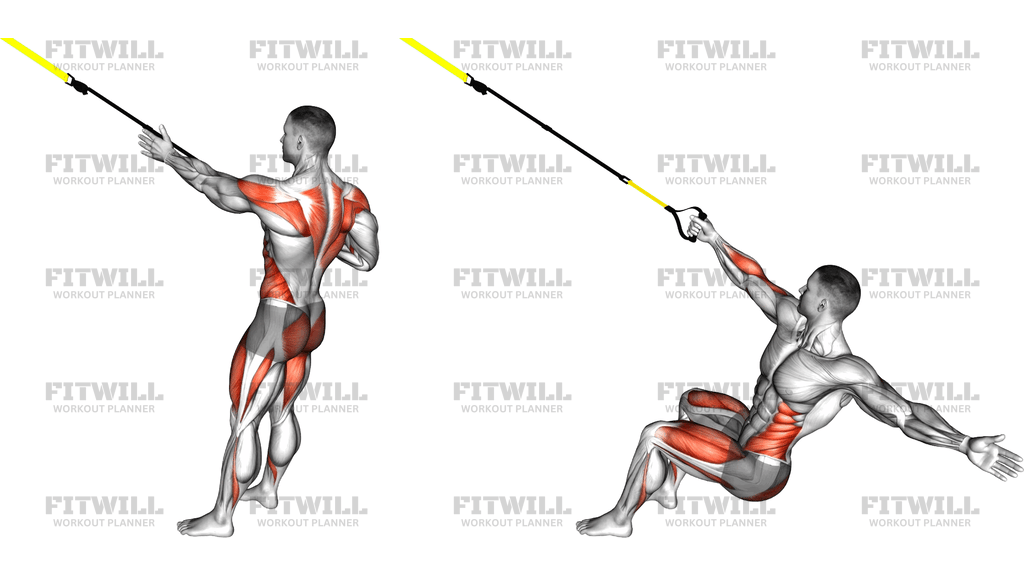
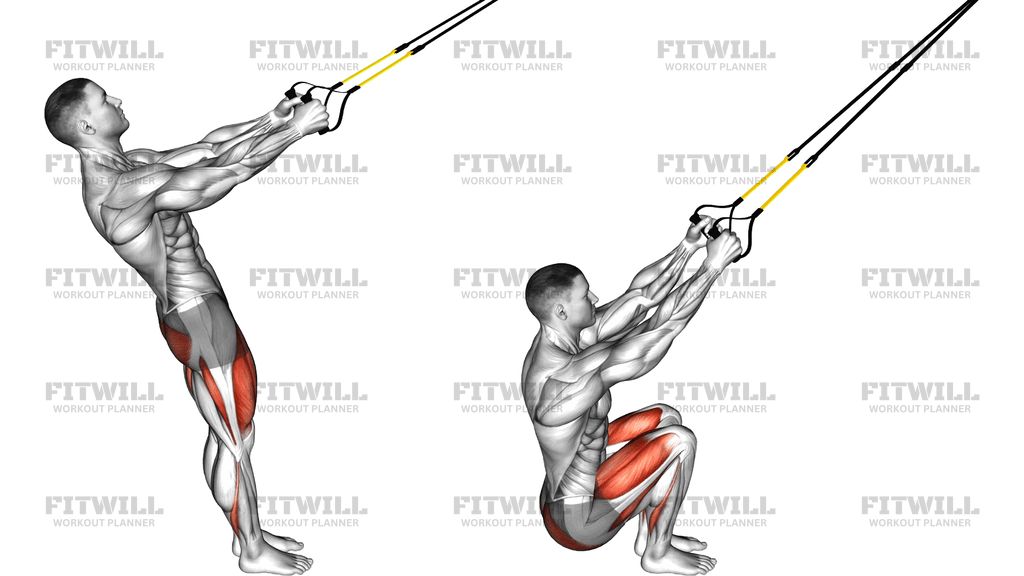
Suspension Hip Hinge is a strap-assisted hip-dominant drill that teaches you to send the hips back, keep the torso long, and load the glutes and hamstrings while the suspension trainer helps you stay balanced. The movement starts tall and finishes with the body tipped forward at the hips rather than rounded through the spine.
Because the handles are held in front of the body, the setup matters. The straps should be taut enough to give light support, but not so tight that they pull you upright. Stand far enough from the anchor to hinge freely, with the feet grounded and the knees softly bent so the movement comes from the hips instead of from a squat.
As you lower, the shins stay fairly vertical, the shoulders stay down, and the arms reach forward with control. The goal is to feel the stretch build in the hamstrings while the glutes and trunk stay braced, so the lower back does not take over. A clean hinge will look and feel like the pelvis is moving backward while the chest stays long.
On the way up, drive the floor away, squeeze the glutes, and bring the hips forward until you are tall again. The handles come back toward the chest only as much as the straps require; do not turn the movement into an arm pull or a row. Keep the return smooth so the straps remain a balance cue rather than a source of momentum.
This exercise fits well as a warm-up hinge pattern, an accessory glute drill, or a low-load strength movement when you want posterior-chain work without a barbell. Keep the range pain-free, move smoothly, and stop the set when the hinge turns into a squat, the torso loses position, or the low back starts to round.
[ Workout Log & Planner ]
Put your next workout in Fitwill
Keep your plan and training log ready when you are.


Instructions
- Face the anchor and hold the suspension handles with both hands, palms neutral, straps taut, and feet about hip-width apart.
- Step back until you have room to hinge while keeping the handles in front of your chest and your shoulders relaxed.
- Soften your knees, stack your ribs over your pelvis, and brace your core before each rep.
- From the tall start, push your hips straight back and let your torso tip forward while your arms extend forward.
- Keep your spine long, your head in line with your body, and your shins nearly vertical as the straps help you balance.
- Lower until you feel a strong hamstring stretch and your torso is nearly parallel to the floor, or stop sooner if your back starts to round.
- Drive through your heels and squeeze your glutes to bring your hips back under you, finishing tall without leaning back.
- Bring the handles back toward your chest under control, reset your breath, and repeat for the planned reps.
Tips & Tricks
- Set the strap length so you can hinge without feeling pulled forward or yanked upright.
- Keep the movement in the hips; if your knees keep drifting forward, you are squatting instead of hinging.
- Let the arms stay long, but do not lock the elbows hard or shrug the shoulders toward your ears.
- Think about moving your belt buckle backward, not folding your chest toward the floor.
- If you feel the exercise mostly in your lower back, shorten the range and brace harder before the descent.
- Use the straps as a balance cue, not as something to row against or hang from.
- Pause for a beat in the bottom position to keep tension on the posterior chain instead of bouncing out of the stretch.
- Exhale as you stand and fully squeeze the glutes at lockout without hyperextending the lumbar spine.
Frequently Asked Questions
What muscles does Suspension Hip Hinge work?
Glutes and hamstrings do most of the work, with the core and spinal erectors helping you keep the torso braced and long.
Is this easier than a barbell hinge?
Usually yes, because the suspension straps add balance and let you practice the hinge pattern with less external load.
How far back should I stand from the anchor?
Far enough that the straps stay taut and you can hinge without losing balance, but close enough that the handles do not pull you forward.
Should my arms bend during the rep?
Keep them mostly long and quiet; the handles may come back toward your chest, but the movement should come from the hips, not an arm pull.
How low should I hinge?
Lower only until you can keep a neutral spine and feel the hamstrings load; parallel is a good target if you can control it.
What is the most common mistake?
Turning it into a squat or rounding the lower back as you reach the bottom.
Can beginners use this exercise?
Yes. It is useful for learning the hip hinge because the straps provide balance and feedback.
Can I use it as a warm-up?
Yes. Light, controlled reps work well before deadlifts, squats, or other lower-body training.