Assisted Hanging Knee Raise
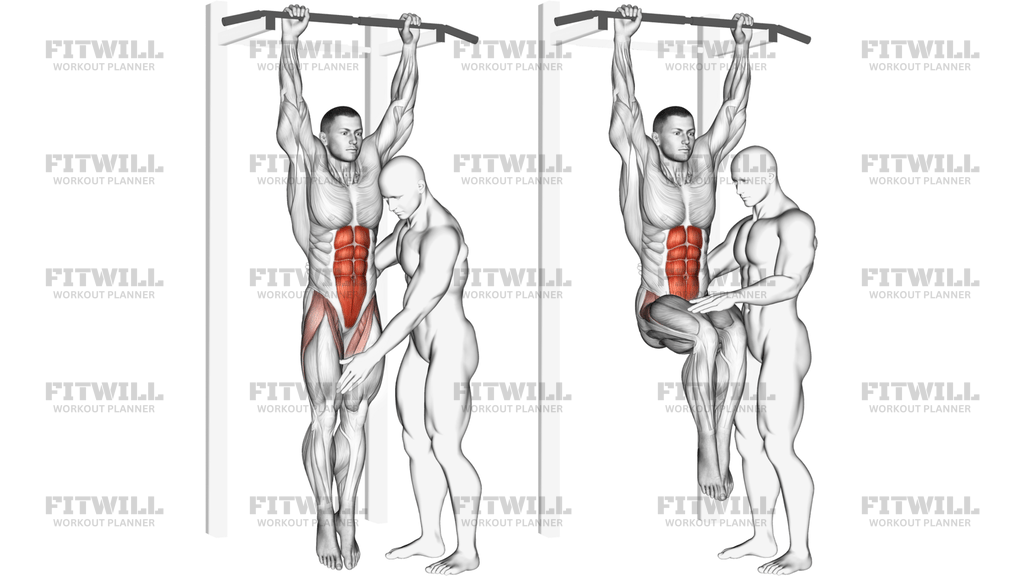
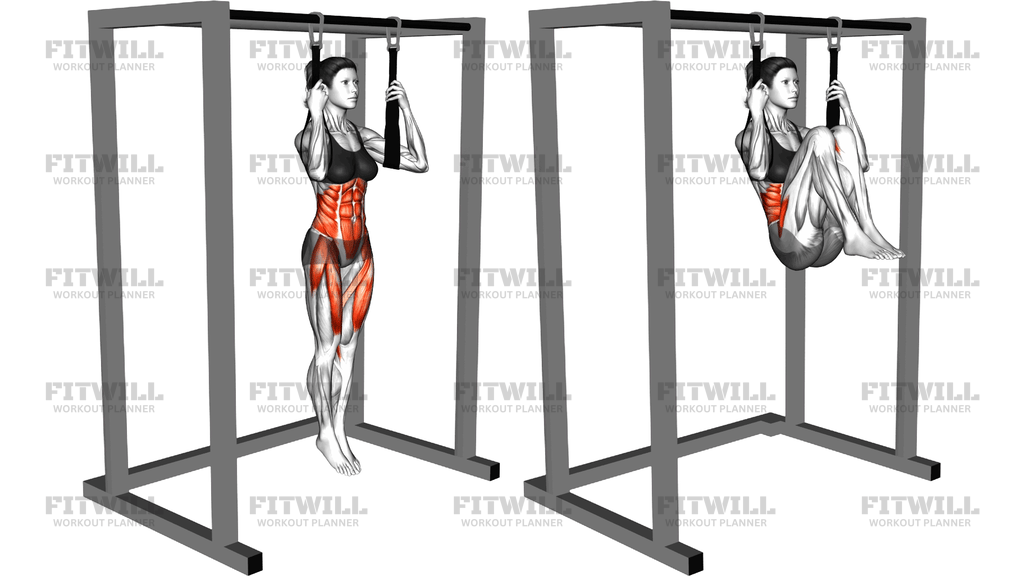
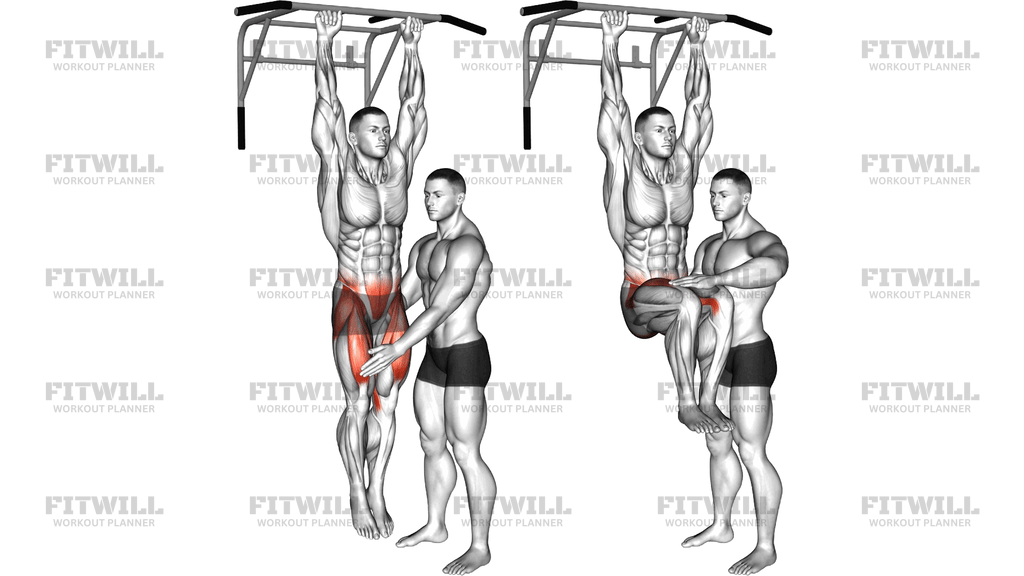
Assisted Hanging Knee Raise is a supported core exercise where you lift bent knees toward the chest from a hanging bar or knee raise station. Assistance from a station or partner helps reduce swinging and makes the movement easier to control than a strict hanging knee raise. It is useful for building abdominal strength while learning how to raise the legs without using momentum.
The primary target is the abs, especially the rectus abdominis, with the hip flexors helping lift the thighs. The forearms and shoulders also work to hold the body in position if you are hanging from a bar. A strong rep includes a slight pelvic tuck at the top so the abs curl the hips upward rather than simply lifting the knees with the hip flexors.
Set up on a secure pull-up bar, captain's-chair station, or assisted knee raise setup. Hold the handles or bar firmly, let the body settle, and keep the shoulders active instead of hanging passively. Before the first rep, brace the abs and make sure the legs are still so the knee raise starts from control.
Bend the knees and raise them toward the chest, then pause briefly near the top. Lower the legs slowly until they return under the body, stopping any swing before you begin the next repetition. If the body starts to rock, use more assistance, shorten the range, or pause longer between reps.
Assisted Hanging Knee Raise fits well in core sessions, bodyweight workouts, and progressions toward stricter hanging knee raises or leg raises. Beginners can use more support and a smaller knee lift, while stronger users can slow the lowering phase or lift the knees higher with a clearer pelvic tuck. The exercise should feel controlled through the front of the waist rather than like a leg swing.
Common mistakes include kicking the knees up, relaxing the shoulders, arching the lower back, or rushing into the next rep while the body is still moving. Keep the ribs down, exhale as the knees rise, and reset between reps. Stop the set when your grip, shoulders, or lower back prevents a clean abdominal curl.
[ Workout Log & Planner ]
Put your next workout in Fitwill
Keep your plan and training log ready when you are.


Instructions
- Set up on a secure hanging knee raise station or pull-up bar with assistance ready if needed.
- Hold the handles or bar firmly and let your body settle.
- Keep your shoulders active and brace your abs.
- Bend your knees and raise them toward your chest.
- Tuck your pelvis slightly at the top to emphasize your abs.
- Pause briefly without swinging.
- Lower your legs with control until they return under your body.
- Reset your body position before starting the next rep.
Tips & Tricks
- Start each rep from a still position.
- Avoid kicking the legs up with momentum.
- Keep your ribs down as the knees rise.
- Use assistance only as much as needed to control the movement.
- Exhale as you lift your knees.
- Stop the set if your lower back starts to arch hard.
- Keep the shoulders active on the bar or pads so your body does not hang loosely between reps.
- Think about curling the pelvis up at the top instead of just lifting the thighs.
Frequently Asked Questions
What muscles does the Assisted Hanging Knee Raise work?
It primarily works the abs, with help from the hip flexors and grip muscles.
Is Assisted Hanging Knee Raise easier than a hanging leg raise?
Yes. Bending the knees and using assistance makes the movement easier to control.
Why do I swing during the exercise?
Swinging usually means the reps are too fast. Pause between reps and lower your legs more slowly.
Should I lift my knees as high as possible?
Lift as high as you can while keeping control and feeling the abs curl the pelvis upward.
Can beginners do Assisted Hanging Knee Raise?
Beginners can use it if the assistance is enough to keep the body stable and the reps controlled.
Should I use a pull-up bar or knee raise station?
Either can work. A knee raise station gives more upper-body support, while a pull-up bar requires more grip and shoulder stability.
How do I feel Assisted Hanging Knee Raise more in my abs?
Pause near the top and slightly tuck your pelvis so the hips curl upward. If you only lift the thighs, the hip flexors will dominate.
What should I do between reps?
Let the legs return under the body and stop any swing before the next lift. Starting from stillness keeps the work on the abs.