Dumbbell Upright Row Back POV
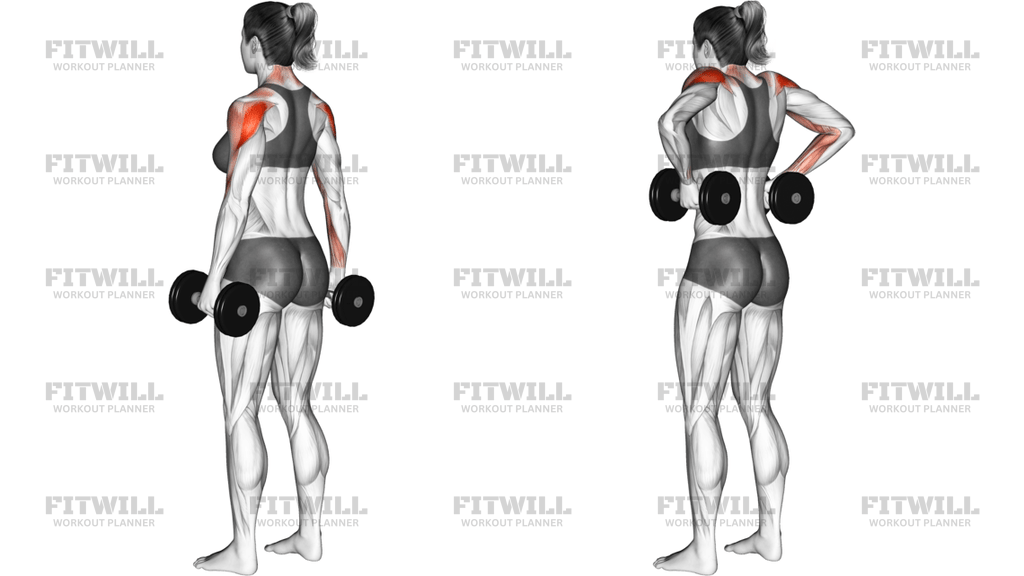
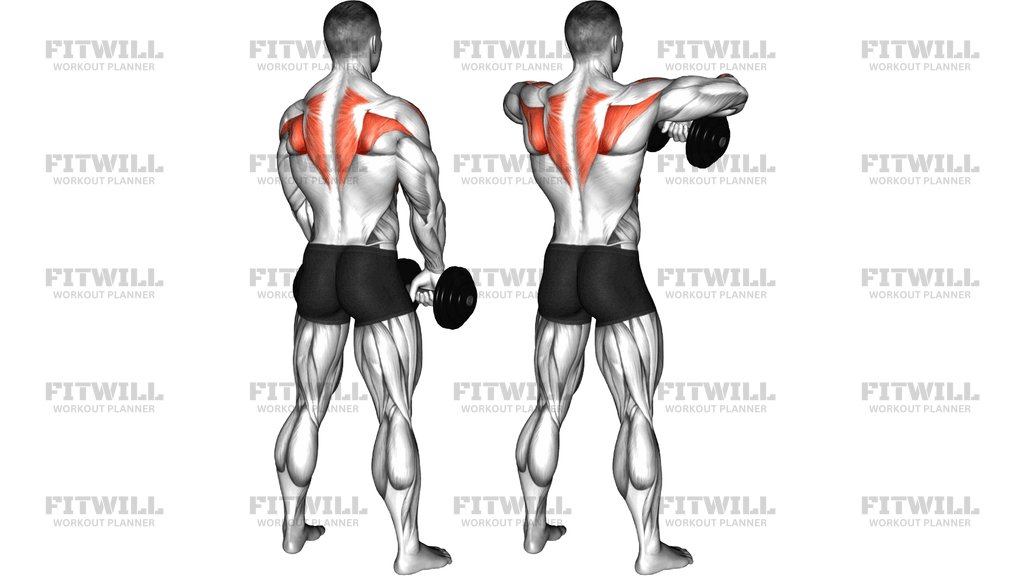
Dumbbell Upright Row (Back POV) is a standing shoulder and upper-back exercise performed with a dumbbell in each hand. It emphasizes the deltoids and upper traps while the rhomboids, biceps, and forearms help stabilize the pull. The back-view image shows the cleanest version of the movement: a tall stance, dumbbells hanging in front of the thighs, and elbows traveling outward and upward instead of the hands drifting forward.
The setup matters because the upright row rewards clean shoulder alignment more than raw load. Stand with your feet about hip-width apart, knees softly unlocked, ribs stacked over the pelvis, and the dumbbells held close to the front of the thighs. From there, the row should rise along the torso with the elbows leading the motion. Keeping the weights close and the wrists neutral helps the delts do the work without turning the rep into a shrug or a torso swing.
At the top, the upper arms should approach shoulder height or stop slightly below that point if your shoulders feel pinched. The goal is a smooth, controlled lift and an equally controlled descent, not a forced range. A short pause at the top can make the upper-back and shoulder effort more obvious, but the neck should stay long and relaxed throughout. If the shoulders rise toward the ears, the load is usually too heavy or the range is too aggressive.
This version works best as accessory work, a warm-up primer, or part of a shoulder-focused session where technique matters more than maximal loading. It can be useful for building shoulder size and upper-trap engagement, but it should still feel joint-friendly and repeatable. If upright rows bother your shoulders, reduce the range, use lighter dumbbells, or choose a different pulling pattern that allows a more comfortable elbow path.
[ Workout Log & Planner ]
Put your next workout in Fitwill
Keep your plan and training log ready when you are.


Instructions
- Stand tall with your feet about hip-width apart and hold a dumbbell in each hand in front of your thighs, palms facing your body.
- Soften your knees, stack your ribs over your pelvis, and let your shoulders sit down without rounding forward.
- Brace your midsection and keep your neck long before the first pull starts.
- Begin the rep by lifting your elbows up and out, not by throwing the hands forward.
- Keep both dumbbells close to your torso as they travel upward so the weights track along your shirt line.
- Raise until your elbows reach shoulder height or slightly below it if that is the most comfortable range.
- Pause briefly at the top, then lower the dumbbells back to the thighs under control.
- Inhale on the way down and exhale as you pull into the next rep.
- Reset your posture after each rep so the next one starts from the same stable position.
Tips & Tricks
- Keep the dumbbells close to your body; if they drift forward, the rep turns into a front-delt shrug.
- Think about driving the elbows upward first so the hands do not take over the lift.
- Use a neutral wrist position and avoid bending the wrists back at the top.
- Stop the set if the shoulders pinch or the upper arms need to rise above a comfortable line.
- Choose a load that lets you pause briefly at the top without leaning back.
- Let the elbows travel out and up, but do not force them higher just to chase extra range.
- Keep the neck long and the shoulders away from the ears to limit unnecessary trap tension.
- If your torso starts swinging, the dumbbells are too heavy for strict upright rows.
- A slower lowering phase makes the delts and upper traps work harder without adding momentum.
Frequently Asked Questions
What muscle does Dumbbell Upright Row (back POV) target most?
The deltoids are the main target, with the upper traps doing a lot of the supporting work.
Can beginners perform this exercise?
Yes, beginners can use it if they keep the dumbbells light and stop the pull before the shoulders feel cramped.
How high should my elbows go on the upright row?
Bring the elbows to about shoulder height, or slightly lower if that keeps the movement comfortable and smooth.
Should the dumbbells stay close to my body?
Yes. They should travel close to the torso rather than swinging out in front of you.
Why is this shown from the back?
The back view makes it easier to check whether the elbows rise evenly and the shoulders stay level instead of shrugging.
What is the most common mistake with this exercise?
Shrugging the shoulders and letting the hands lead the pull instead of lifting with the elbows.
What should I do if the top position bothers my shoulders?
Shorten the range, use lighter dumbbells, or swap to a different shoulder movement that does not pinch.
Is this more of a strength or accessory exercise?
It is usually best as accessory work for shoulder size and upper-trap emphasis rather than a heavy strength lift.