Neck Flexor Stretch
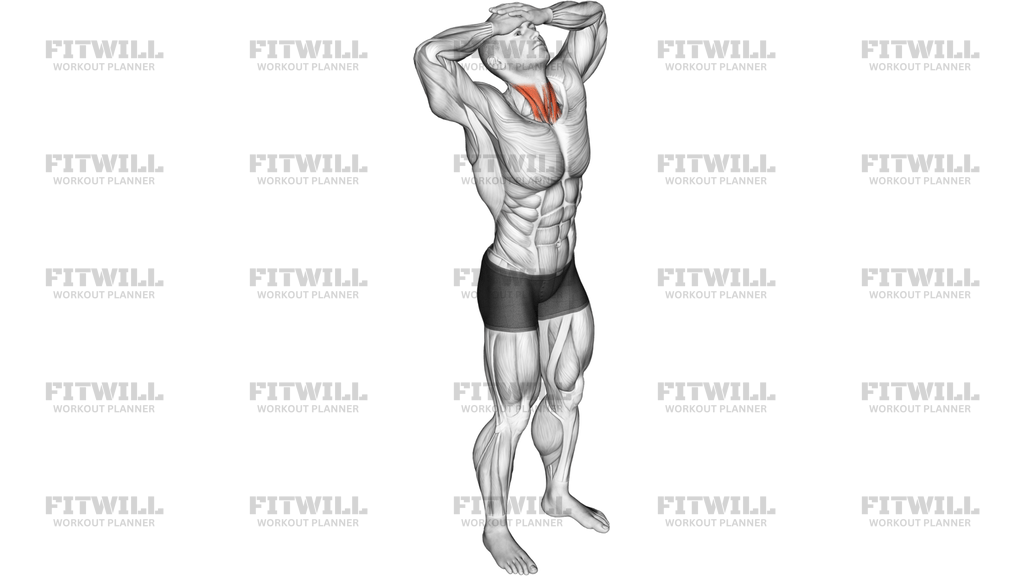
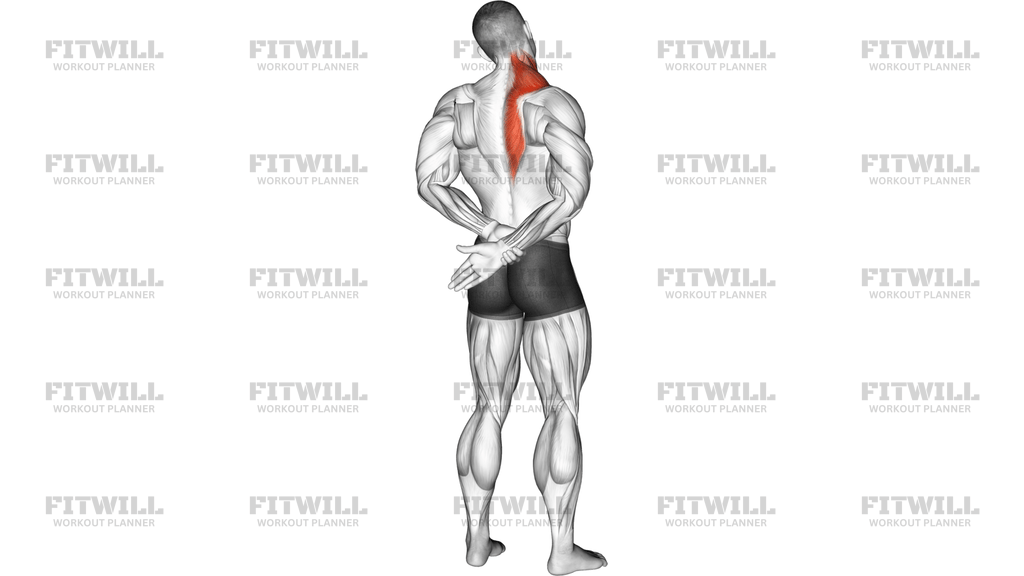
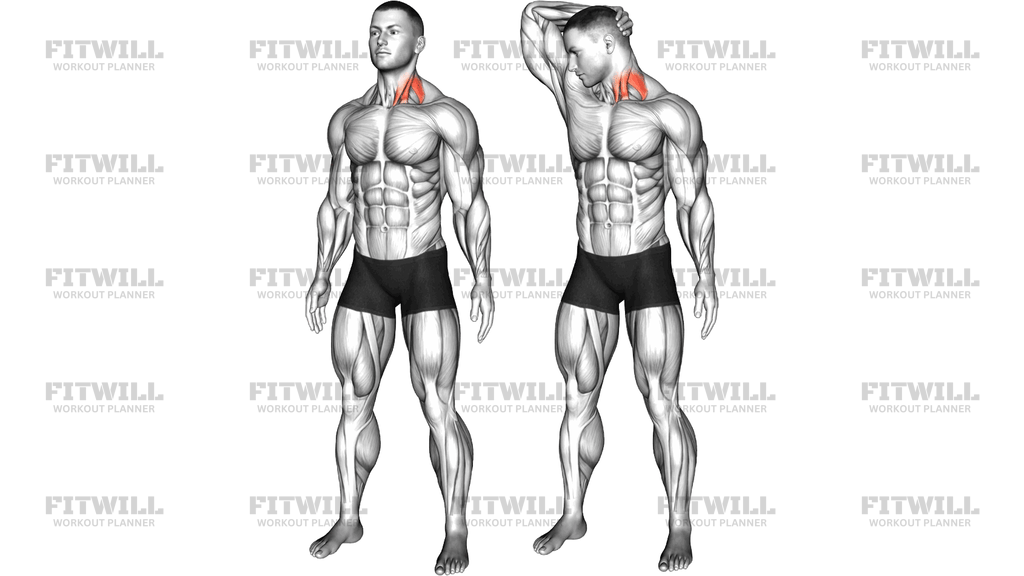
Neck Flexor Stretch is a standing mobility drill for the front of the neck. In the image, the lifter stands tall with the hands bracing the forehead, the elbows opened, and the head gently guided back so the tissues along the front and side of the neck can lengthen without the rest of the body collapsing. It is a small movement, but the setup matters because the quality of the stretch changes a lot depending on whether the ribs stay stacked, the shoulders stay relaxed, and the chin moves smoothly instead of being forced.
This stretch is useful when the front of the neck feels tight from desk work, long periods of looking down, or training positions that keep the head forward and the chest closed. The goal is not to crank the head backward as far as possible. The goal is to create a controlled opening through the neck while the torso stays quiet. That usually means keeping the feet grounded, the core lightly engaged, and the lower back from taking over when the head moves.
A good repetition should feel like a calm lengthening through the front of the throat, the sternocleidomastoid area, and the surrounding neck tissues, not a pinch in the spine or a strain in the jaw. The hands are there to guide and regulate the range, not to yank the head into end range. If the stretch becomes sharp, if the jaw clenches, or if the shoulders start rising, the range is too aggressive and should be reduced immediately.
Use Neck Flexor Stretch as part of a warm-up, cool-down, or mobility session whenever the neck needs a gentle reset. It works well on its own or paired with chest-opening and upper-back mobility work. A mat is optional, but a stable stance matters. Keep the motion slow, breathe evenly, and stop at the point where the stretch stays smooth and easy to control rather than turning into a forced bend through the cervical spine.
[ Workout Log & Planner ]
Put your next workout in Fitwill
Keep your plan and training log ready when you are.


Instructions
- Stand tall with your feet about hip-width apart and your weight centered over both feet.
- Interlace your fingers and place your palms on your forehead, just above the brow line.
- Open your elbows slightly outward and keep your shoulders down instead of shrugging them up.
- Draw your ribs in gently so the stretch comes from the neck, not from arching the lower back.
- Take a slow breath in, then exhale as you let the head glide back into the hands.
- Keep the movement small and smooth until you feel a clear stretch along the front of the neck.
- Hold the end position for a calm breath or two without pressing hard into the forehead.
- Return to neutral slowly, then repeat for the desired number of controlled holds.
Tips & Tricks
- Use only light pressure from the hands; they should guide the head, not force it backward.
- If your lower back starts to arch, bend the knees slightly and reset your ribs before continuing.
- Keep the jaw loose and the teeth unclenched so the stretch stays in the neck instead of the face.
- A smaller range is better than a hard end-range position that creates a pinch at the base of the skull.
- Breathe out slowly while you hold the stretch to help the front of the neck relax.
- If one side feels tighter, let the head drift only slightly farther back on that side without twisting.
- Do not let the elbows collapse forward; a wider elbow position helps keep the chest open and the neck long.
- Stop immediately if you feel dizziness, sharp pain, or a pulling sensation that travels into the arm.
Frequently Asked Questions
What does the Neck Flexor Stretch target?
It mainly lengthens the muscles and soft tissues along the front of the neck, especially the sternocleidomastoid and nearby anterior neck structures.
Why are my hands on my forehead?
The hands act as a guide and a limiter so you can control how far the head moves back without forcing the neck.
Should I feel this in my throat?
You should feel a gentle stretch through the front of the neck, not a sharp pinch in the throat or a jam in the spine.
Can beginners do this stretch?
Yes. Beginners should keep the range small, press lightly with the hands, and stop well before the stretch feels aggressive.
How long should I hold each rep?
Short holds of about 10 to 20 seconds are usually enough, especially if you are using it as a mobility reset.
What is the most common mistake?
The usual mistake is overextending the neck while the ribs flare and the lower back arches, which turns the stretch into a whole-body compensation.
Can I do this after sitting at a desk all day?
Yes, it is a good option when the neck feels tight from looking forward or down for long periods.
What should I do if it feels uncomfortable?
Reduce the range, soften the hands, and keep the chin and throat relaxed; if discomfort stays sharp or causes dizziness, stop.