Extension And Inclination Neck Stretch
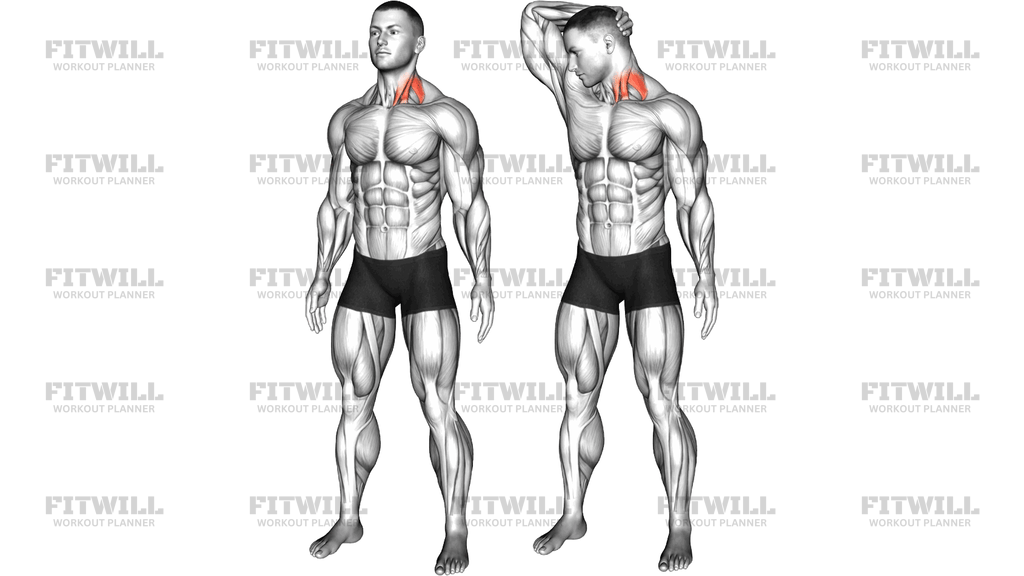
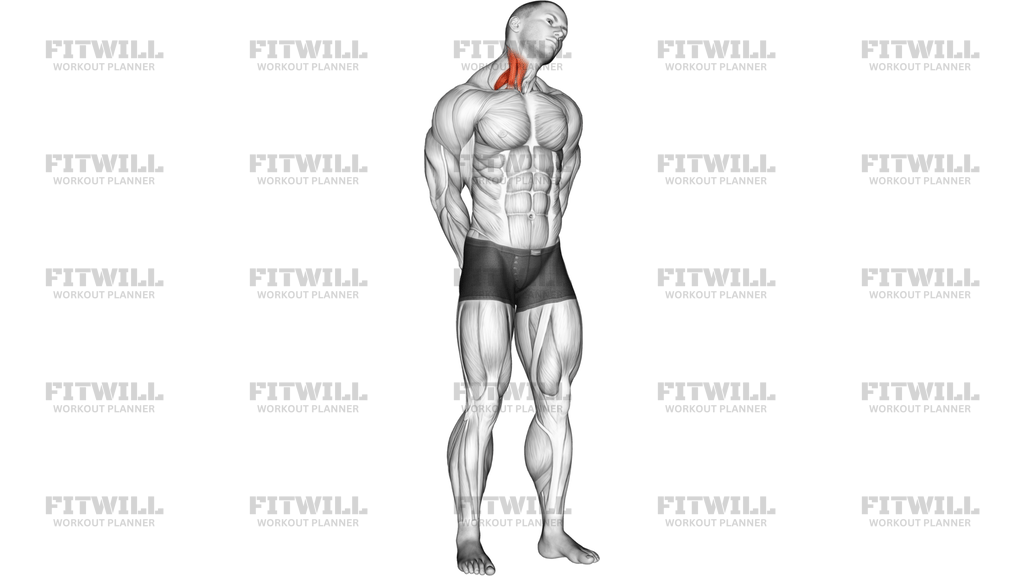
Extension and Inclination Neck Stretch is a standing neck mobility drill that combines a gentle backward tilt with a side inclination to lengthen the front and side of the neck. It is useful when the neck feels stiff from desk work, driving, pressing, or overhead lifting, especially when you want to restore motion without turning the stretch into a forceful pull.
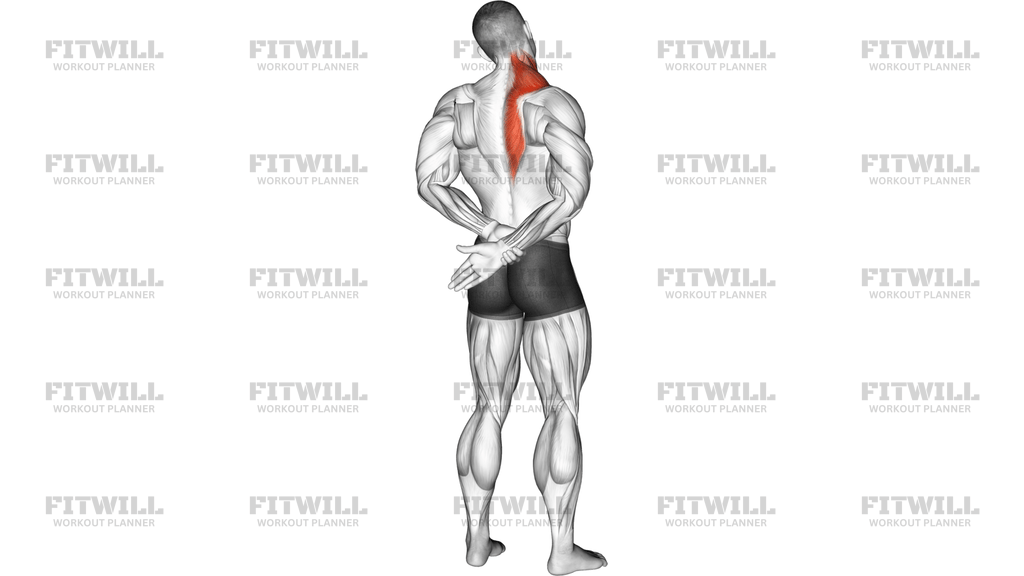
The setup matters because this movement only works well when the torso stays quiet and the shoulders stay low. Stand tall on the floor or on a mat, keep the ribs stacked over the pelvis, and let the shoulder on the stretching side stay down so the neck can open without the upper trap taking over. If you use your hands behind your back to anchor the shoulders, keep that pressure light and relaxed.
The movement should feel like a controlled lengthening, not a cranking motion. First create a small amount of neck extension, then incline the head toward one side until you feel a mild stretch through the front and side of the neck. Avoid shrugging, twisting the torso, or chasing a bigger range than the neck can comfortably own. Slow breathing helps the tissues soften while you hold the end position.
Use this stretch in warmups, cooldowns, or quick posture resets when the front of the neck and the sides of the neck feel tight. It is not meant to build strength or intensity; the goal is cleaner mobility and less guarding. Keep the stretch pain-free, reduce the range if you feel compression or pinching, and stop if you get dizziness, tingling, or sharp pain.
[ Workout Log & Planner ]
Put your next workout in Fitwill
Keep your plan and training log ready when you are.


Instructions
- Stand tall with your feet hip-width apart and your spine long; place your hands lightly behind your lower back or let your arms hang naturally.
- Set your shoulders down and slightly back so the chest stays open without arching your lower back.
- Keep your chin level for a moment and lengthen the back of your neck before moving.
- Slowly tip your head backward a few degrees until you feel the front of the neck begin to open.
- From that position, incline your head to one side, bringing the ear toward the shoulder on the side you want to stretch.
- Keep the opposite shoulder heavy and your torso still so the movement stays in the neck.
- Breathe slowly and hold the stretch for 15 to 30 seconds without bouncing or forcing the range.
- Return to center with control, reset your posture, and repeat on the other side.
Tips & Tricks
- Keep the neck motion small; the best stretch usually comes from a few degrees of extension and side bend, not max range.
- Let the shoulder on the stretching side stay heavy so the upper trapezius does not steal the movement.
- If the throat or front of the neck feels pinched, reduce the backward tilt before adding more side inclination.
- Keep your ribs stacked over your pelvis instead of flaring the chest to fake extra neck mobility.
- Exhale slowly as you settle into the hold so the jaw and neck stay relaxed.
- Avoid turning the nose far to the side; this should feel like a controlled inclination, not a full rotation.
- Use a mirror or wall feedback if you tend to lean your torso instead of moving only the head.
- Stop immediately if you feel tingling, dizziness, or sharp pain.
Frequently Asked Questions
What does Extension and Inclination Neck Stretch target most?
It mainly targets the front and side of the neck, including the sternocleidomastoid, scalenes, and nearby upper-neck tissues.
Is this a strength exercise?
No. It is a mobility and stretching drill meant to reduce stiffness, not build load-bearing strength.
Should I do it standing or seated?
Either works, but standing makes it easier to keep the torso tall and the shoulders from creeping up.
How long should I hold each side?
A gentle 15 to 30 second hold is usually enough. Longer holds are fine only if the stretch stays mild and comfortable.
What should I feel during the stretch?
You should feel a mild opening along the front and side of the neck, not sharp compression at the spine or throat.
Why do my shoulders keep taking over?
Usually the shoulder on the stretching side is shrugging. Keep it heavy and let the neck move without the torso leaning.
Can I use this after pressing or desk work?
Yes. It fits well as a cooldown, posture reset, or part of an upper-body warmup when the neck feels tight.
When should I avoid this stretch?
Skip it if extension or side bending causes dizziness, tingling, numbness, or sharp pain, and get it checked if symptoms persist.