Standing Toe Up Hamstring Stretch
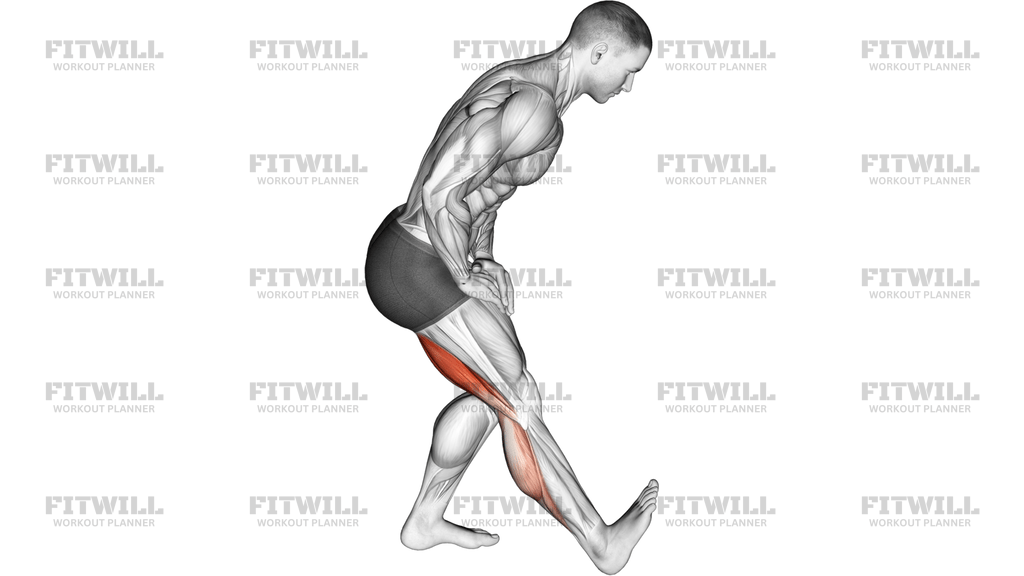
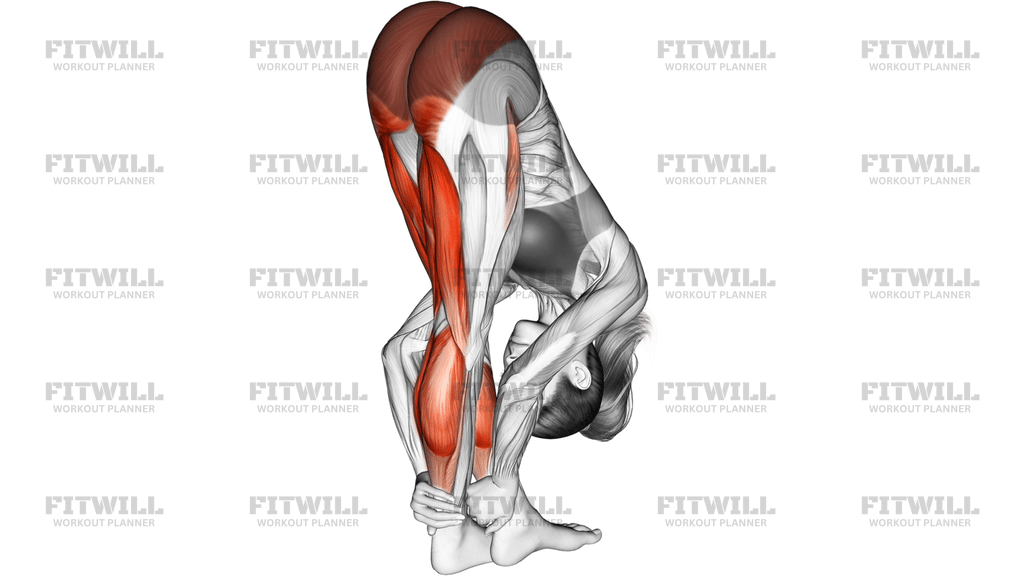
Standing Toe Up Hamstring Stretch is a standing mobility drill for the back of the thigh. The toe-up position lengthens the hamstrings while the upright stance gives you a clear place to hinge, breathe, and control the stretch instead of collapsing forward. It is a useful option when the legs feel tight from sitting, running, squatting, deadlifting, or long periods of standing.
The main target is the hamstrings, but the calf, glute, and trunk muscles help keep the body organized while you hold the position. That support matters because this stretch is not about forcing the deepest possible range. It is about finding a clean line from hip to heel, keeping the pelvis square, and letting the hamstrings accept tension without the lower back taking over.
Set up by standing tall with one heel grounded and the toes pulled up toward the shin. The working leg should stay mostly straight with only a soft unlock at the knee, while the opposite leg stays slightly bent for balance. From there, hinge at the hips and let the torso tip forward as a single unit, keeping the chest open and the spine long. The hands can rest lightly on the thigh or shin for support, but they should not pull you deeper.
The best version of Standing Toe Up Hamstring Stretch feels like a controlled fold over the front leg, not a rounded reach toward the floor. As you breathe out, let the hips glide back a little farther while the toes stay lifted and the heel stays heavy. If the stretch moves into the knee joint or starts to feel sharp, reduce the range immediately and reset the hinge.
This exercise works well in a warm-up, cool-down, or recovery session because it is easy to dose and easy to repeat on both sides. It also makes a good reset between lower-body sets when the posterior chain feels stiff. Keep the motion calm, avoid bouncing, and use the position to build tolerance in the hamstrings rather than chasing a forced end range.
Fitwill
Log Workouts, Track Progress & Build Strength.
Achieve more with Fitwill: explore over 9600 exercises with images and videos, access built-in and custom workouts, perfect for both gym and home sessions, and see real results.
Start your journey. Download today!




Instructions
- Stand on a flat floor or mat and place one heel in front of you with the toes pulled up toward the shin.
- Keep the working leg mostly straight, and bend the other knee slightly so you can balance without twisting the hips.
- Square both hips forward and rest your hands lightly on the front thigh or shin for support.
- Take a breath, brace gently, and hinge from the hips instead of rounding the lower back.
- Slide your torso forward until you feel a clear stretch along the back of the extended leg.
- Hold the end position for a few slow breaths while keeping the heel heavy and the toes lifted.
- If the stretch eases, exhale and hinge a little farther only as long as the spine stays long.
- Press through the front heel, stand back up with control, and repeat on the other side.
Tips & Tricks
- Pull the toes up hard enough to feel the hamstrings lengthen; a relaxed foot turns this into a looser calf stretch.
- Keep the front hip pointed forward. If it opens outward, the stretch shifts away from the hamstrings.
- A small bend in the working knee is better than locking it straight and yanking on the joint.
- Think about pushing the hips back, not reaching the chest toward the toes.
- Use a wall, rack, or chair for balance if the support leg keeps wobbling.
- If your lower back rounds first, stop higher and keep the torso angle smaller.
- Hold each side for a few slow breaths instead of bouncing in and out of the end range.
- Back off immediately if you feel tingling, numbness, or a sharp tug behind the knee.
Frequently Asked Questions
What muscle does Standing Toe Up Hamstring Stretch target most?
It primarily targets the hamstrings on the straight leg, with the calf and glutes helping stabilize the position.
Why do I keep the toes pulled up in Standing Toe Up Hamstring Stretch?
Pulling the toes up makes the back-of-thigh line easier to feel and reduces the chance that the calf does all the work.
How straight should my knee be in Standing Toe Up Hamstring Stretch?
Keep the working knee mostly straight, but do not lock it hard. A soft unlock is enough to protect the joint while still loading the hamstrings.
Should I round my back to get deeper in Standing Toe Up Hamstring Stretch?
No. Hinge from the hips and keep the spine long. If your back rounds first, you are past the clean stretch range.
Can beginners do Standing Toe Up Hamstring Stretch?
Yes. Beginners should use a shorter hinge, keep one hand on a wall or chair, and stay out of any sharp pull behind the knee.
When should I use Standing Toe Up Hamstring Stretch?
It works well before lower-body training, after runs, or during cool-down work when the hamstrings need a controlled lengthening drill.
What if I feel the stretch more in my calf than my hamstring?
Lift the toes a little more, keep the hips squared, and reduce how far you hinge so the tension shifts back into the hamstrings.
How long should I hold each side of Standing Toe Up Hamstring Stretch?
Hold long enough to breathe slowly through the position, usually a few breaths or about 15 to 30 seconds per side.