Standing Leg Up Hamstring Stretch
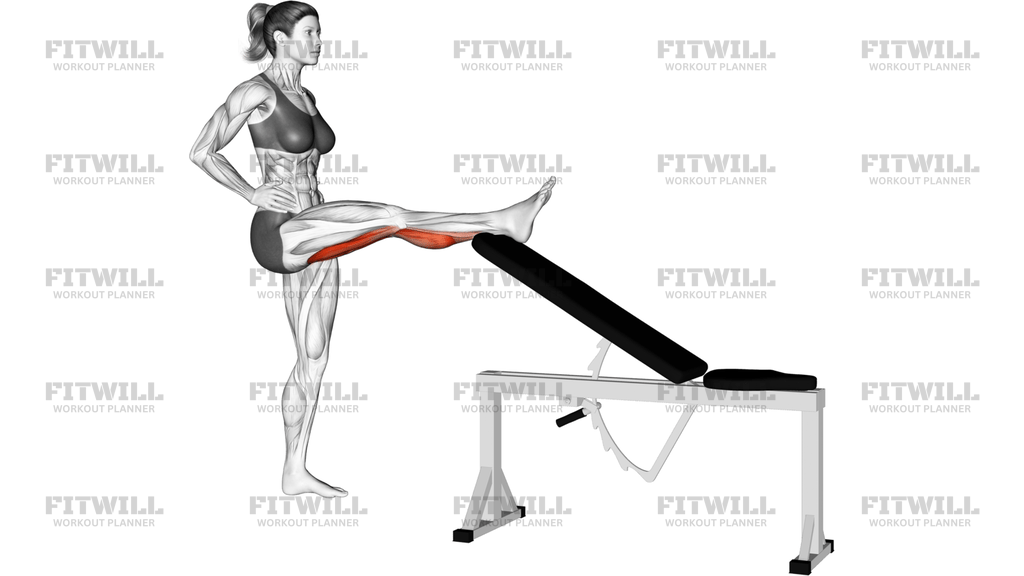
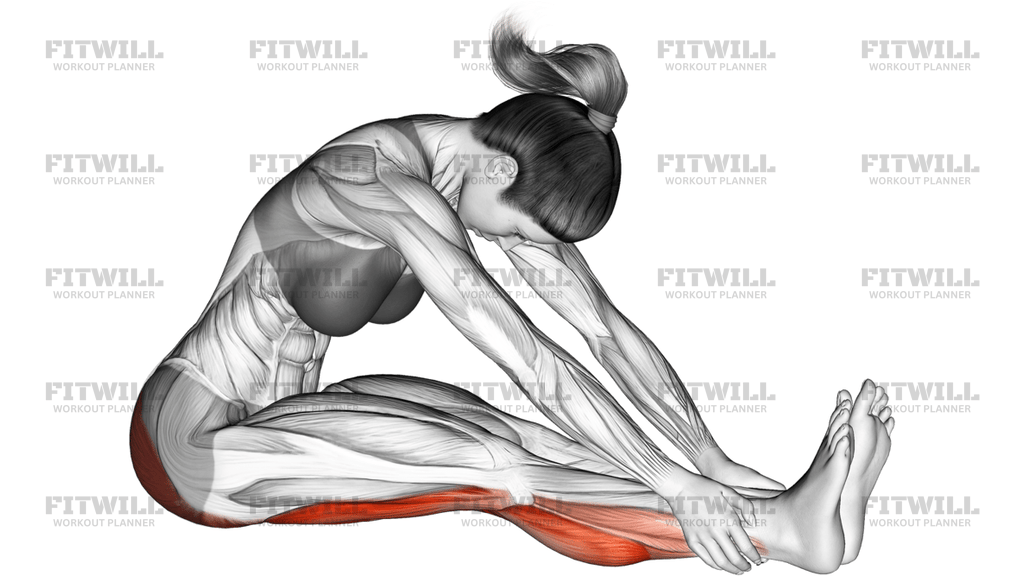
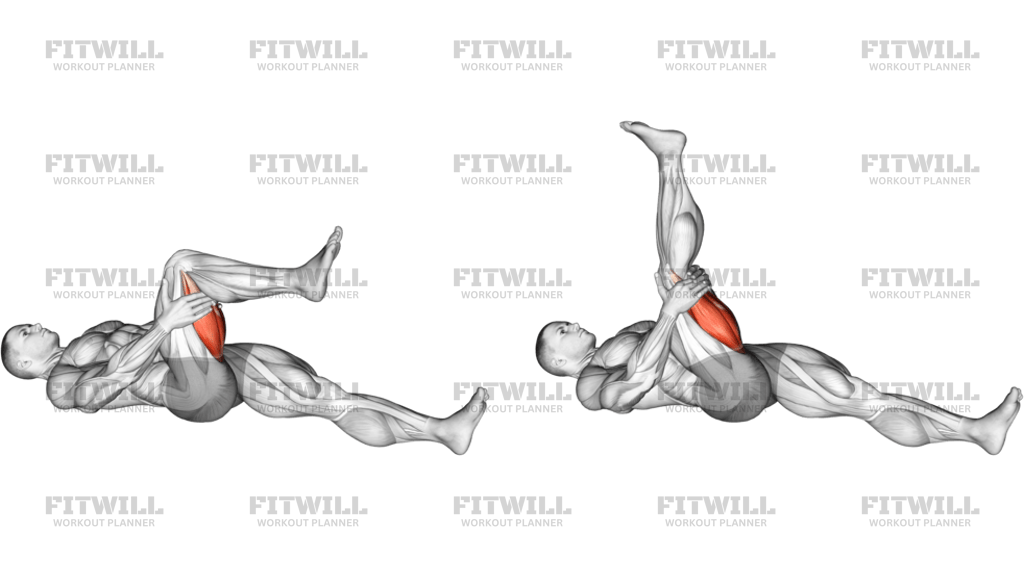
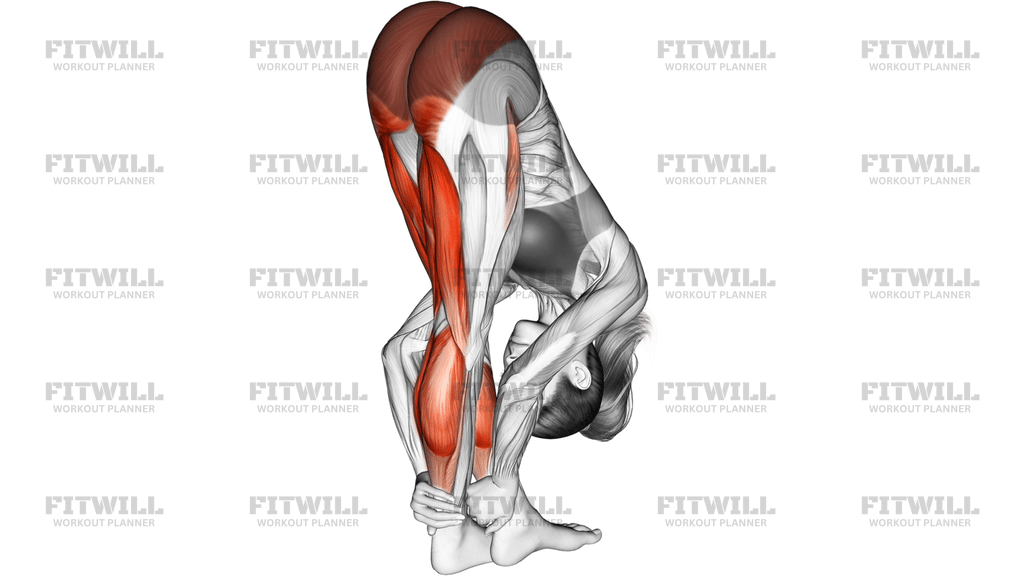
Standing Leg Up Hamstring Stretch is a standing mobility drill for the back of the thigh, usually done with one heel elevated in front of you or with the working leg lifted while you hinge from the hips. The goal is not to chase the floor. The goal is to place the hamstring on useful tension while the spine, pelvis, and balance stay organized.
The stretch is most useful when your hamstrings feel short from sitting, running, or lower-body lifting. It also works well before hinges, deadlifts, or sprint work because it reminds the body how to keep the hip crease moving without rounding the lower back. The standing position makes the stretch honest: if you lose balance, twist the hips, or lock the knee too aggressively, you will feel it immediately.
A good setup starts with the support leg planted firmly on the mat and the raised leg placed high enough to feel a stretch without forcing the pelvis to turn. Keep the front foot flexed, soften the standing knee slightly, and square the hips toward the lifted leg. From there, fold forward from the hip joint instead of collapsing through the ribs and low back. That keeps the tension in the hamstrings rather than dumping it into the spine.
This is a stretch you should ease into, not attack. A short pause at the top of the range often works better than a deep reach, because the hamstrings respond to position and breathing as much as they do to angle. If the pull shifts behind the knee, the support height is probably too high or the knee is locking out too hard. A lower setup with a calm exhale will usually give you a cleaner line of tension.
Use Standing Leg Up Hamstring Stretch as a focused accessory before training or as part of a cooldown when you want to restore length without getting sloppy through the trunk. The best reps feel long, steady, and symmetrical from side to side. If one side is tighter, match the position to the tighter side instead of forcing the stronger side to go deeper.
[ Workout Log & Planner ]
Put your next workout in Fitwill
Keep your plan and training log ready when you are.


Instructions
- Stand tall on the mat and place one heel on a low, stable support in front of you, keeping the toes pulled back toward your shin.
- Plant the standing foot firmly and keep a slight bend in that knee so you can balance without locking out.
- Square both hip bones toward the raised leg before you start folding forward.
- Hinge at the hips and send your chest forward over the straight leg, keeping the back long instead of rounding hard.
- Let the hands slide down the shin, ankle, or thigh only as far as you can keep the pelvis level.
- Exhale as you settle into the stretch and hold the position without bouncing.
- Ease out of the stretch with control, then reset before switching sides.
- Repeat the same setup on the other leg so both sides get equal attention.
Tips & Tricks
- Use a low support first. A heel on a bench, step, or even a low block is enough if the pelvis stays square.
- Keep the front foot flexed so the calf and ankle help anchor the stretch line.
- Soften the standing knee instead of locking it hard; that keeps the balance demand reasonable.
- Fold from the hips, not the rib cage. If your lower back rounds first, the support is too high or the reach is too aggressive.
- Keep both hip points facing forward. Rotating the pelvis usually turns the movement into a twist instead of a hamstring stretch.
- A long exhale often lets the hamstring ease another few degrees without forcing it.
- If you feel the pull behind the knee, back off and lower the support rather than pushing deeper.
- Use light fingertip support on a wall or rack if balance is limiting the stretch quality.
- Match both sides carefully; the tighter side should dictate the setup, not the looser side.
Frequently Asked Questions
What muscle does Standing Leg Up Hamstring Stretch target most?
The hamstrings are the primary target, especially the back of the raised leg.
Can beginners do Standing Leg Up Hamstring Stretch?
Yes. Start with a low support and a small forward hinge so you can keep your balance and posture under control.
How high should the raised leg be?
High enough to feel the hamstring, but low enough that you can keep the pelvis square and the lower back quiet.
Why do I feel this stretch in my lower back?
That usually means you are rounding instead of hinging. Reduce the reach and fold from the hip crease.
Should my knee stay straight during Standing Leg Up Hamstring Stretch?
Keep the working leg mostly straight, but do not force the knee into a hard lock if that pulls the stretch behind the knee.
Is it better to hold or pulse this stretch?
A steady hold is usually better. It lets you settle the pelvis and breathe without turning the stretch into a bounce.
When should I use Standing Leg Up Hamstring Stretch?
Use it before lower-body training, after running, or in a cooldown when the back of the thigh feels tight.
What should I do if I lose balance?
Touch a wall, rack, or other stable support lightly. The stretch should stay controlled instead of becoming a balance drill.