Standing High Leg Bent Knee Hamstring Stretch
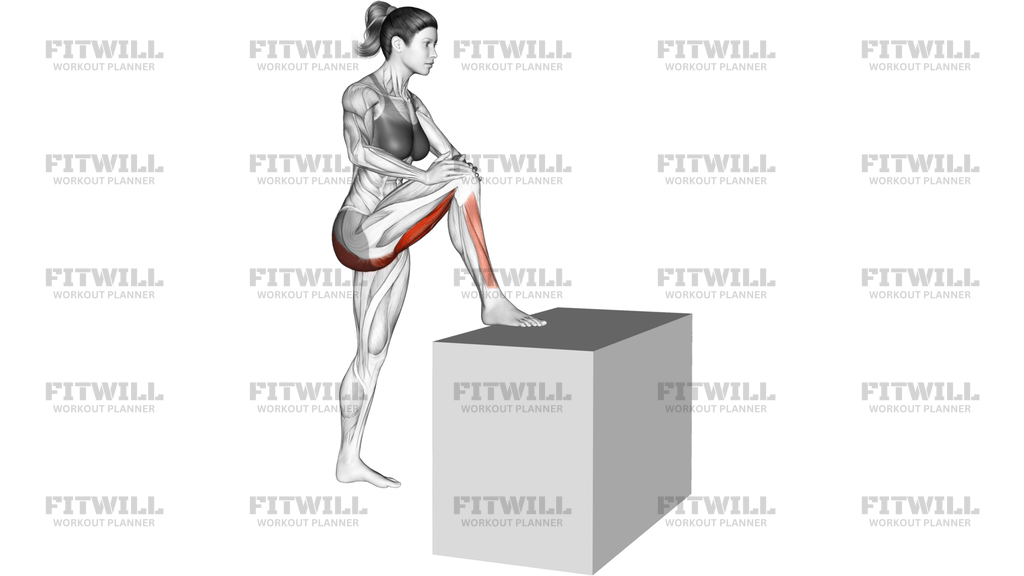
Standing High Leg Bent Knee Hamstring Stretch is a standing lower-body stretch that uses your own body weight and an elevated support to lengthen the back of the thigh. The working leg is placed on a box, bench, or similar platform with the knee bent, then the hips hinge forward until you feel a controlled stretch through the hamstrings. It is commonly used after leg training, during mobility work, or as part of a warmup when the goal is to open up the posterior chain without loading it.
This stretch is aimed first at the hamstrings, but the position also asks the glutes, calves, and trunk to stay organized while you hold the posture. Because the leg is supported high in front of you, the pelvis can tip forward or the low back can take over if you rush the setup. A good repetition keeps the standing leg steady, the lifted foot planted securely, and the torso moving as one controlled hinge instead of a collapse at the waist.
The height of the support matters. A lower step gives you a milder stretch and makes it easier to keep the hips square. A higher box increases the challenge, but only if you can keep the knee, hip, and spine in a comfortable line. The goal is not to fold as far as possible. The goal is to find a repeatable position where the hamstrings lengthen while the rest of the body stays braced and balanced.
For the best result, exhale as you hinge and use a light, steady reach to settle into the end range. Keep the bent knee relaxed enough to avoid locking out, but do not let it drift into an unstable position. If you feel the sensation moving into the low back or the front of the hip instead of the back of the thigh, reset the foot height or reduce the lean.
This exercise works well as a recovery stretch, a cooldown drill, or a mobility primer before squats, deadlifts, running, and other hinge-dominant work. It is friendly for beginners when the platform is kept low and the stretch is held gently. Progress comes from cleaner posture, smoother breathing, and a more comfortable end range rather than forcing a bigger reach.
Fitwill
Log Workouts, Track Progress & Build Strength.
Achieve more with Fitwill: explore over 9600 exercises with images and videos, access built-in and custom workouts, perfect for both gym and home sessions, and see real results.
Start your journey. Download today!




Instructions
- Stand facing a box, bench, or step and place one foot on top with the knee bent and the foot fully supported.
- Keep the other foot planted on the floor far enough back that you can balance without tipping onto the toes.
- Square your hips toward the support and lengthen through the spine before you lean forward.
- Press gently through the elevated foot so the leg feels stable instead of wobbling side to side.
- Hinge at the hips and bring your chest forward over the working thigh until the back of the thigh starts to stretch.
- Keep the standing leg straight but not locked, and let the bent knee stay soft rather than forcing it straight.
- Hold the end position with slow breathing and a calm, steady torso.
- Ease out of the stretch by lifting the chest and bringing the torso back over the standing leg.
- Repeat on the other side and match the hold time or number of breaths.
Tips & Tricks
- Choose a support height that lets you keep both hips level; if the pelvis twists, the box is probably too high.
- Keep the standing foot rooted into the floor so the stretch does not turn into a balance drill.
- Reach from the hips instead of rounding the lower back to get a cleaner pull through the hamstring.
- A bent knee usually makes the stretch feel more focused near the top of the hamstring behind the thigh.
- If you feel the back of the knee tugging hard, reduce the lean and soften the knee angle slightly.
- Use slow exhalations to let the thigh relax into the stretch instead of forcing depth with your arms.
- Do not press so hard into the elevated leg that the knee collapses inward or outward.
- If the standing hamstring or calf is cramping, shorten the stance and lower the support height.
- Hold the stretch long enough to settle, but come out before the supporting leg starts shaking.
Frequently Asked Questions
What muscle does Standing High Leg Bent Knee Hamstring Stretch target most?
The hamstrings are the main target, especially the back of the elevated thigh.
Do I need a box or bench for the elevated leg?
Yes, a box, bench, step, or other stable support works best so the foot can stay planted while you hinge forward.
Should the foot on the box stay flat or on the heel?
Keep the foot fully supported and stable on the platform. The exact pressure can vary, but the leg should feel planted rather than slipping.
How should I move into the stretch?
Hinge forward from the hips with a long spine. Avoid folding hard through the lower back or bouncing at the bottom.
Where should I feel the stretch most?
You should feel it mainly in the back of the elevated thigh. A little tension in the glute or calf can happen, but the low back should not take over.
Can I use this before deadlifts or squats?
Yes. It works well as a light mobility drill before hinge-based training as long as you keep the stretch gentle.
What is the most common mistake in this stretch?
Most people either round the low back or use a support that is too high, which shifts tension away from the hamstrings.
How long should I hold each side?
Hold long enough for the muscles to settle and the breathing to slow down, then come out smoothly and switch sides.