Kneeling Toe Up Hamstring Stretch
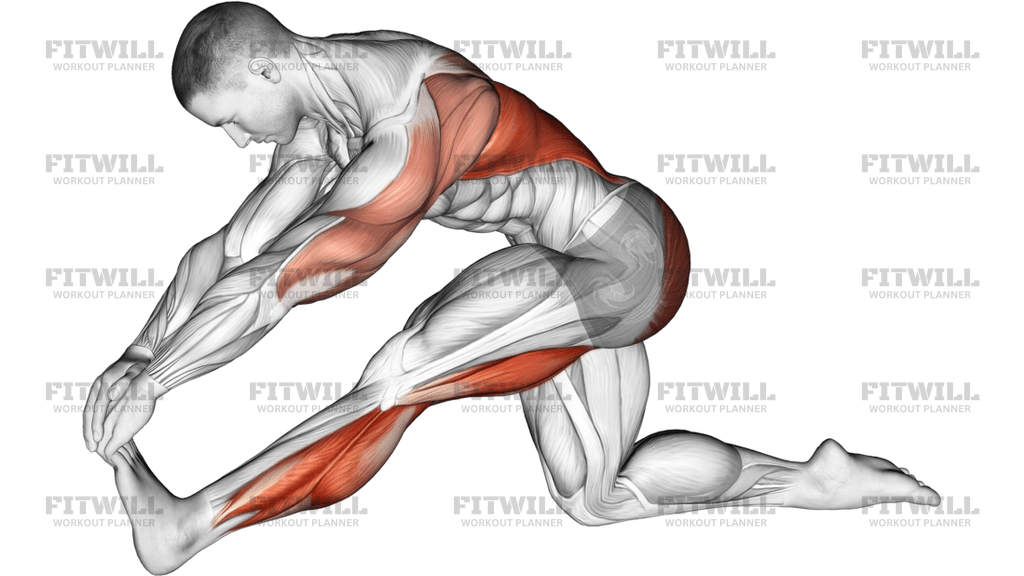
Kneeling Toe Up Hamstring Stretch is a floor-based hamstring mobility drill done with body weight and an exercise mat. The front leg stays straight with the heel on the floor and the toes pulled up, while the back knee stays down for support. That setup matters because it lets you hinge forward from the hips and load the hamstrings without turning the movement into a sloppy toe touch.
This stretch is aimed at the back of the thigh, especially the hamstrings, with the calves and the muscles around the hips helping to stabilize the position. When the foot is dorsiflexed, the stretch often feels sharper and more complete along the hamstring line, which is useful after lower-body training, before hinging work, or during a mobility block when you want a cleaner posterior-chain lengthening pattern.
The best version of this exercise starts from a tall kneeling setup with the working heel planted, toes up, and the pelvis squared toward the extended leg. From there, the torso should fold forward as one unit while the hips glide back until you feel a strong but controllable stretch. If you twist, round hard through the low back, or yank on the foot, the sensation shifts away from the hamstrings and the stretch becomes less useful.
Because this is a stretch rather than a strength move, the goal is calm control and repeatable position quality. Use steady breathing, settle into the end range for a short pause, and back out before the stretch turns into pain or cramping. A folded mat under the rear knee can make the setup friendlier, and beginners can absolutely use this drill as long as they keep the front leg straight, the toes lifted, and the range comfortable.
Fitwill
Log Workouts, Track Progress & Build Strength.
Achieve more with Fitwill: explore over 9600 exercises with images and videos, access built-in and custom workouts, perfect for both gym and home sessions, and see real results.
Start your journey. Download today!




Instructions
- Place one knee on the mat and extend the other leg straight in front of you with the heel down and the toes pulled up.
- Keep the front foot flexed and square the hips toward that leg before you start reaching forward.
- Brace lightly through the torso, then hinge from the hips instead of collapsing through the low back.
- Walk or slide your hands toward the foot until you feel a firm stretch along the back of the straight leg.
- Keep the extended knee long and the toes lifted while you settle into the end range.
- Hold the position for a controlled pause and breathe out to let the hamstrings ease a little more.
- Return by shifting the torso back and stacking the chest over the hips again.
- Repeat on the other side with the same foot position and tempo.
Tips & Tricks
- Keep the front heel heavy on the floor; if it lifts, the hamstring stretch turns into a balance drill.
- Pull the toes toward the shin before you fold forward so the calf does not take over the sensation.
- Think about moving your hips back, not just reaching your hands farther toward the foot.
- A small bend in the support knee is fine if it helps you stay square and pain-free.
- Do not force the chest onto the thigh; stop when the hamstring tension is strong but still smooth.
- If the back knee is sore, place a folded towel or mat under it before starting.
- Long exhales usually help this stretch more than big aggressive pulls.
- If you feel the sensation mostly in your low back, shorten the range and hinge less aggressively.
Frequently Asked Questions
What does Kneeling Toe Up Hamstring Stretch target most?
It mainly targets the hamstrings of the straight leg, with the calf and hip stabilizers helping in the setup.
Can beginners perform this exercise?
Yes. Beginners usually do well with a shorter reach, a soft mat under the rear knee, and a focus on keeping the front toes pulled up.
How should I position the front foot?
Keep the front leg straight with the heel on the floor and the toes pulled toward the shin so the hamstring line stays active.
What is the most common mistake with this stretch?
People usually round hard through the low back or reach with the arms instead of hinging the hips back over the straight leg.
Should I feel this more in the hamstring or the low back?
The stretch should live mostly in the back of the straight leg. If the low back takes over, reduce the reach and keep the torso longer.
Do I need to keep the back knee on the mat?
Yes, that kneeling support helps you stay anchored and makes it easier to hinge forward without losing balance.
When is this stretch most useful?
It works well after leg training, before hinge-focused lifting, or anytime you need to restore hamstring length without standing balance demands.
How can I make the stretch more intense without forcing it?
Keep the toes lifted, square the hips, and use a small hip hinge rather than yanking the torso farther down.