Standing Reach Down Hamstring Stretch
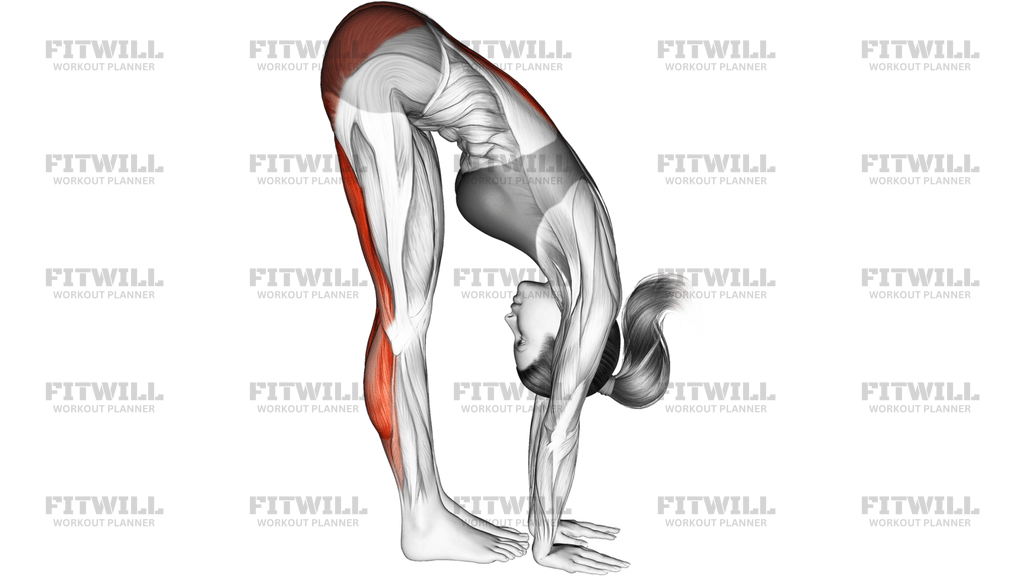
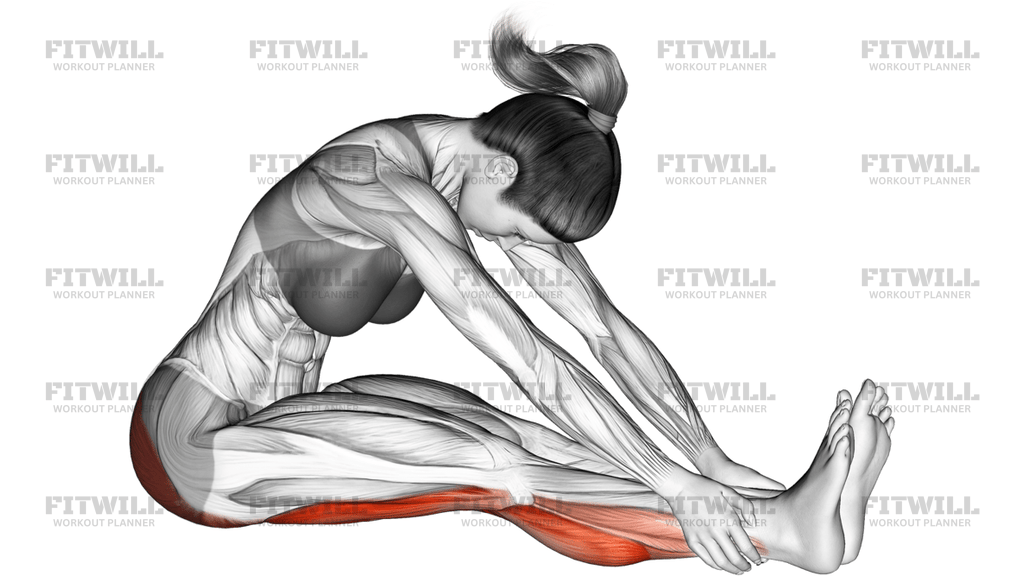
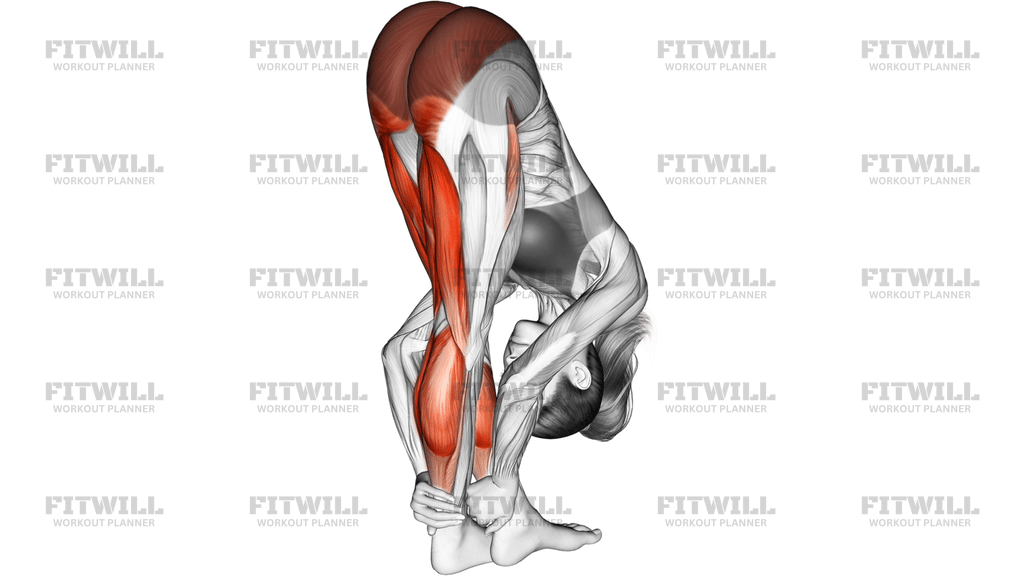
Standing Reach Down Hamstring Stretch is a standing forward-fold stretch for the back of the thighs. The image shows a tall fold with the hips sent back, the torso draped over the legs, and both hands reaching toward the floor. That shape is the point of the exercise: it lengthens the hamstrings while also asking the calves, glutes, and back to stay organized enough to keep the stretch smooth instead of turning it into a sloppy toe touch.
This movement is most useful when you want to open the posterior chain without getting down on the floor. It is a simple bodyweight drill, but the setup matters. If the feet are planted evenly, the hinge starts from the hips, and the spine stays long before relaxing into the fold, the stretch lands where it should. If you round aggressively from the lower back or bounce to reach lower, the exercise becomes more about compensating than about actually improving hamstring length.
A good repetition starts tall, then folds forward with control until the hands contact the floor, shins, ankles, or feet depending on flexibility. The knees can stay mostly straight, but a small soft bend is fine if it keeps the stretch in the hamstrings rather than pulling at the knees or low back. From there, breathe slowly and let each exhale help you settle a little deeper without forcing pain.
Use Standing Reach Down Hamstring Stretch after lifting, before lower-body work, or any time the hamstrings feel tight and you need a safe, accessible reset. It works well for people who spend a lot of time sitting, runners who need posterior-chain mobility, and anyone who wants a quick standing stretch without a bench, band, or machine. The goal is not to touch the floor at all costs. The goal is to create a clean fold, a steady breath, and a repeatable stretch that you can control from start to finish.
Treat the position as a mobility hold rather than a strength effort. Keep the neck relaxed, keep the weight balanced through the whole foot, and come out slowly so the spine and hamstrings do not get yanked back to standing. If you feel sharp pain, pinching behind the knee, or a strong pull in the low back, shorten the range and back off the depth.
Fitwill
Log Workouts, Track Progress & Build Strength.
Achieve more with Fitwill: explore over 9600 exercises with images and videos, access built-in and custom workouts, perfect for both gym and home sessions, and see real results.
Start your journey. Download today!




Instructions
- Stand on the mat with your feet about hip-width apart and your weight spread evenly across both feet.
- Keep a soft bend in the knees, then hinge your hips back and start folding your torso toward your thighs.
- Slide your hands down the fronts of your legs as you lower, keeping the fold controlled instead of dropping suddenly.
- Reach your fingertips or palms toward the floor; if your range is limited, stop at your shins, ankles, or feet.
- Let your torso drape over your legs while keeping the stretch in the hamstrings rather than jamming the low back.
- Exhale slowly and settle into the deepest pain-free range you can hold without bouncing.
- Keep the neck relaxed and let the head hang naturally instead of lifting the chin.
- Hold the stretch for the desired time, then press through your feet and roll back up with control.
Tips & Tricks
- If your hands only reach your thighs, that is fine; a true hamstring stretch does not require touching the floor.
- Keep the fold coming from the hips first. If you collapse straight down through the spine, the stretch usually shifts out of the hamstrings.
- A small bend in the knees is useful when tight hamstrings start pulling behind the knees or rounding the lower back.
- Keep pressure balanced through the whole foot instead of drifting onto the heels or the toes as you reach lower.
- Slow exhales help the hamstrings relax. Quick, shallow breathing usually makes the stretch feel harsher.
- Do not bounce toward the floor. A still hold gives the tissue a better chance to lengthen safely.
- If the back of the legs feel fine but the low back feels compressed, reduce depth and re-stack the spine before folding again.
- When the stretch is done, rise slowly; standing up too fast can make you dizzy after a deep forward fold.
Frequently Asked Questions
What does Standing Reach Down Hamstring Stretch target most?
It mainly targets the hamstrings, with some stretch also reaching the calves, glutes, and lower back.
Do I need to touch the floor with both hands?
No. Reach as far as your current hamstring length allows, whether that is your thighs, shins, ankles, or the floor.
Should my knees stay completely straight?
Mostly straight is fine, but a slight knee bend is better if it keeps the stretch in the hamstrings and out of the low back.
What is the most common mistake with this floor reach?
Rounding hard from the spine or bouncing lower instead of hinging from the hips and holding a controlled stretch.
Can beginners do this hamstring stretch safely?
Yes. Beginners should shorten the range, keep a soft knee bend, and stop before the low back or knees feel strained.
Why are my calves tight too?
A forward fold that reaches toward the floor loads the whole back side of the leg, so the calves often stretch along with the hamstrings.
When should I use this stretch?
It works well after training, between lower-body sets, or anytime you need a quick standing hamstring mobility reset.
What should I do if I feel it more in my lower back than my hamstrings?
Reduce the depth, bend the knees slightly, and fold from the hips until the stretch shifts back into the hamstrings.