Standing Hip Flexor Stretch
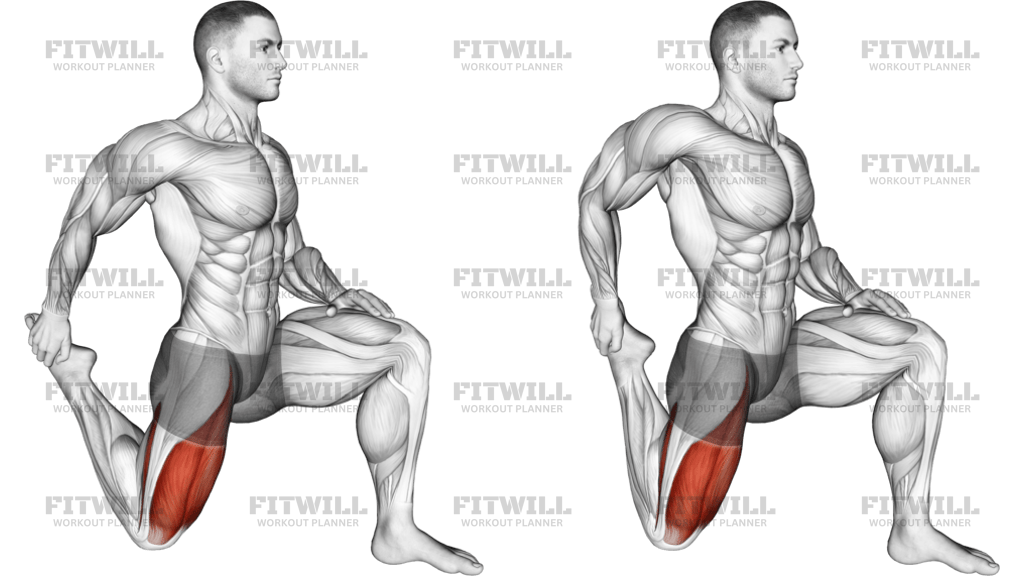
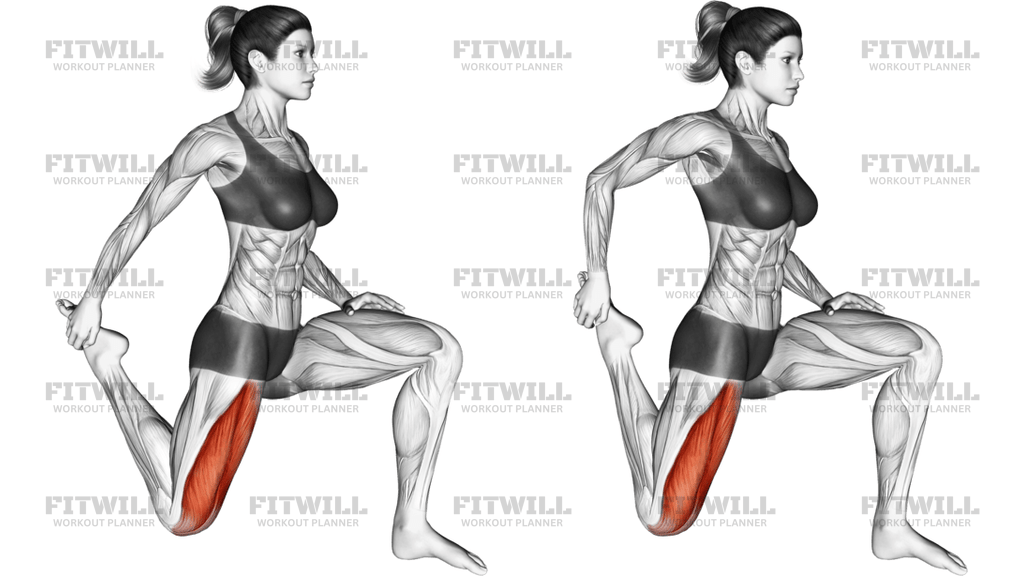
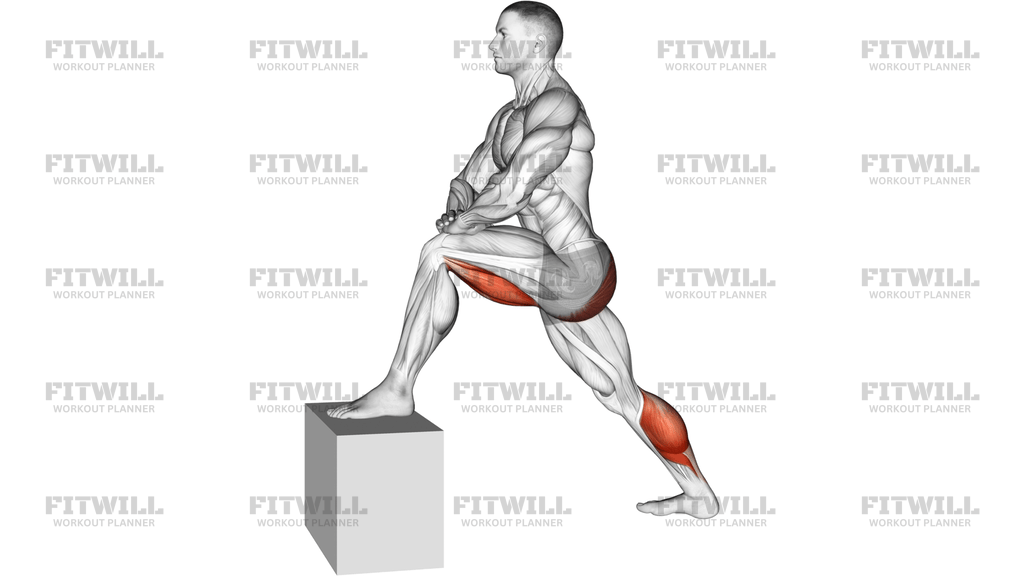
Standing Hip Flexor Stretch is a split-stance mobility drill that opens the front of the trailing hip and upper thigh. In the image, the front foot is elevated on a low box, the back leg stays long behind the body, and the torso remains upright so the stretch lands in the hip rather than the lower back. It is a bodyweight stretch, not a strength lift, but the quality of the setup still determines whether you feel the right tissues.
This position is useful for the iliopsoas, rectus femoris, and the tissues that tend to tighten when you sit, sprint, or spend a lot of time in deep hip flexion. The rear leg is the one being stretched, while the front leg and trunk help you stay balanced. Keeping the pelvis square and the ribs stacked over the hips matters more than forcing a deeper lunge, because a sloppy arch usually turns the drill into a low-back bend instead of a hip opening stretch.
A good rep starts by setting the front foot firmly on the step or box and placing the back foot far enough behind you that you can keep both hips pointed forward. From there, brace lightly, squeeze the glute of the trailing leg, and tuck the pelvis just enough to take the arch out of the lower back. That small pelvic adjustment is what shifts the tension into the front of the rear hip and thigh. If needed, rest the hands on the front thigh for balance, but do not dump your bodyweight onto the knee joint.
As you settle into the stretch, move only until you feel a strong but controllable pull. Breathe out slowly to help the pelvis stay tucked, then hold the end range without bouncing or leaning forward. The stretch should feel steady and even, not pinchy in the front knee and not sharp in the low back. When the hold is finished, step out of it gradually and reset before changing sides.
This stretch fits well before lower-body training as a warmup, after running, or in a cooldown when the hips feel stiff from prolonged sitting. Use it when you want more hip extension for squats, lunges, split squats, sprint mechanics, or everyday stride length. If the front foot elevation makes the position too aggressive, lower the front foot to the floor and keep the same pelvis and breathing cues until the range feels clean.
[ Workout Log & Planner ]
Put your next workout in Fitwill
Keep your plan and training log ready when you are.


Instructions
- Place the front foot on a low box or step and step the other leg long behind you, keeping both feet pointed mostly forward.
- Square your hips and chest to the front, then set your balance with most of your weight centered over the front leg.
- Keep the back heel lifted and the rear leg straight enough to feel a stretch through the front of the hip and thigh.
- Rest your hands on the front thigh if needed, but keep the torso tall instead of folding over the leg.
- Brace lightly and tuck the pelvis so the lower back stays neutral rather than arched.
- Squeeze the glute on the trailing side to increase the hip-opening effect.
- Shift the hips forward a small amount until you feel a strong, steady stretch in the front of the rear hip.
- Breathe out slowly and hold the end position for the prescribed time without bouncing or forcing depth.
- Step back out of the stretch with control, then switch sides and repeat.
Tips & Tricks
- The stretch should land in the front of the rear hip and upper thigh, not in the lower back.
- If you feel pinching in the front knee, shorten the stance or reduce the step height.
- Keep the pelvis square; letting the back hip open outward usually turns the stretch into a twist.
- A small tuck of the pelvis is enough; over-tucking can make the stretch feel cramped instead of open.
- Use the exhale to soften the rib flare and keep the torso stacked over the hips.
- Do not dump bodyweight onto the front knee or lean heavily on the front thigh with straight arms.
- Lower the front foot to the floor if the elevated version feels too aggressive.
- Hold the stretch still rather than pulsing, because bouncing tends to shift tension away from the hip flexor.
- If the rear leg cramp starts in the quad, back off slightly and re-set the glute squeeze.
Frequently Asked Questions
What does Standing Hip Flexor Stretch target?
It mainly targets the hip flexors and upper quadriceps of the trailing leg, especially the iliopsoas and rectus femoris.
Why is the front foot elevated in the image?
The small box opens the hip angle and makes it easier to keep the torso upright while the rear hip gets the stretch.
Should I keep my back leg straight or bent?
Keep it long enough to feel the front of the hip and thigh, but do not lock it so hard that the pelvis tips forward.
Where should I feel the stretch most?
You should feel it in the front of the rear hip and upper thigh, not in the lumbar spine or the front knee.
Can I do this on the floor instead of a box?
Yes. The floor version is usually easier and is a good place to start if the elevated setup feels too intense.
Why do I need to squeeze the glute on the back leg?
That glute squeeze helps tuck the pelvis and keeps the stretch on the hip flexor instead of letting the lower back arch.
Is this better before or after a workout?
It works well in both places: use it in a warmup to open the hips, or after training to settle tight hip flexors down.
What is the most common mistake with this stretch?
The biggest mistake is leaning forward and arching the low back, which reduces the hip-flexor stretch and can irritate the spine.