Wall Flexors Stretch
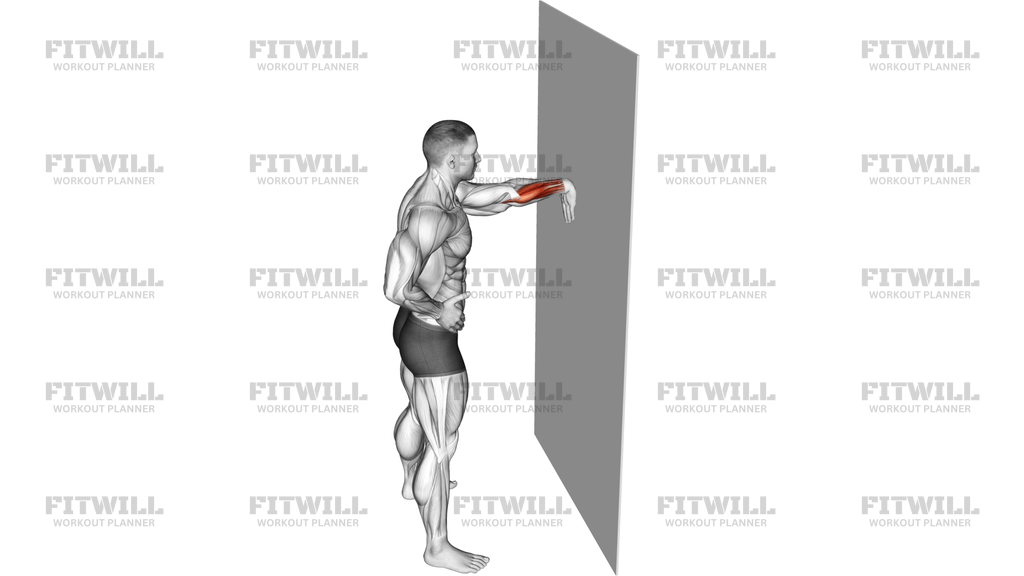
Wall Flexors Stretch is a standing wall-assisted forearm stretch that targets the wrist and finger flexors through a long, controlled hold. The wall gives you a fixed surface to press against, which makes it easier to keep the elbow straight and create a consistent stretch through the underside of the forearm instead of turning the movement into a shoulder shrug or a sloppy wrist bend.
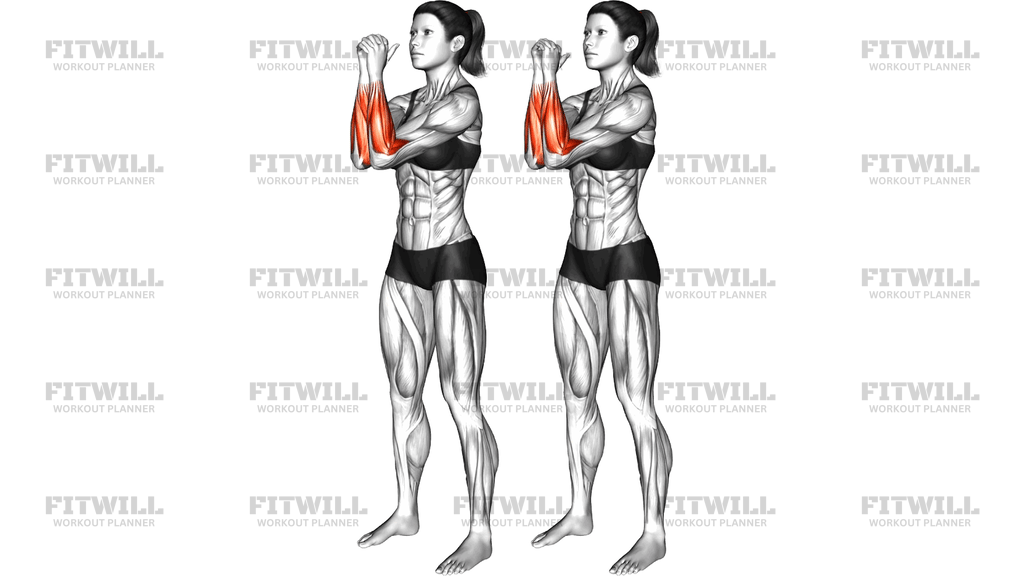
This movement is useful when the forearms feel tight from gripping, pulling, pressing, climbing, racket sports, or desk work. It is not a strength exercise in the usual sense; its value comes from creating a calm, repeatable stretch at the wrist, elbow, and forearm while the rest of the body stays organized. The image shows the arm reaching straight out to the wall with the hand positioned so the wrist can open up against the surface while the forearm stays long.
The setup matters because a small change in hand angle can completely change where you feel the stretch. Keep the elbow straight, keep the shoulder down, and use the wall to anchor the hand while the torso leans just far enough away to load the forearm. If the elbow bends or the shoulder rolls forward, the stretch usually shifts away from the forearm and into the front of the shoulder, which defeats the point of the exercise.
Perform the stretch slowly and breathe into the end range instead of forcing it. You should feel a strong but manageable pull through the flexor side of the forearm, not a sharp sensation in the wrist joint, hand, or elbow. This stretch works well after upper-body training, between gripping sets, or as part of a mobility block when the goal is to restore comfortable wrist extension and reduce forearm stiffness before more loading.
Fitwill
Log Workouts, Track Progress & Build Strength.
Achieve more with Fitwill: explore over 9600 exercises with images and videos, access built-in and custom workouts, perfect for both gym and home sessions, and see real results.
Start your journey. Download today!




Instructions
- Stand side-on to a wall with your feet about hip-width apart and place the working hand on the wall at shoulder height.
- Keep the elbow straight and position the hand so the wrist can open against the wall, with the forearm lined up in front of the shoulder.
- Relax the shoulder away from your ear and keep the neck long before you move deeper into the stretch.
- Gently turn or slide the hand into the angle that increases the pull along the underside of the forearm.
- Lean your body away from the wall just enough to feel a clear stretch through the wrist and finger flexors.
- Hold the end position with steady breathing and a soft, braced torso so the stretch stays in the forearm instead of the shoulder.
- Keep the elbow locked out but not jammed, and avoid bouncing or twisting through the wrist.
- Come out of the stretch slowly, then repeat on the other side if both forearms need work.
Tips & Tricks
- A small change in hand height can change the stretch a lot, so start at shoulder height before experimenting with a slightly lower or higher position.
- Keep the shoulder blade settled down instead of shrugging up, or the load will move out of the forearm and into the upper trap.
- If the stretch lands in the wrist joint, ease off and reduce the lean until the sensation returns to the forearm muscle belly.
- Do not let the elbow bend to escape the stretch; a straight elbow keeps the flexor chain lengthened.
- Slow nasal breathing or long exhales help the forearm relax and let the wall do the work.
- Use the opposite hand lightly on the hip or ribs if you need feedback to keep the torso from rotating.
- If your fingers cramp, back out of the range and re-enter more gradually rather than forcing the hand flatter.
- A short hold with a clean line from shoulder to fingertips is more useful than hanging in a painful end range.
Frequently Asked Questions
What does Wall Flexors Stretch primarily target?
It mainly targets the wrist and finger flexors on the underside of the forearm.
Do I need to press hard into the wall for this stretch?
No. Use the wall as a stable anchor and lean only far enough to feel a controlled forearm stretch.
Where should I feel the stretch?
You should feel it through the palm-side forearm, not as a sharp pinch in the wrist or elbow.
Why is the elbow kept straight?
A straight elbow keeps the flexor chain lengthened and prevents the stretch from collapsing into the arm position.
Can I use this after heavy pulling or pressing work?
Yes. It is commonly used after grip-heavy training to restore forearm length and reduce stiffness.
What if I feel it more in my shoulder than my forearm?
Drop the shoulder, reduce the lean, and keep the hand and elbow lined up so the stretch stays in the forearm.
Is this suitable for beginners?
Yes, as long as the lean is gentle and the wrist angle is comfortable.
How long should I hold the stretch?
Hold it long enough to let the forearm relax, usually in short, controlled holds rather than aggressive bouncing.