Flexion Finger Stretch
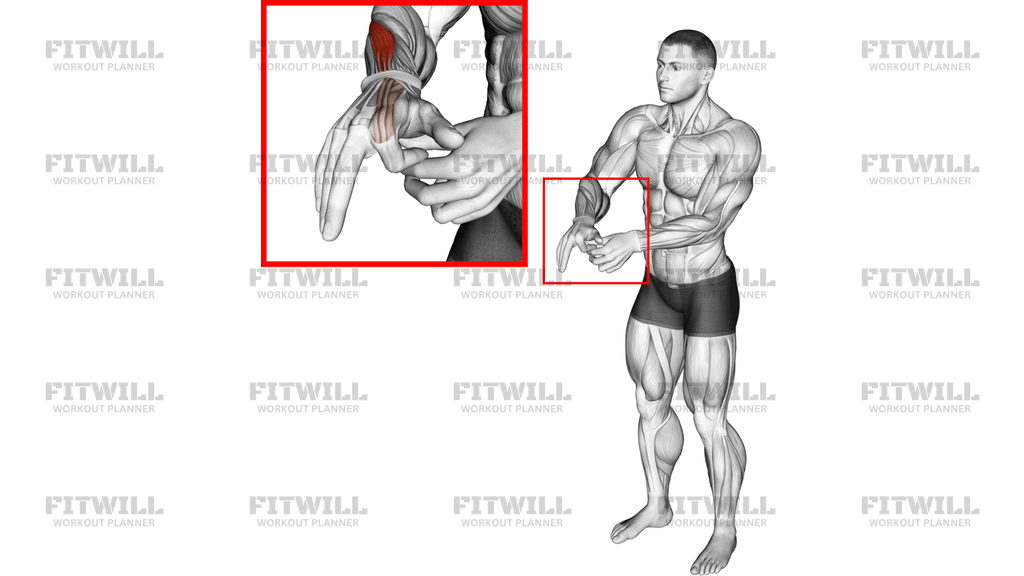
Flexion Finger Stretch is a standing hand and forearm mobility drill that gently lengthens the finger flexors, palm, and the tissues on the underside of the forearm. One hand assists the other so the stretch is controlled by pressure and position, not by forcing the fingers into an extreme range.
This movement is useful when the hands have been doing a lot of gripping, typing, climbing, racket work, or pulling. The fingers, wrist, elbow, and shoulder all influence where the stretch is felt, so small changes in arm angle can shift the tension from the fingertips into the palm or farther up the forearm. That is why the setup matters more than trying to chase a bigger stretch.
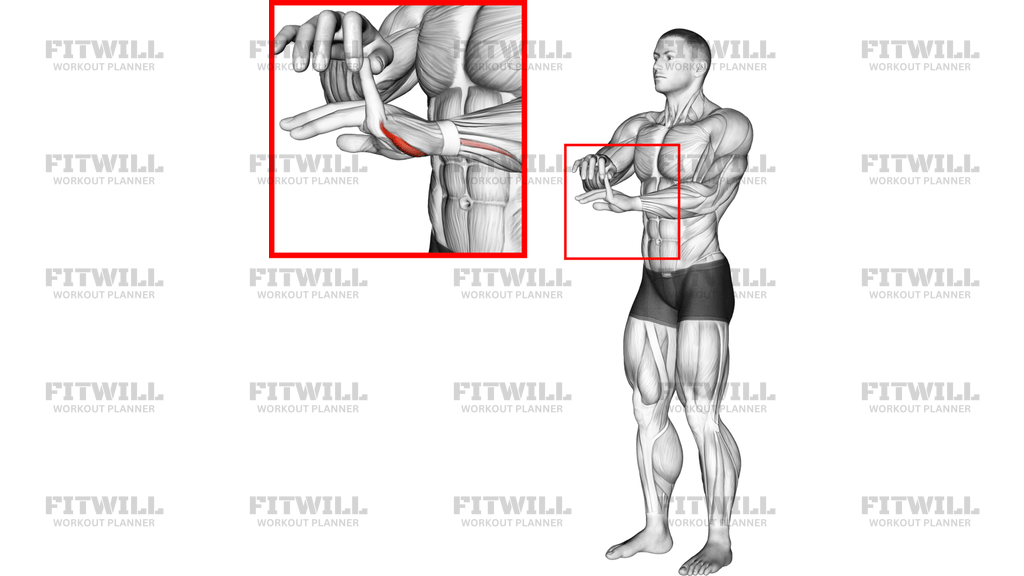
The image shows the working arm held in front of the body while the opposite hand applies a gentle assist to the fingers. Keep the elbow long, the shoulder relaxed, and the wrist steady so the line of tension stays smooth. The goal is a calm pull through the hand and forearm, not a sharp crank on the joints. If the stretch turns into pain, reduce the pressure immediately.
Move into the end range slowly and pause long enough to breathe without bracing. The best version of this exercise feels like a sustained lengthening in the palm side of the forearm, with the hand staying open and the non-working muscles staying quiet. Bounce-free holds and a soft grip from the assisting hand will usually give a better result than forcing the position harder.
Flexion Finger Stretch fits well in a warm-up, cooldown, mobility block, or recovery session when the goal is to restore hand comfort and wrist freedom. It can help the fingers feel less bound up before training and less stiff afterward, but it should never be used to push through numbness, tingling, or a joint pinch. Clean setup, controlled pressure, and calm breathing matter more than range.
[ Workout Log & Planner ]
Put your next workout in Fitwill
Keep your plan and training log ready when you are.


Instructions
- Stand tall with the working arm in front of you and the elbow straight but not locked.
- Open the fingers and let the palm face slightly down or inward, matching the hand position shown in the image.
- Reach the opposite hand over the fingers and place it where it can guide the stretch gently.
- Keep the shoulder down and the wrist long before adding pressure.
- Use the assisting hand to ease the fingers back until you feel a stretch through the palm and forearm.
- Hold the end range without bouncing and breathe slowly through the stretch.
- Back off a few degrees if the pull shifts into the finger joints or becomes sharp.
- Release the hand slowly, shake it out, and repeat on the other side.
Tips & Tricks
- Keep the elbow long enough to tension the forearm, but do not drive it into a hard lockout.
- A light assist from the opposite hand usually stretches the finger flexors better than a hard yank.
- The stretch should run along the palm side of the forearm; if it feels like a joint pinch, reduce the angle.
- Let the shoulder stay down so the position does not turn into a neck shrug.
- Warm hands respond better, so this works well after rowing, gripping, or general upper-body warm-up work.
- Small changes in hand height move the stretch: higher tends to reach more forearm, lower often feels more in the fingers.
- Keep the wrist quiet and avoid folding it aggressively just to create more range.
- Stop immediately if you feel tingling, numbness, or a sharp snap in the thumb or fingers.
Frequently Asked Questions
What does Flexion Finger Stretch target?
It mainly targets the finger flexors, palm, and the underside of the forearm.
Is this a strength exercise or a mobility drill?
It is a mobility and recovery drill, not a load-building strength movement.
Should my elbow stay straight?
A long elbow usually gives a cleaner stretch through the forearm and fingers, but do not force the joint into pain.
Where should I feel the stretch?
You should feel a controlled pull through the palm side of the hand and into the forearm, not a pinch in the joints.
Can beginners do this exercise?
Yes, beginners can do it as long as the pressure stays gentle and the stretch remains pain-free.
How long should I hold each side?
A 15 to 30 second hold is usually enough, or long enough to breathe calmly through the position.
When is this stretch most useful?
It works well after gripping work, climbing, racket sports, pulling sessions, or long periods of typing.
What should I avoid with this stretch?
Do not force the fingers back aggressively, bounce at the end range, or keep stretching through numbness or sharp pain.