Hip Abduction
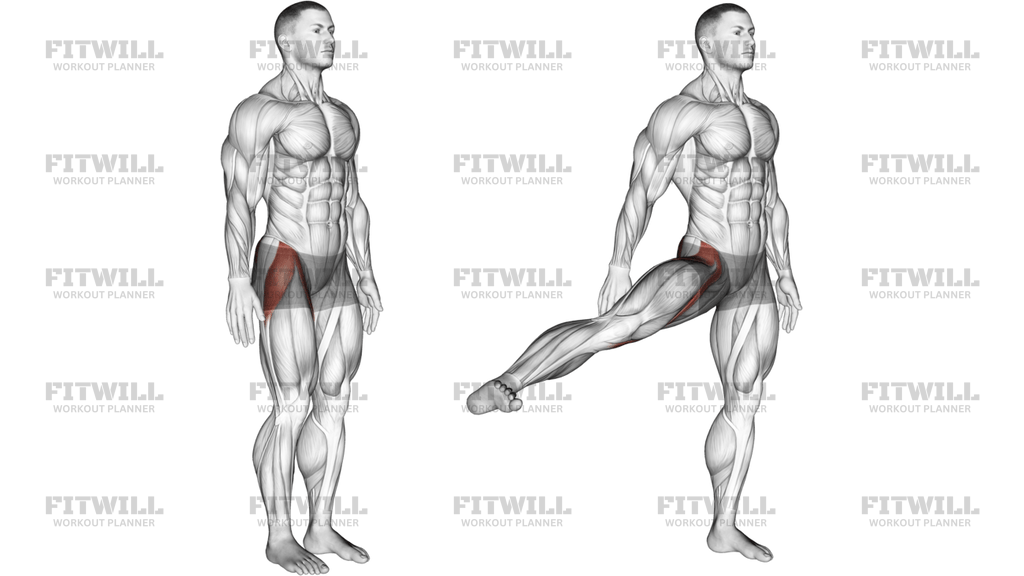
Standing Hip Abduction is a bodyweight or lightly loaded lower-body exercise that trains the hip to move the free leg away from the midline while the standing leg and trunk stay organized. It is commonly used to build control around the pelvis, strengthen the outer hip, and improve single-leg stability for walking, running, cutting, and other activities that depend on clean side-to-side control.
The visible setup matters because this movement is easy to turn into a lean, swing, or twist. A good repetition starts with the standing foot planted firmly, the supporting knee soft but stable, and the pelvis squared to the front. The torso should stay tall while the moving leg lifts out to the side without hiking the hip or rotating the body to fake extra range.
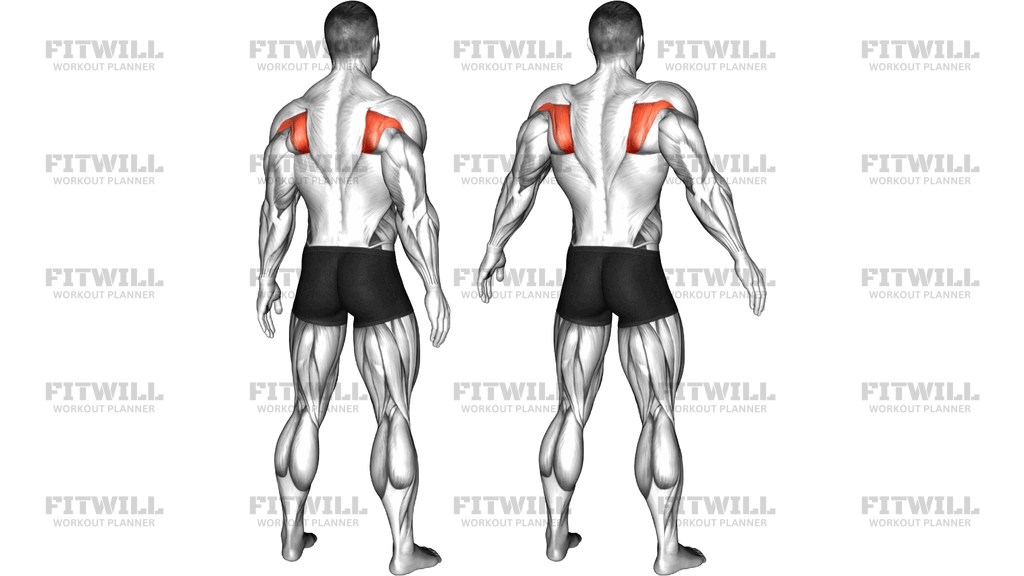
This exercise is especially useful for targeting the glute medius and glute minimus, with the upper outer glute doing most of the work and the core helping keep the rib cage and pelvis stacked. The support leg, ankle, and trunk all contribute to balance, but the training effect comes from isolating the hip joint and keeping the pelvis level through each rep.
Perform the lift smoothly, pause briefly at the top, and lower the leg under control until you are back at the starting position. The useful range is the one you can repeat without tipping the trunk or turning the toes outward to cheat the motion. If balance is the limiting factor, hold a wall or post with one hand and keep the movement strict instead of trying to force a larger swing.
Use Hip Abduction as an accessory drill, activation movement, or lower-body control exercise when you want more stable hips and cleaner single-leg mechanics. It works well before squats, lunges, runs, or field work, and it can also be loaded lightly with ankle weights or a cable if the base pattern is already solid. The safest version is the one that keeps the pelvis steady, the stance leg quiet, and the moving leg controlled from start to finish.
[ Workout Log & Planner ]
Put your next workout in Fitwill
Keep your plan and training log ready when you are.


Instructions
- Stand tall on one leg with your weight centered over the whole foot and your pelvis facing straight ahead.
- Keep a slight bend in the support knee and let the free leg hang long beside the stance leg.
- Brace lightly through your midsection so your torso does not lean when the leg starts to move.
- Lift the free leg out to the side in a smooth arc without turning the toes or opening the hips.
- Stop the lift when the pelvis starts to tip or the trunk wants to sway.
- Pause for a moment at the top and feel the outer hip on the standing side stay active.
- Lower the leg back toward the start under control instead of letting it drop.
- Reset your balance before the next repetition and repeat for the planned set.
Tips & Tricks
- Keep the standing hip stacked over the ankle instead of drifting to the side as the free leg lifts.
- Think about moving the thigh out, not swinging the whole pelvis away from the support leg.
- A smaller, cleaner range is better than a high kick that forces the torso to lean.
- Point the lifted toes mostly forward so the motion stays in the hip instead of turning into hip flexion.
- Use one hand on a wall or post if balance is limiting the quality of the hip work.
- Exhale as the leg lifts and inhale as it lowers to keep the trunk from bracing too hard.
- Pause at the top only if you can hold the pelvis level without wobbling.
- If you feel the low back more than the outer hip, reduce the range and slow the tempo.
Frequently Asked Questions
What muscle does Hip Abduction target most?
The outer hip, especially the glute medius and glute minimus, does most of the work.
Can beginners perform this exercise?
Yes. Beginners usually do best with a wall or post for balance and a small, controlled range.
How heavy should I train this movement?
If you add ankle weights or a cable, choose a load that lets you keep the pelvis level and the torso still.
What is a common mistake to avoid?
The most common mistake is leaning the torso or hiking the hip to make the leg look higher than it really is.
Should I keep the toes pointed forward or turned out?
Forward is usually best for this version because it keeps the lift focused on hip abduction instead of rotation.
What should I hold onto if balance is an issue?
A wall, rack, or sturdy post works well and lets you focus on the outer hip instead of fighting to stay upright.
Where should I feel the working side?
You should feel the standing-side outer hip working hard while the stance foot and trunk stay stable.
Can I use this before squats or running?
Yes, it is often used as an activation drill before lower-body training, running, or change-of-direction work.
What if I feel my low back instead of my hip?
Shorten the range, slow the lowering phase, and keep the ribs stacked over the pelvis so the hip stays in control.