Adduction Hand With Elbow Extended Stretch
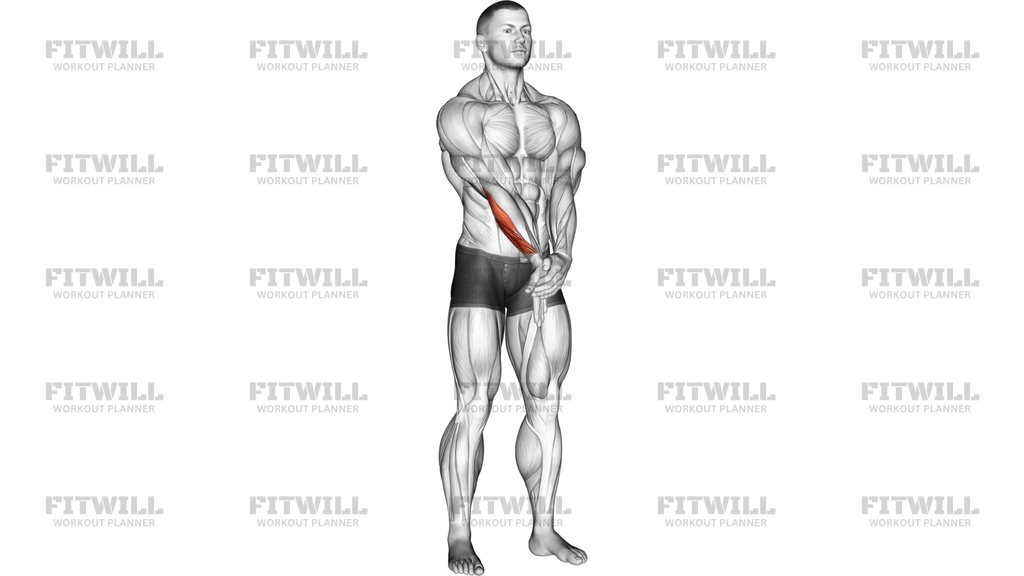
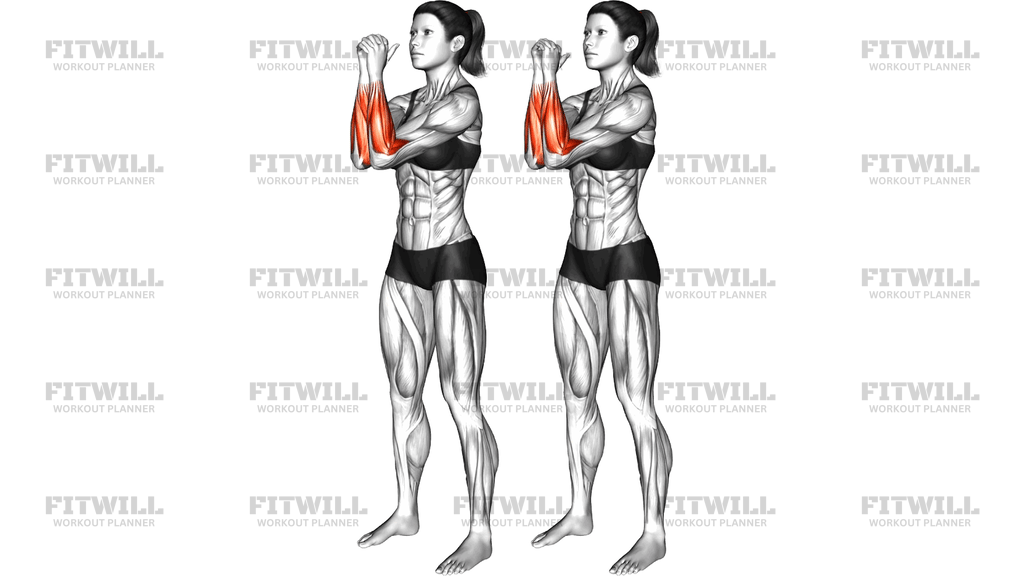
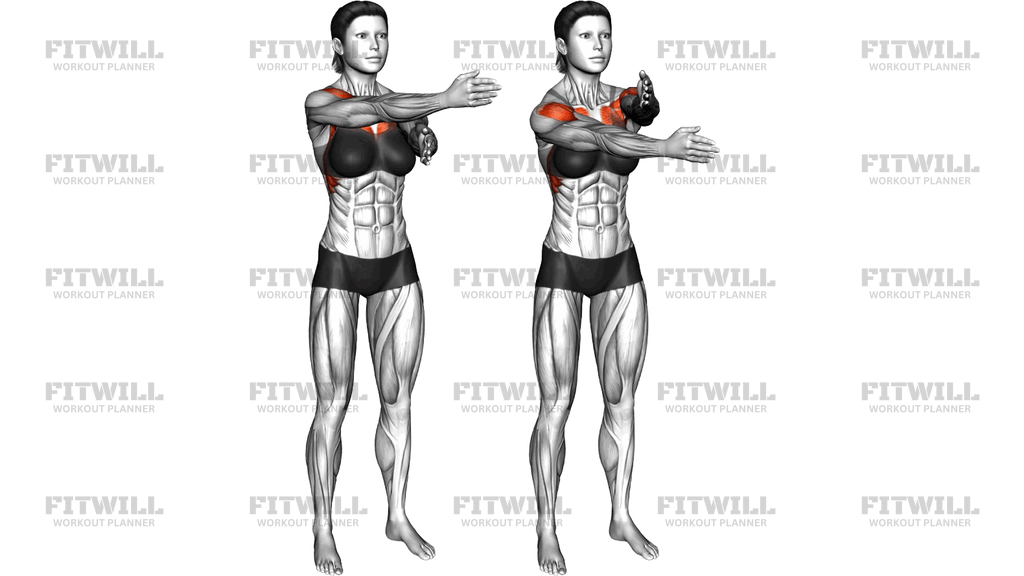
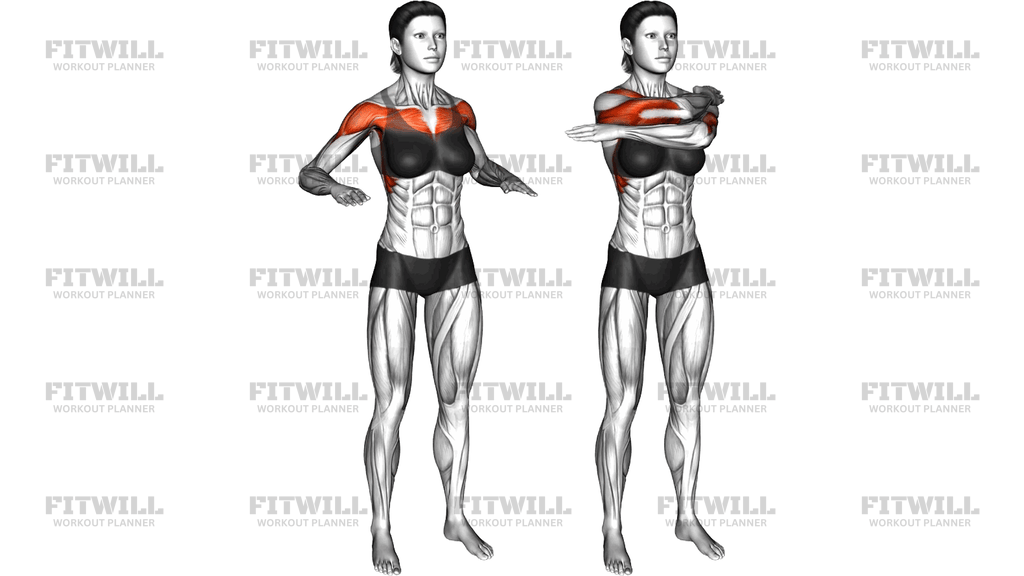
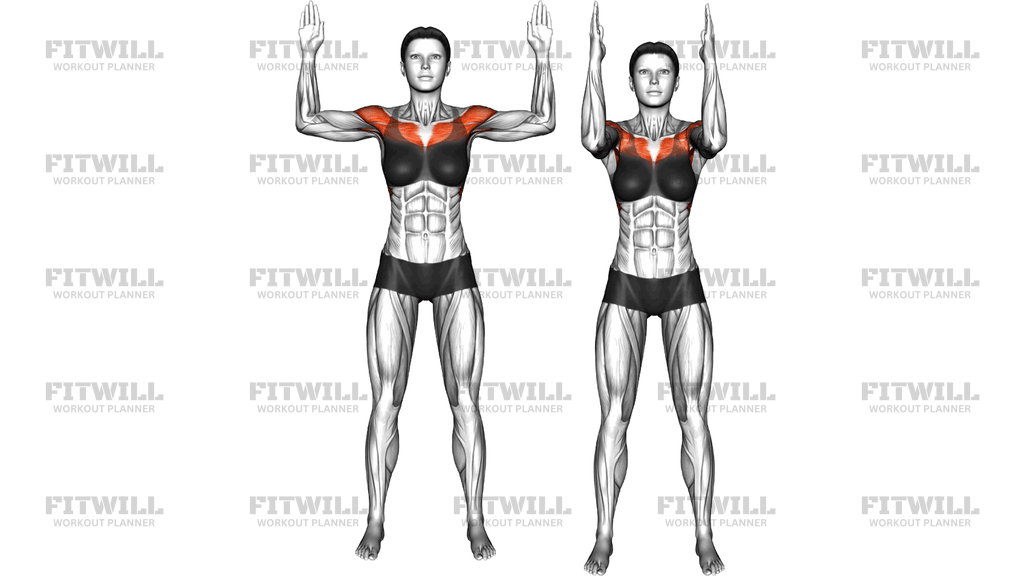
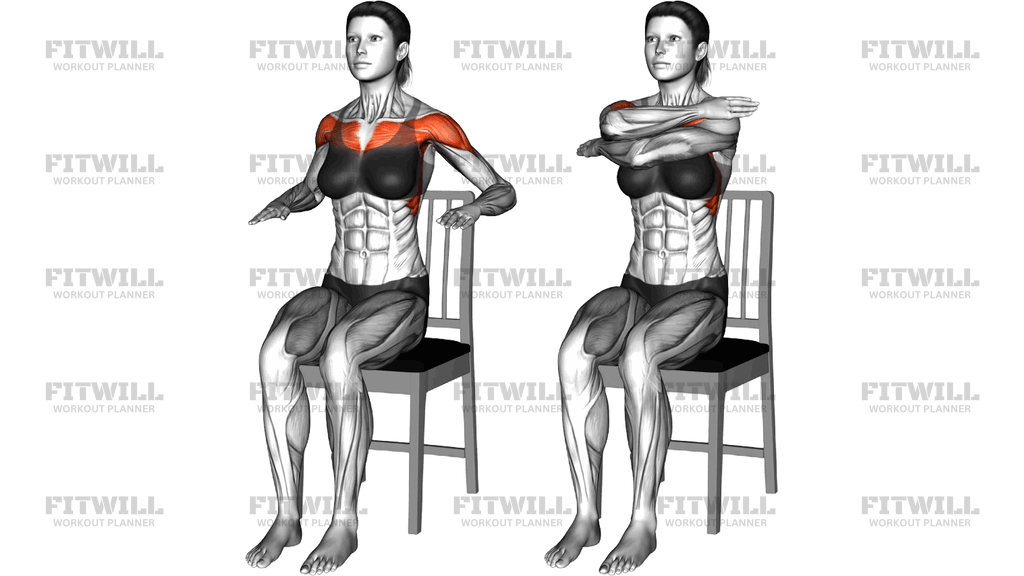
Adduction Hand With Elbow Extended Stretch is a standing forearm and wrist stretch where one arm stays straight while the opposite hand gently draws the wrist and fingers inward across the body. The image shows a tall, upright setup with the elbow extended, the shoulders relaxed, and the working hand controlled from the front of the body. That long-arm position matters because it lets the stretch travel through the forearm tissues without turning into a bent-elbow shrug or a rushed wrist bend.
This movement is useful when the forearms feel tight after heavy gripping, pulling, pressing, climbing, racket work, or long periods of keyboard and mouse use. It can also fit into a warm-up when the wrists feel stiff and you want to restore a little range before training. The main sensation should stay in the forearm and wrist line, with the shoulder staying quiet and the torso stacked rather than twisting to chase more range.
Set the feet on a mat or flat floor, stand tall, and keep the ribs and pelvis organized before you start the pull. One arm hangs straight in front of the thigh with the elbow long, and the other hand cups the fingers or palm so the stretch can be guided smoothly. From there, gently draw the working hand toward the midline and slightly across the front of the body until you feel a mild stretch. The goal is a controlled line of tension, not a hard wrench at the wrist.
As you hold the stretch, breathe slowly and keep the neck, shoulders, and jaw relaxed. If the shoulder rises, the elbow bends, or the wrist pinches sharply, reduce the pull and reset the position. A clean rep is one where the arm stays long, the movement feels smooth, and the stretch is easy to repeat on both sides.
Use this exercise as a low-load mobility drill or cooldown movement when you want to leave the forearms feeling looser, not irritated. Beginners can do it safely with a very light pull and short holds. More range is only useful if it stays pain-free and controlled, so stop short of tingling, joint pinching, or a forced end range.
[ Workout Log & Planner ]
Put your next workout in Fitwill
Keep your plan and training log ready when you are.


Instructions
- Stand on a flat floor or mat with your feet about hip-width apart and your torso tall.
- Let one arm hang in front of the thigh with the elbow fully extended and the shoulder relaxed.
- Use the opposite hand to grasp the fingers or palm of the working hand.
- Keep the working wrist relaxed so the stretch can travel through the forearm instead of the hand.
- Gently draw the hand inward and slightly across the front of the body until you feel a mild forearm stretch.
- Keep the elbow long and avoid shrugging the shoulder or twisting the trunk to create extra range.
- Hold the end position with slow nasal or diaphragmatic breaths for a brief, controlled stretch.
- Ease the hand back to neutral without bouncing or snapping it upward.
- Repeat on the other side and match the same amount of pull and hold time.
Tips & Tricks
- Hold the fingers or palm close enough to the wrist that you can guide the stretch smoothly instead of yanking on the hand.
- If the sensation jumps into the wrist joint, soften the angle and reduce how far you pull across the body.
- Keep the shoulder down; a raised shoulder usually means you are losing the forearm focus.
- The elbow should stay straight, but it should never feel jammed or locked aggressively.
- A slight turn of the forearm can change where the stretch lands, so use the hand position that feels clearest in the forearm.
- Do not twist the torso to fake more range; the stretch should come from the arm position, not body rotation.
- Use short holds and repeatable reps if the forearm is sensitive from gripping work.
- Stop if you feel tingling, numbness, or a sharp pinch near the wrist or elbow.
Frequently Asked Questions
What does Adduction Hand With Elbow Extended Stretch target most?
It mainly stretches the forearm and wrist tissues while the shoulder stays quiet and the elbow remains straight.
Why does the elbow stay extended in this stretch?
Keeping the elbow long helps isolate the forearm line and prevents the movement from collapsing into a bent-arm variation.
Should I pull on the fingers or the palm?
Either can work, but grasping the fingers usually gives you better control over the line of pull.
How hard should the opposite hand pull?
Only pull enough to feel a mild to moderate stretch. If you have to force it, the stretch is too aggressive.
Do I need a mat for this exercise?
No, but a mat can make the standing setup more comfortable if you are using this as part of a mobility session.
What is a common mistake with the hand and wrist position?
The most common mistake is bending the wrist too sharply and turning the stretch into joint pressure instead of forearm lengthening.
Can I use this after heavy lifting?
Yes, it fits well after grip-heavy work, as long as you keep the pull light and the stretch pain-free.
What should I do if I feel tingling?
Back off immediately or stop the stretch. Tingling usually means the position is too intense or too far into a nerve-sensitive angle.
How do I make the stretch more effective without forcing it?
Keep the torso still, keep the elbow straight, and use a slow exhale as you settle into a small but repeatable range.