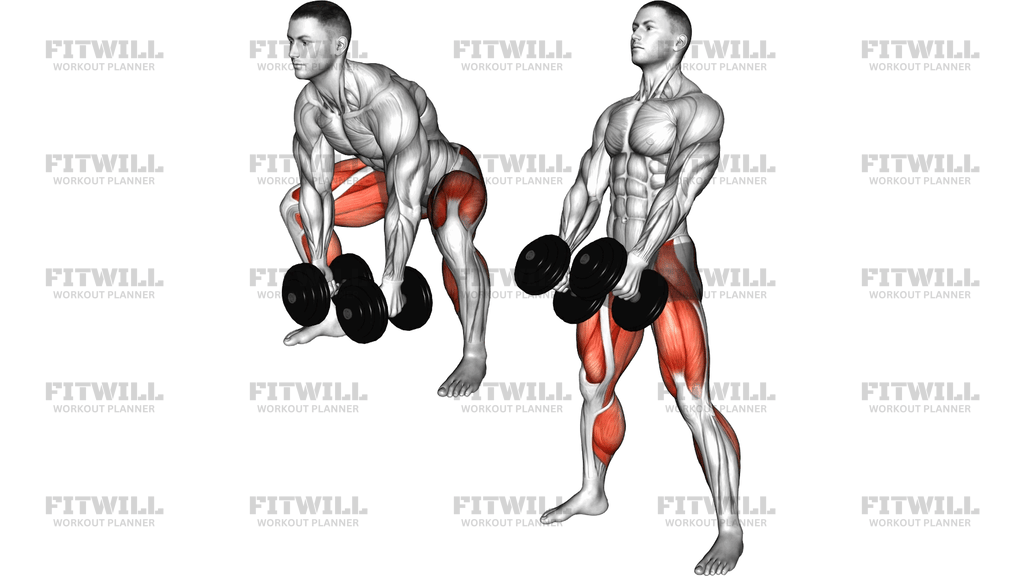
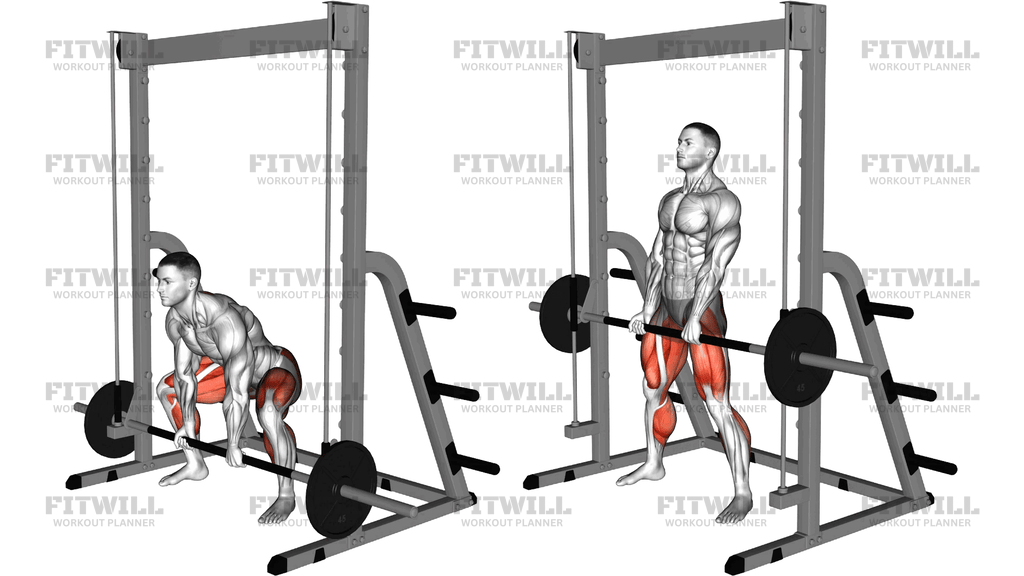
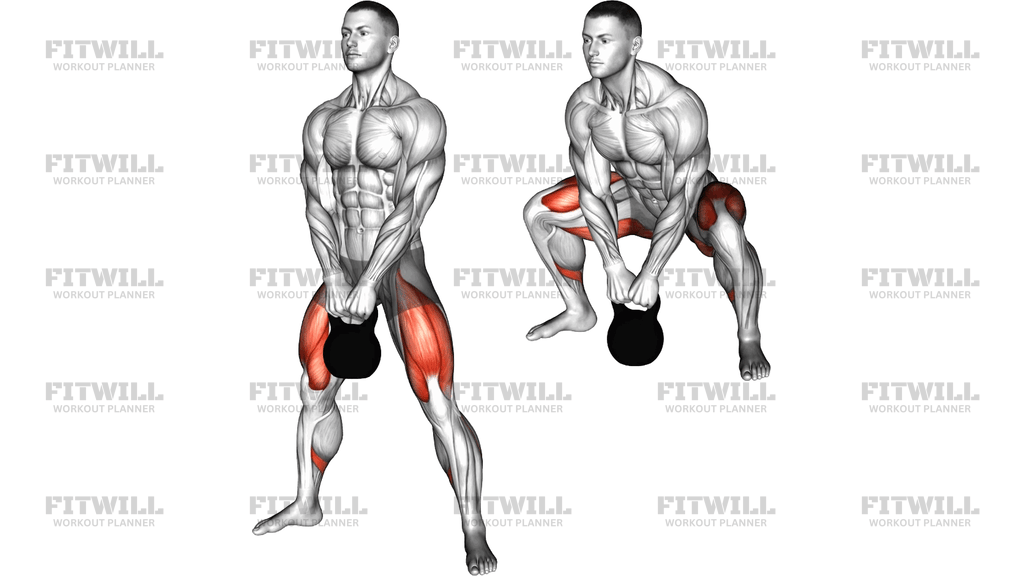
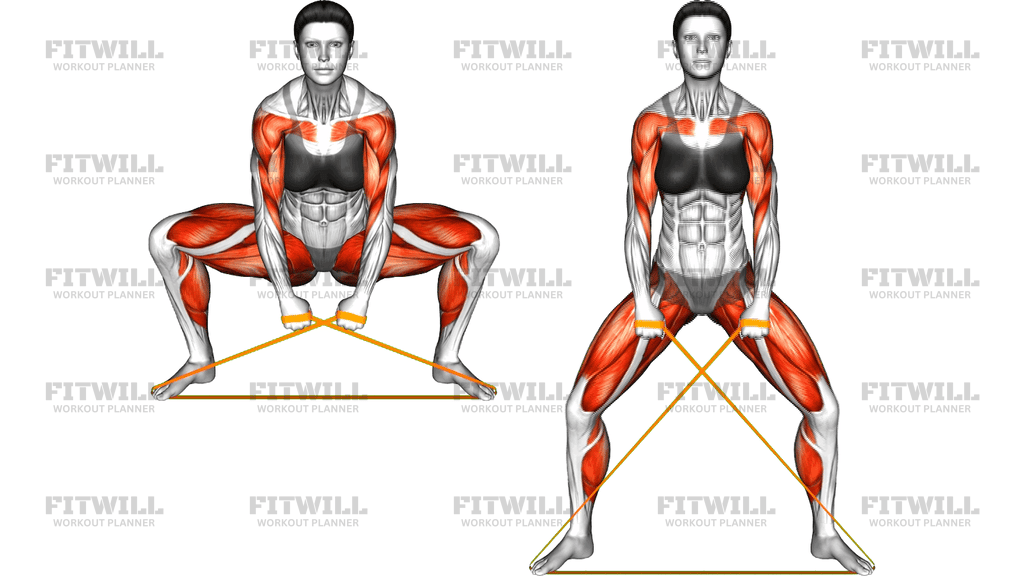
Barbell Bench Squat
Barbell Bench Squat is a barbell squat variation that uses a bench behind you as a depth target. It trains the quads hard while also asking the glutes, adductors, trunk, upper back, and feet to stay organized under a loaded squat pattern. Because the bench gives you a consistent bottom position, it is useful when you want repeatable depth, cleaner technique, and a clear target for controlled strength work.
The bench changes the exercise from a free-depth squat to a coached squat. That matters because the moment you reach the bench, you need to keep tension, stay braced, and avoid collapsing onto it. The best reps feel like a controlled sit-back to a light touch, not a rest. If the bench is too high, the movement becomes more hip-dominant; if it is too low, you may lose pelvic position or let the knees cave inward. Bench height and foot placement both shape the training effect.
Set the bar securely across the upper back, stand tall, and take a stance that lets you lower under control with the knees tracking over the toes. Descend by sitting back and down until the glutes lightly touch the bench, then drive up through the midfoot and heel to stand again. Keep the chest proud, ribs down, and torso rigid so the bar path stays over the middle of the foot instead of drifting forward.
This version of the squat is especially useful when you want to practice consistent depth, build confidence with the squat pattern, or keep the eccentric and bottom position honest. It can fit into strength, hypertrophy, or technique-focused sessions, but the load should always respect the bench target and the quality of the knee and hip path. The rep is successful when the touch is controlled, the rebound is intentional, and the ascent starts from active tension rather than from bouncing off the seat.
Use a bench height that lets you maintain your best squat position without tucking under at the bottom. If pain, knee collapse, or loss of control appears, reduce the load, shorten the depth slightly, or adjust the stance before continuing. The goal is a stable, repeatable squat to a clear target, not a forced tap on the bench.
[ Workout Log & Planner ]
Put your next workout in Fitwill
Keep your plan and training log ready when you are.


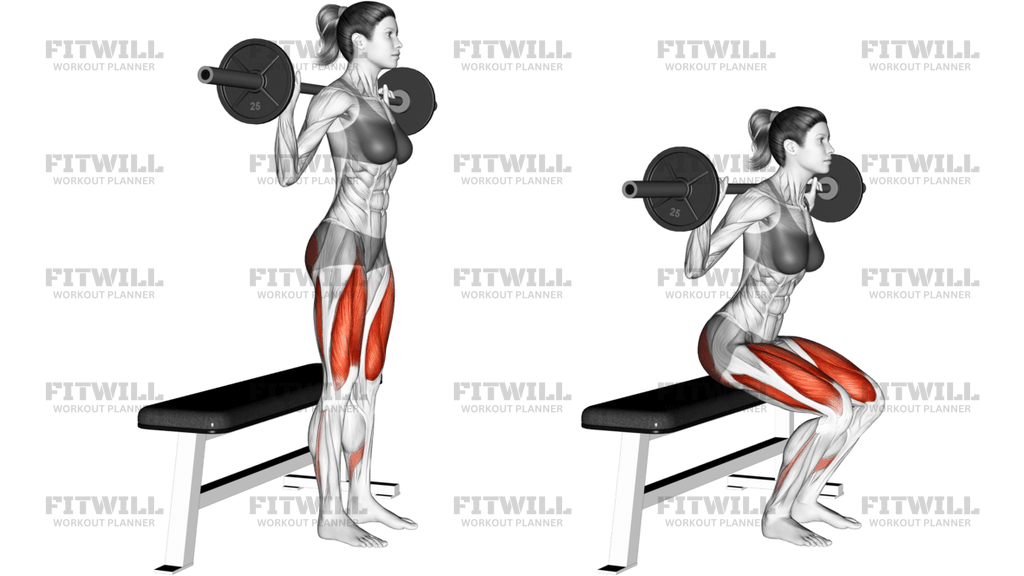
Instructions
- Place a flat bench behind you at the depth you want to hit, then step under the bar and rest it across your upper back with your feet about shoulder-width apart.
- Unrack the bar, take one or two small steps back, and set your stance so your heels stay planted and your knees can track in line with your toes.
- Brace your trunk, lift your chest, and fix your gaze forward so your torso stays firm before you begin the descent.
- Sit your hips back and down under control until your glutes lightly touch the bench.
- Keep tension in your legs and torso at the bottom instead of relaxing onto the bench.
- Drive through your midfoot and heels to stand, pushing the knees out as you rise.
- Finish each rep tall with the bar over your midfoot and your ribs stacked over your pelvis.
- Reset your breath at the top, then repeat for the planned number of repetitions before carefully reracking the bar.
Tips & Tricks
- Choose a bench height that lets you touch down without rounding your lower back at the bottom.
- Treat the bench as a target, not a place to sit and rest between reps.
- Keep the bar stable over the midfoot; if it drifts forward, the squat will usually turn into a good-morning pattern.
- Let the knees travel forward enough for a natural squat, but do not let them collapse inward on the way up.
- A slightly wider stance often makes it easier to reach the bench while keeping the torso tight.
- Lower under control so the touch point is quiet and repeatable instead of bouncing off the bench.
- Use a load that still lets you own the bottom position and drive up without hips shooting up first.
- If your low back relaxes on contact, reduce depth or load before adding weight.
Frequently Asked Questions
What muscles does the Barbell Bench Squat emphasize most?
It mainly trains the quads, with strong help from the glutes, adductors, core, and upper back.
Why use a bench instead of squatting freely?
The bench gives you a consistent depth target, which helps clean up squat mechanics and makes each rep easier to repeat.
Should I relax onto the bench at the bottom?
No. Touch the bench lightly and keep leg tension on so the ascent starts from an active squat, not a seated pause.
How high should the bench be?
Use a bench height that lets you reach depth without rounding your lower back or losing brace at the bottom.
Can beginners do the Barbell Bench Squat?
Yes, if the load is light and the bench height allows a stable, pain-free bottom position.
What is the most common form mistake?
Collapsing onto the bench or letting the knees cave inward when driving back up is the biggest problem to avoid.
Where should the bar stay during the rep?
It should stay balanced over the midfoot, with the torso braced so the bar path stays steady instead of pitching forward.
What stance usually works best?
A shoulder-width or slightly wider stance usually makes it easier to reach the bench while keeping the knees and hips aligned.