Dumbbell Front Raise
Dumbbell Front Raise is a standing shoulder exercise that trains the front of the deltoids through a straight-ahead lift from the thighs to shoulder height. With the dumbbells moving in front of the body, the exercise asks you to keep the torso still while the shoulders do the work, which makes it useful for isolating the front of the shoulder without relying on a press or a swing.
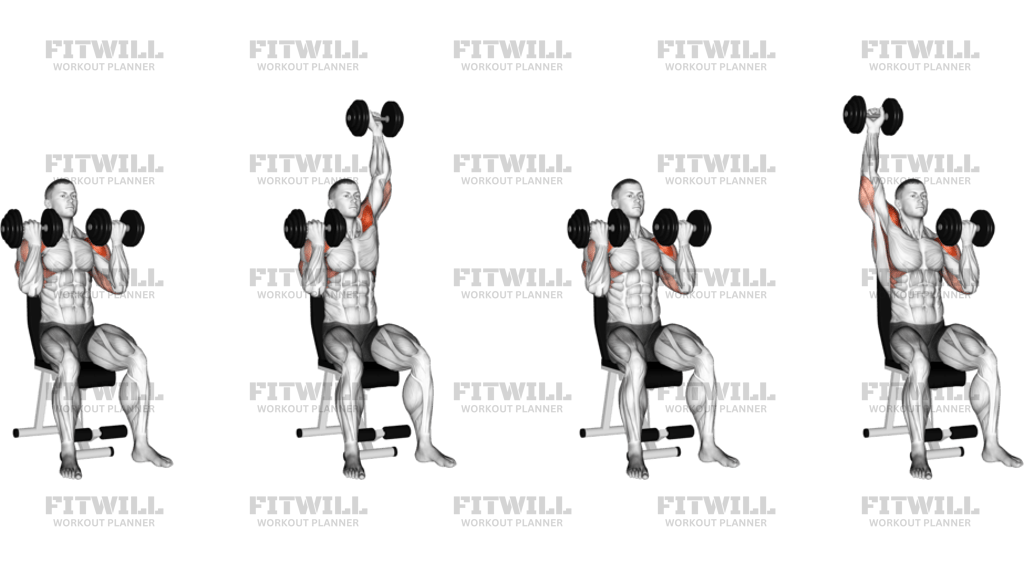
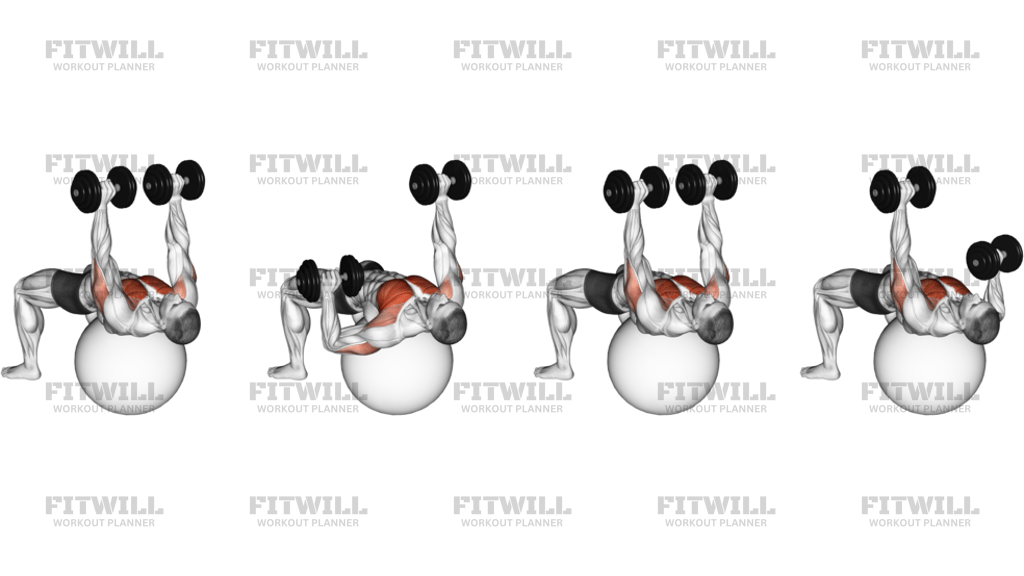
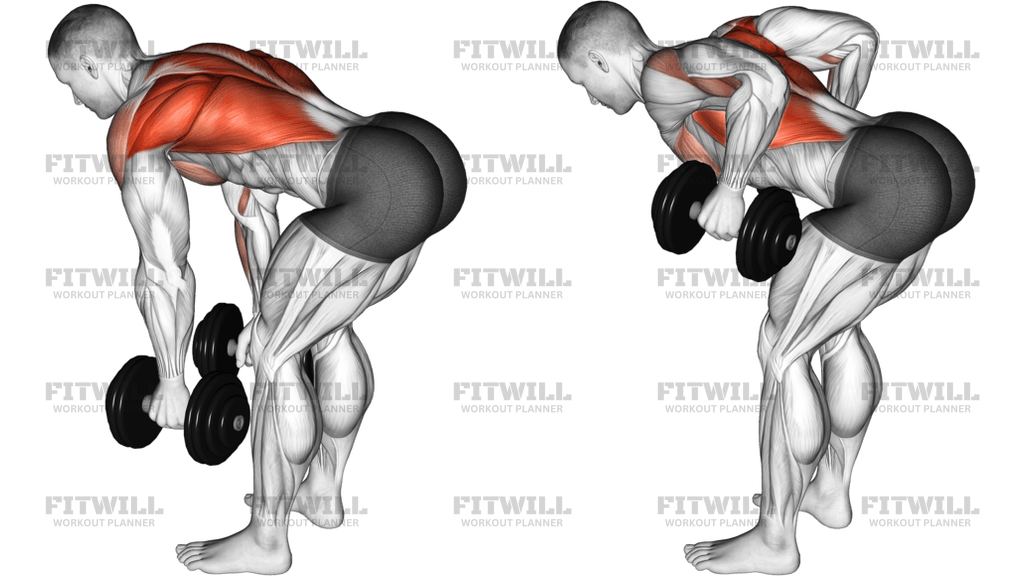
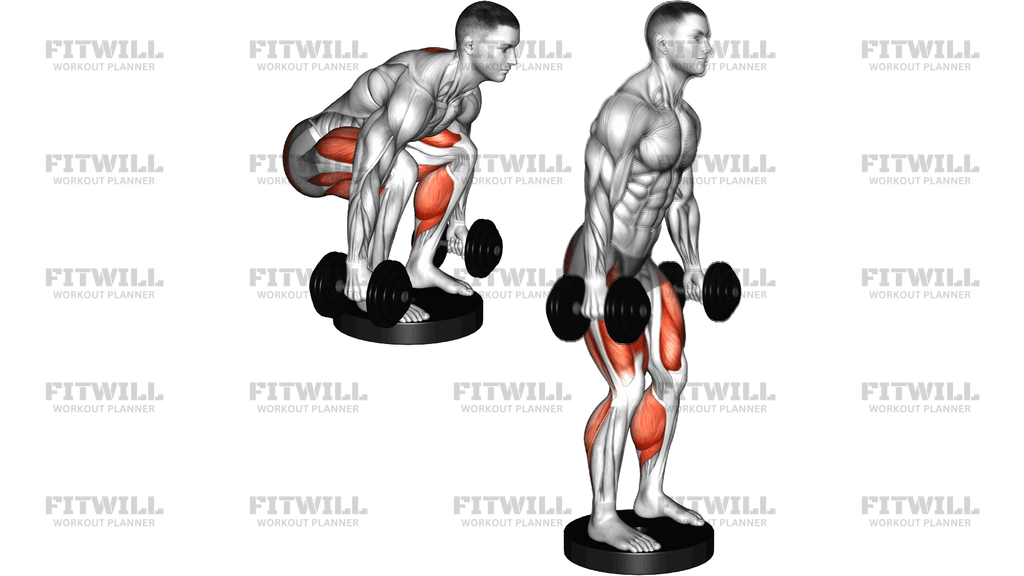
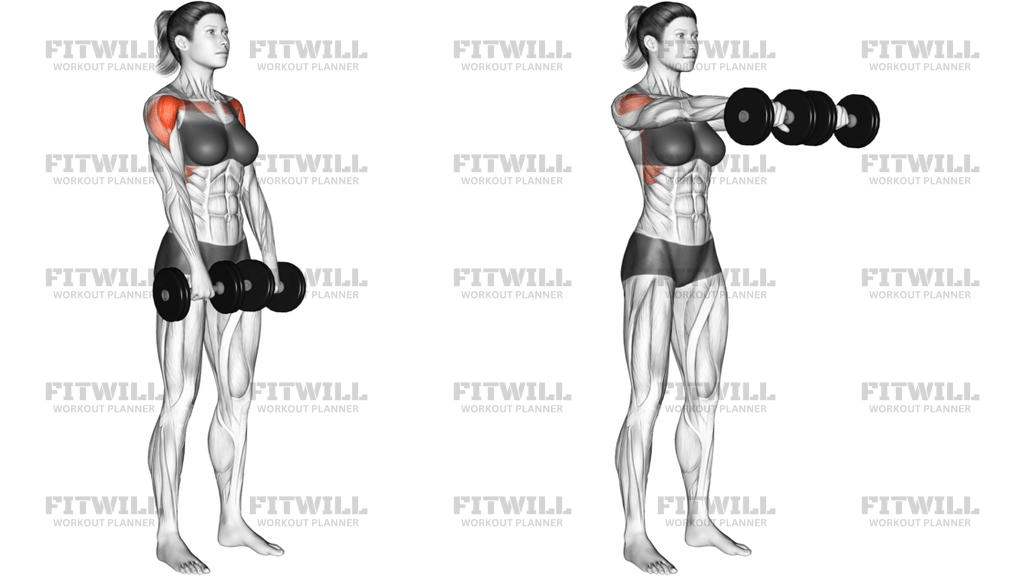
The image shows a tall stance with the weights starting by the thighs and finishing at shoulder level with both arms moving together in a controlled arc. That setup matters because a small lean, shrug, or hip drive can turn the movement into momentum work. Done well, the raise teaches clean shoulder flexion, better control of the scapulae, and strict upper-body positioning under light to moderate load.
This exercise is best performed with a soft bend in the elbows, wrists stacked over the dumbbell handles, and the ribs kept down as the arms travel forward and up. Lift in a smooth arc until the weights reach roughly shoulder height, then pause briefly without forcing higher range. Lower the dumbbells slowly to the thighs before the next rep so the front delts stay under tension through both halves of the repetition.
Dumbbell Front Raise is commonly used as accessory work on shoulder days, in upper-body warmups, or in higher-rep hypertrophy blocks where strict form matters more than load. It is a good option when you want direct front-delt work with minimal equipment, but it should stay pain-free and controlled. If the front of the shoulder pinches, the load is usually too heavy, the hands are rising too high, or the torso is helping too much. Keep your neck long, avoid shrugging the dumbbells toward the ears, and breathe out as the weights rise and in as they lower.
[ Workout Log & Planner ]
Put your next workout in Fitwill
Keep your plan and training log ready when you are.


Instructions
- Stand tall with your feet about hip-width apart and hold a dumbbell in each hand in front of your thighs, palms facing your legs.
- Keep a soft bend in your elbows, stack your wrists over the handles, and set your shoulders down away from your ears.
- Brace your midsection so your ribs stay down and your lower back does not arch as the weights move.
- Lift both dumbbells forward together in a smooth arc, keeping them slightly in front of your torso instead of swinging out to the sides.
- Raise the weights until your hands or upper arms reach about shoulder height, then stop before you shrug or lean back.
- Pause briefly at the top with control, keeping tension in the front of the shoulders rather than letting the weights drift.
- Lower the dumbbells slowly along the same path until they return to the thighs, resisting the drop on the way down.
- Reset your posture, breathe, and repeat for the planned number of reps without using momentum.
Tips & Tricks
- Choose light dumbbells first; a front raise gets sloppy fast once the load is heavy enough to make you swing.
- Keep a small bend in the elbows, but do not turn the movement into a bent-arm curl in front of the body.
- Stop around shoulder height; going higher usually shifts tension to the upper traps and makes the rep less strict.
- Keep the dumbbells slightly in front of the body line so the shoulders flex cleanly instead of flaring the arms outward.
- If your lower back arches, lower the weight and shorten the range until your ribs stay stacked over your pelvis.
- Let the neck stay long and relaxed so the shoulders do not creep toward the ears at the top of the lift.
- Use a slow lowering phase of about two to three seconds to keep the front delts working through the full rep.
- If both arms together feel uneven, alternate sides to keep the torso from twisting or leaning.
- Stop the set when the handles start rising from momentum instead of shoulder control.
Frequently Asked Questions
What does Dumbbell Front Raise work most?
It primarily targets the front of the shoulders, especially the anterior deltoids.
Why does the image show the dumbbells starting in front of the thighs?
That start position lets you lift from a dead stop and keeps the movement strict instead of using a swing.
How high should I raise the dumbbells?
Raise them to about shoulder height, or slightly below if higher reps make you shrug or lean back.
Should my palms face down or in?
A neutral-to-slightly-pronated grip is fine as long as the wrists stay stacked and the shoulders feel comfortable.
Can I do this one arm at a time?
Yes, alternating arms is a good option if you need to reduce cheating or keep your torso steadier.
Why do I feel it in my traps instead of my shoulders?
That usually means the weight is too heavy or you are shrugging the dumbbells up instead of lifting with the front delts.
Is Dumbbell Front Raise beginner-friendly?
Yes, it is beginner-friendly when you keep the load light and the range strict.
What is the most common mistake with this exercise?
The biggest mistake is swinging the torso or leaning back to get the weights moving.