Dumbbell Seated Curl
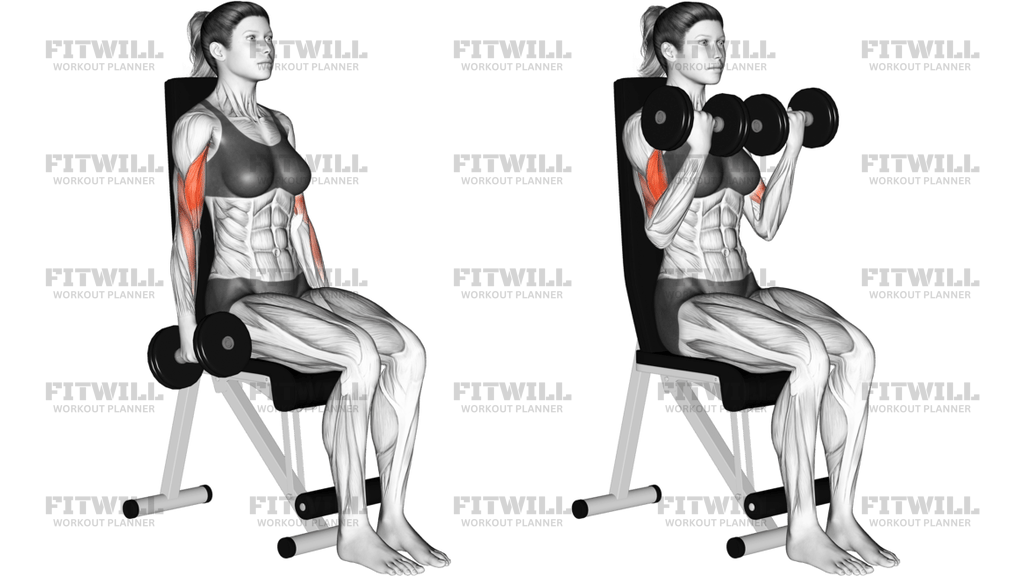
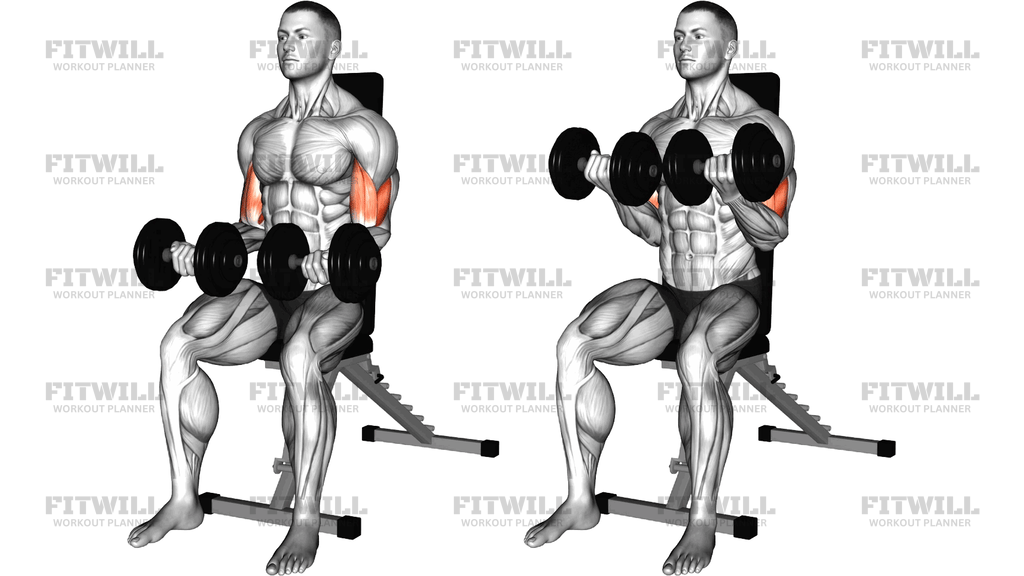
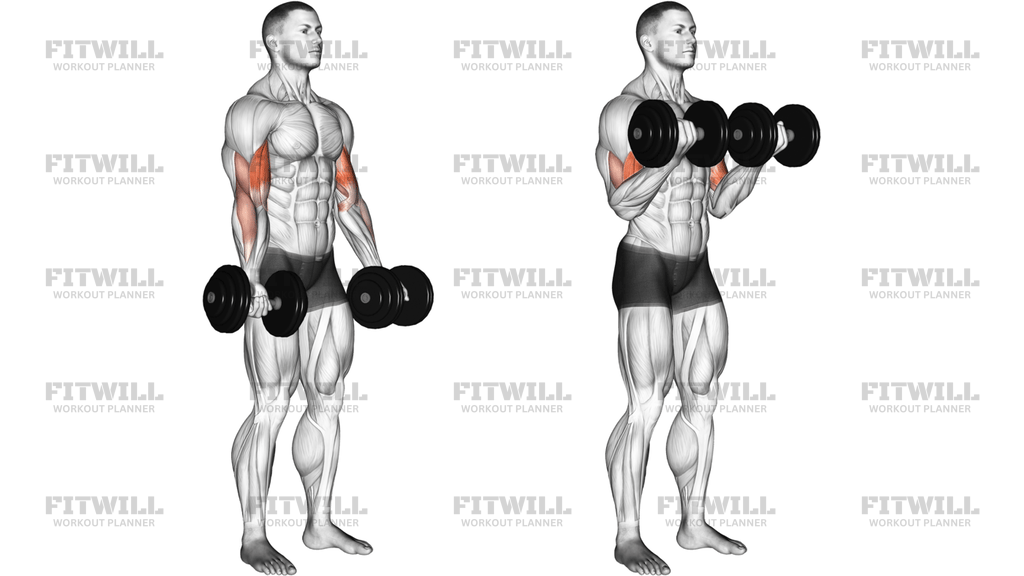
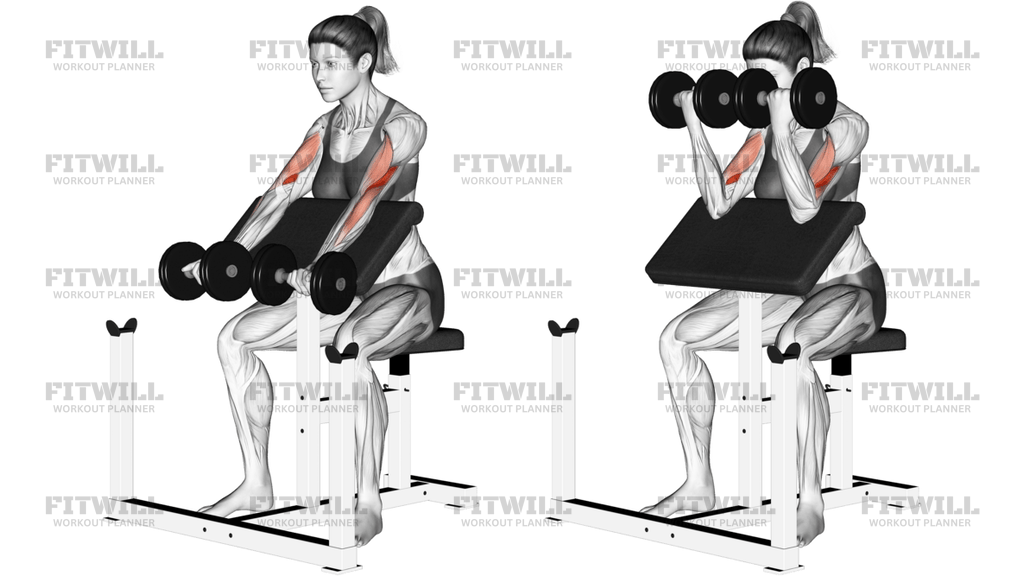
Dumbbell Seated Curl is a strict seated arm-curl pattern built around the image of a lifter sitting upright on a bench with a dumbbell in each hand. The bench back gives you a fixed torso, which makes the exercise a useful choice when you want to isolate elbow flexion instead of turning the set into a standing swing. With the upper arms held close to the sides, the movement asks the biceps to do the majority of the work while the forearms and brachialis help control the line of travel.
Because you are seated, the setup matters more than it does in a standing curl. Plant both feet, sit tall against the pad, and let the dumbbells hang beside the thighs before the first rep begins. From there, the curl should travel in a clean arc toward the shoulders without the elbows drifting forward or the chest rocking back. That fixed torso position is what makes this version especially useful for strict hypertrophy work and for learning how to keep tension on the arms through the full range.
The best rep starts with a still shoulder girdle and ends with a controlled squeeze near the top, not with a hard body lean or a heaved shoulder shrug. As the dumbbells come down, the arms should lengthen under control until the elbows are nearly straight, then the next rep starts again from that quiet bottom position. Done well, the lift builds a strong contraction in the biceps while keeping the wrists, neck, and lower back out of unnecessary stress.
This exercise fits well in arm-focused sessions, upper-body accessory work, or any program where you want a simple, repeatable biceps movement with clear form standards. It is also a practical option when you want to reduce cheating compared with a standing curl, since the bench limits momentum and makes load selection more honest. Keep the reps smooth, use a weight you can control on the way down, and let the seated position do the job of keeping the movement strict rather than trying to force the set with your torso.
[ Workout Log & Planner ]
Put your next workout in Fitwill
Keep your plan and training log ready when you are.


Instructions
- Sit upright on a bench with your back lightly against the pad, feet flat on the floor, and a dumbbell in each hand hanging beside your thighs.
- Turn your palms forward and keep your elbows close to your ribs before the first rep starts.
- Brace your torso without leaning back or shrugging your shoulders.
- Curl both dumbbells toward your shoulders by bending only at the elbows.
- Keep your upper arms still so the dumbbells travel in a smooth arc instead of drifting forward.
- Squeeze the biceps near the top without letting the wrists bend back.
- Lower the dumbbells slowly until your arms are almost straight and the stretch returns to the biceps.
- Breathe out as you curl up, breathe in as you lower, and repeat for the planned reps.
Tips & Tricks
- Keep the back of your upper arms close to your sides; if the elbows drift forward, the set turns into a front-shoulder curl.
- Choose a load you can lower quietly for several seconds, because the seated position makes the eccentric phase easier to feel.
- Keep the bench contact light and consistent so you do not start leaning back to help the dumbbells up.
- Let the wrists stay stacked over the forearms; bending them back shifts stress away from the biceps and into the forearm flexors.
- Stop the curl just short of letting the shoulders roll forward at the bottom, where momentum is easiest to steal.
- If both arms do not move evenly, alternate reps or lower the weight until each dumbbell tracks at the same speed.
- A small pause near the top can help you feel the peak biceps contraction without losing elbow position.
- End the set when the last rep starts to turn into a torso swing or a shoulder shrug.
Frequently Asked Questions
What muscle does Dumbbell Seated Curl target most?
The biceps brachii is the main target, with the brachialis and brachioradialis helping control the curl.
Can beginners perform this exercise?
Yes. The seated setup makes it beginner-friendly because the bench reduces cheating and helps you learn a strict elbow-flexion pattern.
Where should my elbows be during the curl?
Keep them close to your sides and mostly fixed in place. If they travel far forward, the dumbbells stop loading the biceps as cleanly.
Should I lean back on the bench to help the weight up?
No. Leaning back usually means the load is too heavy or the set is getting sloppy, and it takes tension off the arms.
Do I curl both dumbbells at the same time or one arm at a time?
The image shows both arms working together, but you can alternate arms if that helps you keep the elbows pinned and the reps strict.
How low should the dumbbells go?
Lower them until the arms are nearly straight and you feel a clear biceps stretch, but do not force the shoulders forward to chase extra range.
What is the main mistake to avoid?
The biggest error is swinging the torso or popping the elbows forward to finish the rep.
How do I progress this exercise?
Add small increases in dumbbell weight, or keep the same load and make the lowering phase slower and more controlled.