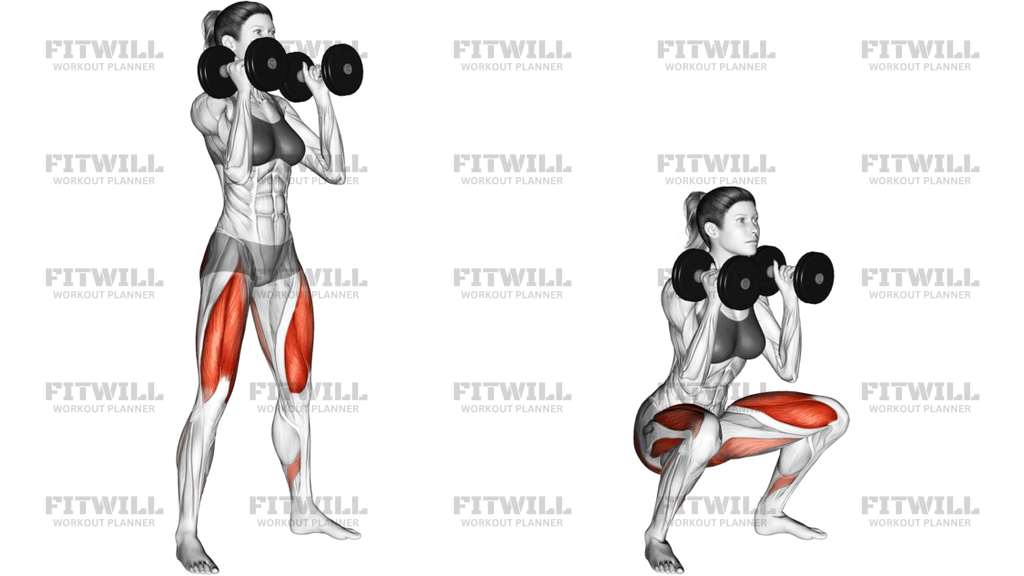
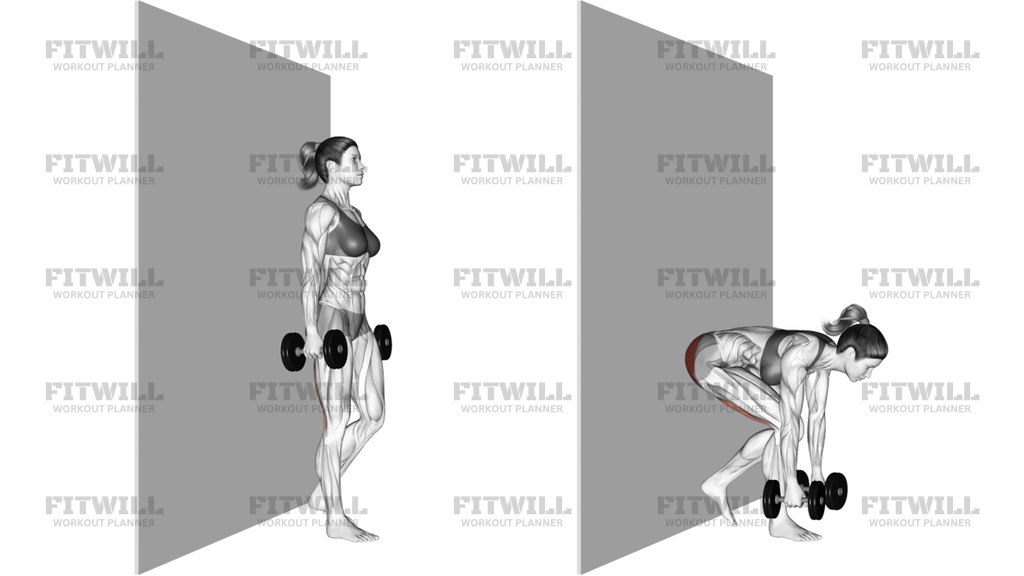
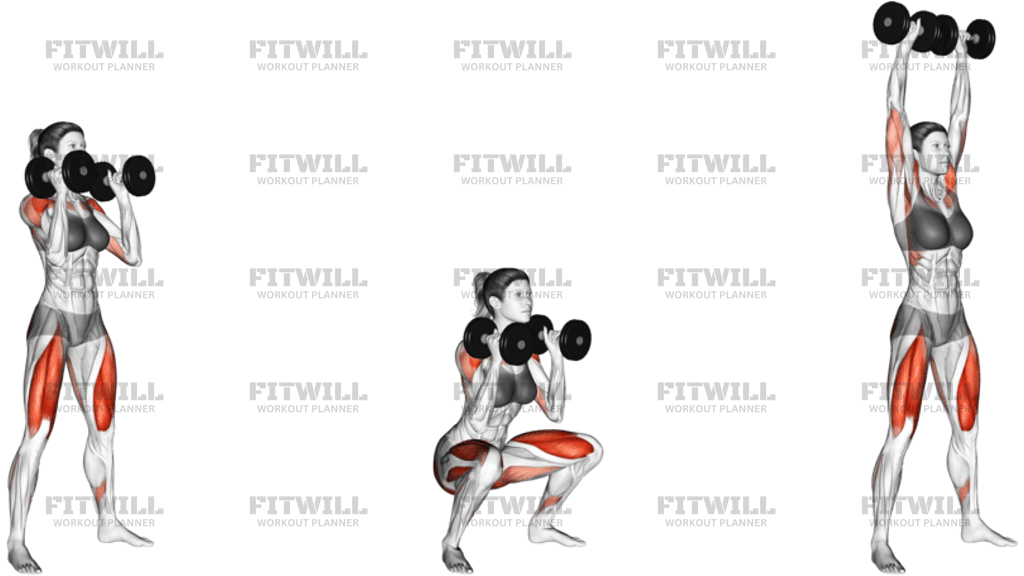
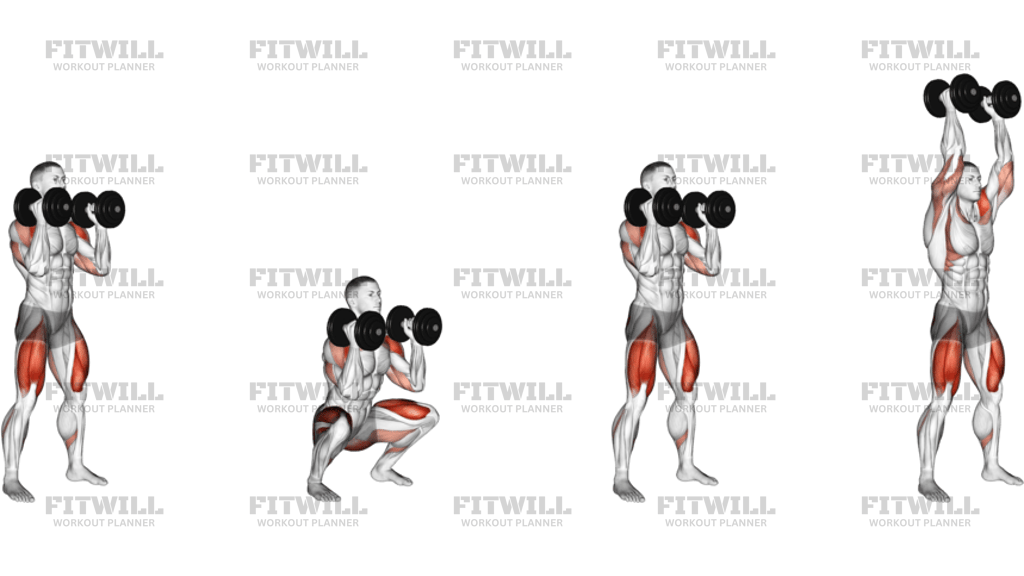
Dumbbell Goblet Split Squat
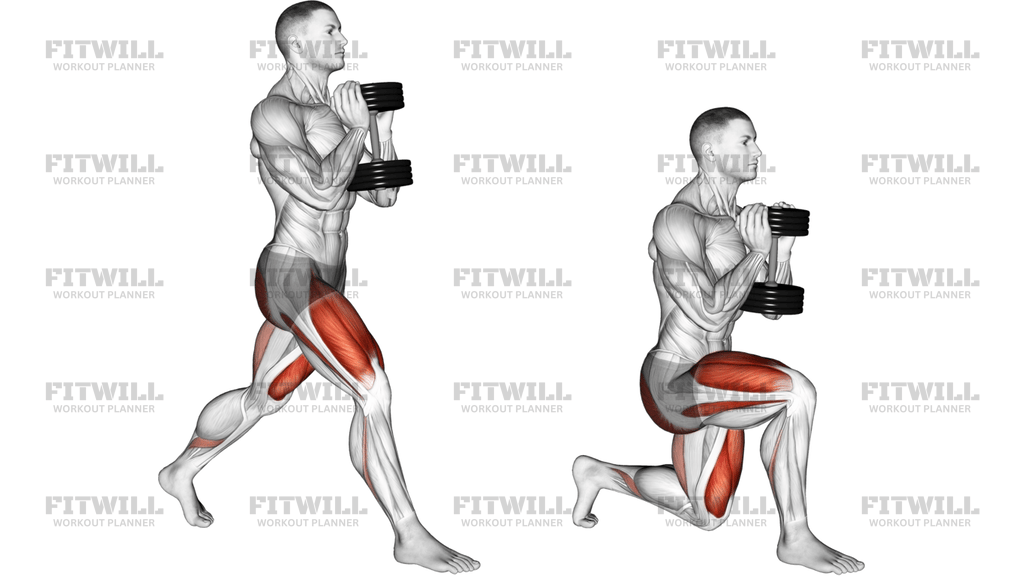
Dumbbell Goblet Split Squat is a split-stance lower-body exercise that loads the front leg while the dumbbell is held close to the chest. The goblet position helps keep the torso tall and makes it easier to stay balanced, which is why this variation is often used when the goal is to build controlled leg strength without needing a barbell setup.
This movement is especially useful for training the glutes, quads, and adductors through a deep single-leg pattern, while the rear leg works mostly as a support. The front foot drives most of the force, but the exercise also asks the hips and trunk to resist twisting, shifting, or collapsing as you descend and stand back up. That makes Dumbbell Goblet Split Squat a practical choice for strength work, athletic preparation, and accessory training.
The setup matters because stance length changes the feel of the rep. A slightly longer stance usually lets the front heel stay planted and shifts more work into the glutes and hamstrings, while a shorter stance pushes more knee bend and quad demand. Hold the dumbbell vertically at the chest, keep the elbows tucked, and line the feet up so you can lower straight down between them instead of wobbling forward onto the toes.
On each rep, lower under control until the back knee comes close to the floor and the front thigh approaches parallel or slightly below, depending on mobility. Keep the front foot flat, let the front knee track in line with the toes, and avoid bouncing off the bottom. Drive back up through the front midfoot and heel, finishing with the hips tall and the ribcage stacked over the pelvis rather than leaning backward to fake the lockout.
Dumbbell Goblet Split Squat works well in hypertrophy blocks, unilateral strength sessions, warmups, and home workouts because it gives a lot of training value with only one dumbbell. It is also a useful way to expose left-right differences in hip control, knee tracking, and balance. If the load starts to pull your shoulders forward or your front heel lifts early, the set is too heavy or the stance is too short. Keep the motion smooth, repeatable, and pain-free, and step out of the split stance safely between sides.
[ Workout Log & Planner ]
Put your next workout in Fitwill
Keep your plan and training log ready when you are.


Instructions
- Stand in a split stance with the front foot flat, the back heel lifted, and the feet far enough apart that you can lower straight down without losing balance.
- Hold one dumbbell vertically at your chest in a goblet grip, with both hands under the top head and your elbows tucked close to your ribs.
- Square your hips and ribs to the front, then tighten your abdomen so the dumbbell stays centered instead of drifting forward.
- Lower your back knee toward the floor by bending both knees together, keeping most of your weight on the front leg.
- Keep the front heel planted and let the front knee track over the middle toes as you descend.
- Pause briefly near the bottom when the back knee is close to the floor and the front thigh is near parallel.
- Drive through the front midfoot and heel to stand back up, keeping the dumbbell fixed at chest height.
- Finish tall with the hips fully extended, then repeat all reps on one side before switching legs.
- Step out of the split stance carefully when the set is finished and reset your footing before the next side.
Tips & Tricks
- A longer stance usually makes the front heel stay down more easily and shifts more work into the glutes.
- Keep the dumbbell tight to your chest; if it drifts away, your torso will tip forward and the set gets harder to control.
- Think of dropping the back knee straight down, not stepping forward into the rep.
- Let the front knee travel naturally, but keep it in line with the second and third toes instead of caving inward.
- Keep pressure through the front foot's tripod: big toe, little toe, and heel.
- If the rear foot starts helping to push you up, shorten the load or lighten the dumbbell so the front leg does the work.
- A small pause at the bottom removes bounce and makes the glutes and quads do more of the lift.
- Exhale as you drive up, then re-stack your ribs over your pelvis before the next rep.
- If balance is the limiter, do the set next to a rack or wall rather than widening the stance and turning it into a lunge step.
Frequently Asked Questions
What does Dumbbell Goblet Split Squat train the most?
It mainly trains the glutes and quads on the front leg, with the core and hip stabilizers working hard to keep you upright.
Should the dumbbell stay at my chest in Dumbbell Goblet Split Squat?
Yes. Holding it at the chest keeps the load centered and makes it easier to stay tall instead of folding over the front leg.
How far apart should my feet be in Dumbbell Goblet Split Squat?
Set the feet far enough apart that the front heel stays planted at the bottom and the back knee can drop close to the floor without crowding the stance.
Does Dumbbell Goblet Split Squat need the back knee to touch the floor?
No. Let the back knee come close to the floor with control, but only go as deep as you can without bouncing, twisting, or losing the front-foot drive.
Is Dumbbell Goblet Split Squat more for glutes or quads?
It can emphasize both. A slightly longer stance and a more vertical shin usually feel more glute-heavy, while a shorter stance and more knee bend shift more work to the quads.
Can beginners do Dumbbell Goblet Split Squat?
Yes, it is beginner-friendly if you start light and use a stance that lets you stay balanced and upright through the whole rep.
What is the most common mistake in Dumbbell Goblet Split Squat?
The usual mistake is pushing off the back foot and turning it into a forward lunge. The front leg should do almost all of the lifting.
What should I do if I lose balance in Dumbbell Goblet Split Squat?
Shorten the stance slightly, lower the load, and keep the dumbbell glued to your chest. If needed, place one hand near a rack for light support while you learn the pattern.