Dumbbell Alternate Chest Press On Stability Ball
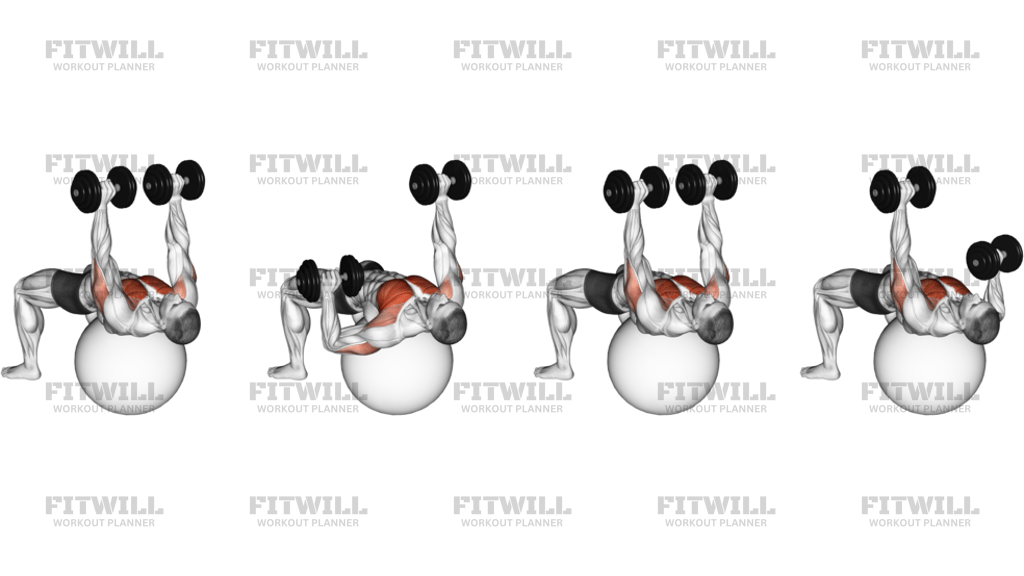
Dumbbell Alternate Chest Press On Stability Ball is a chest press variation that combines a pressing pattern with a strong anti-rotation demand. With your upper back supported on the ball and your hips held in a bridge, each rep asks the pressing arm to work while the rest of the body stays organized. The result is a movement that trains the chest, triceps, front delts, and deep trunk stabilizers at the same time, which makes it a useful accessory exercise for building pressing control rather than just chasing load.
The ball is not just a place to lie down. It changes the whole exercise by removing the security of a flat bench and forcing you to keep your ribs stacked, glutes active, and feet planted while one dumbbell moves at a time. That alternating pattern makes the torso want to rotate and the hips want to sag, so the setup matters more than it would on a bench. If the ball is too far under your shoulders or your feet are too narrow, the press usually turns into wobbling instead of clean chest work.
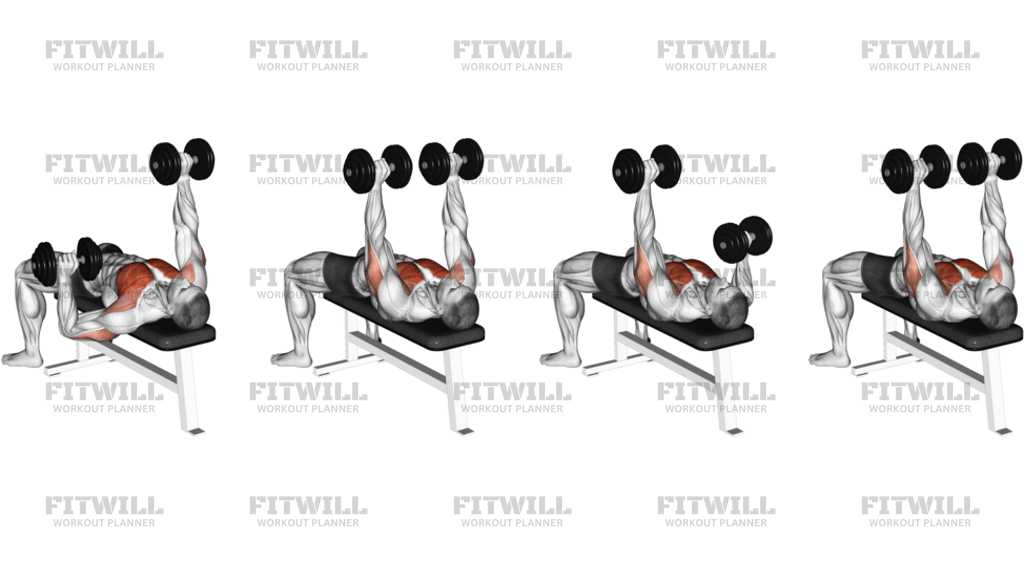
A good rep starts before the dumbbells move. Set the upper back on the center of the ball, position the feet so you can hold a steady bridge, and bring the dumbbells above the chest with the wrists stacked over the elbows. From there, lower one arm under control toward the chest line while the other stays vertical, then press back to the top without letting the ball shift. The movement should look smooth and deliberate, with the ribcage quiet and the hips staying level from side to side.
This exercise fits well in upper-body training when you want pressing work plus a stability challenge, especially in accessory blocks, core-integrated sessions, or athletic strength programs. It is usually better to keep the load moderate and the tempo controlled than to chase fatigue with sloppy reps. If shoulder position, balance, or breathing starts to break down, the set is already too heavy for the purpose of this variation. Clean alternating presses are the goal here, not maximal loading.
Because one arm is always working while the other is fixed overhead, this movement is also a good test of unilateral control. You should feel the chest do the main pushing, but you will also notice the triceps finishing the press and the core preventing twist through the torso. When done well, the exercise teaches you to keep a strong pressing line while staying balanced on an unstable base, which carries over well to other dumbbell presses and athletic upper-body work.
[ Workout Log & Planner ]
Put your next workout in Fitwill
Keep your plan and training log ready when you are.


Instructions
- Sit with the upper back centered on the stability ball, feet flat and slightly wider than hip-width, then walk your feet out and raise your hips until your torso is level and supported from the shoulders to the upper back.
- Hold a dumbbell in each hand above the chest with your palms facing forward and your wrists stacked over your elbows.
- Set your shoulder blades down into the ball, keep your chin tucked slightly, and brace your ribs so the lower back does not over-arch.
- Lower one dumbbell toward the side of the chest while the other arm stays fully extended and steady over the shoulder.
- Keep the working elbow at a slight angle from the torso instead of flaring it straight out to the side.
- Press the dumbbell back to the start until the arm is vertical again and the elbow is locked out without snapping.
- Alternate sides on each rep while keeping the hips level and the ball still under your upper back.
- Inhale on the lower phase, exhale as you press, and finish the set by bringing both dumbbells back to the top before standing up carefully.
Tips & Tricks
- Start lighter than you would for a flat-bench dumbbell press, because the alternating pattern on the ball magnifies every balance mistake.
- Keep your glutes active through the whole set; if the hips drop, the press turns into a loose bridge instead of a controlled chest press.
- If the dumbbell drifts toward your face, reset the shoulder and lower it in a cleaner line toward the mid-chest.
- Do not let the non-working arm wander; a stable vertical arm makes the alternating rep much cleaner and reduces torso rotation.
- Plant the feet firmly enough that you can resist sliding on the floor when one dumbbell is lowered.
- A slower lowering phase makes the instability useful; rushing the descent usually turns the set into a bounce and wobble drill.
- Keep the wrists straight above the knuckles so the dumbbell sits over the forearm instead of folding the wrist back.
- If your neck feels tense, shorten the range slightly and keep the head relaxed into the ball rather than reaching forward.
Frequently Asked Questions
What muscles does Dumbbell Alternate Chest Press On Stability Ball work?
The main work comes from the chest, with help from the triceps, front delts, and deep core muscles that keep you stable on the ball.
Why use a stability ball instead of a flat bench?
The ball adds balance demand, so your torso has to stay organized while one arm presses. That makes it more challenging for stability and control than a standard bench press.
How should my body be positioned on the ball?
Your upper back and shoulders should be centered on the ball, feet flat on the floor, and hips lifted into a solid bridge so your torso stays supported.
How far should I lower each dumbbell?
Lower until the upper arm is near chest level and the shoulder still feels packed. Stop sooner if the ball shifts, the elbow flares hard, or the shoulder feels pinched.
Should both dumbbells move at the same time?
No. The alternating version keeps one arm locked out while the other lowers and presses, which is what creates the anti-rotation challenge.
Is this exercise appropriate for beginners?
Yes, but only with light dumbbells and a stable setup. Beginners should first learn to keep the hips level and the ball still before increasing load.
What if I feel my low back arching too much?
Lower the hips a little, shorten the range, and brace the ribs down harder before you press. If the arch keeps growing, the load is too heavy for this variation.
Can I switch to a regular dumbbell press if the ball feels too unstable?
Yes. A flat bench or floor press is a good regression if the ball makes it hard to keep the press path clean.