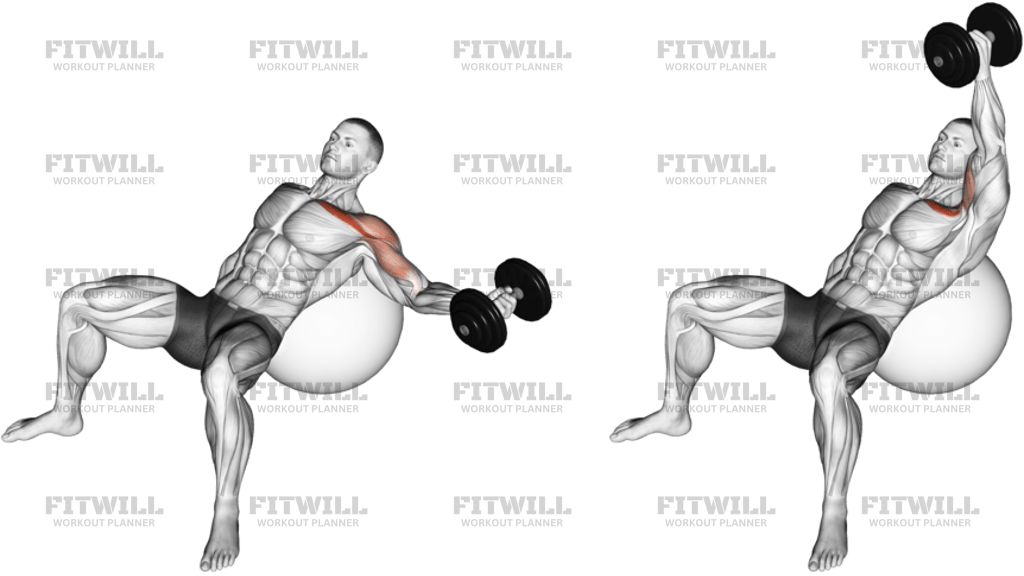
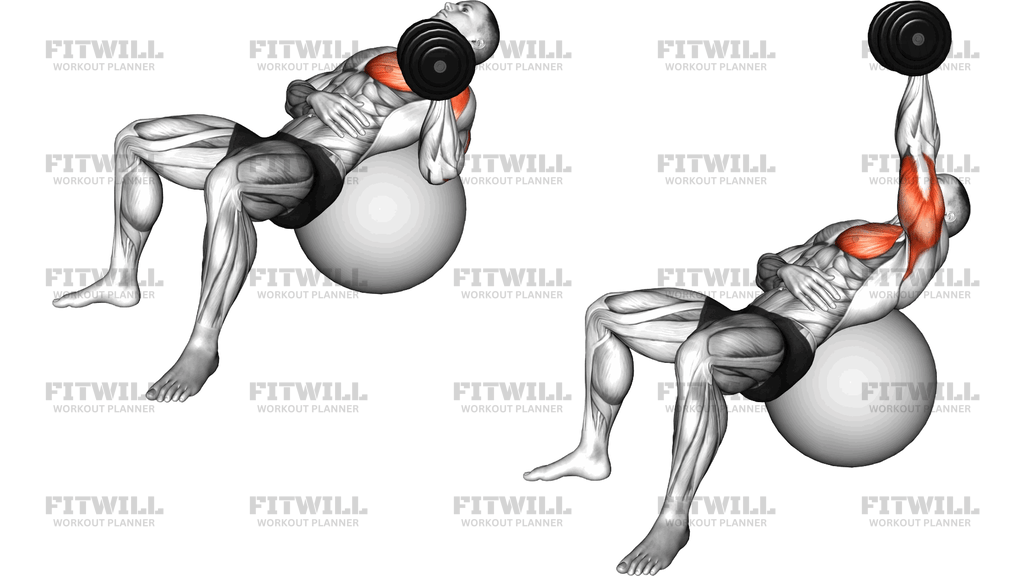
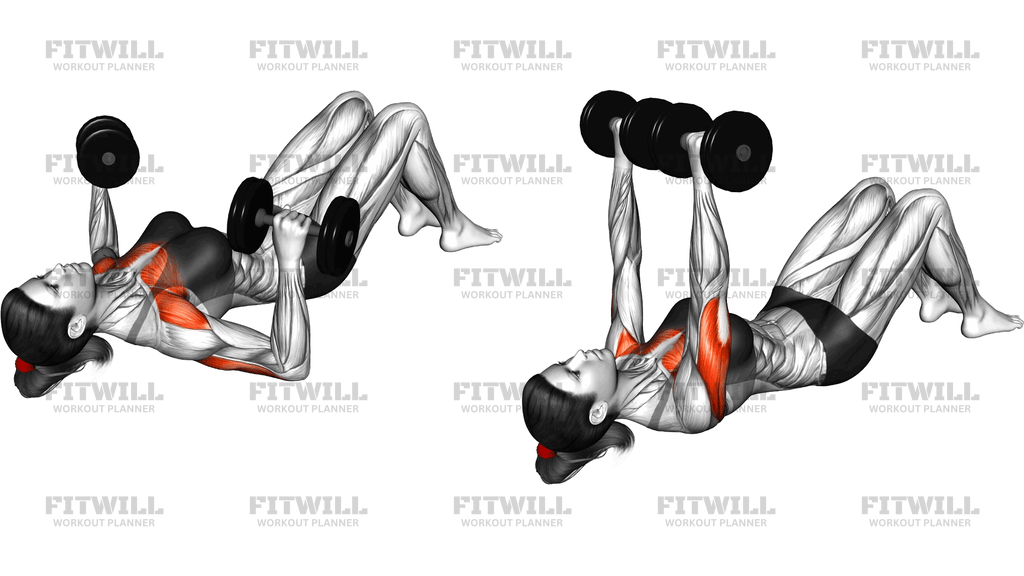
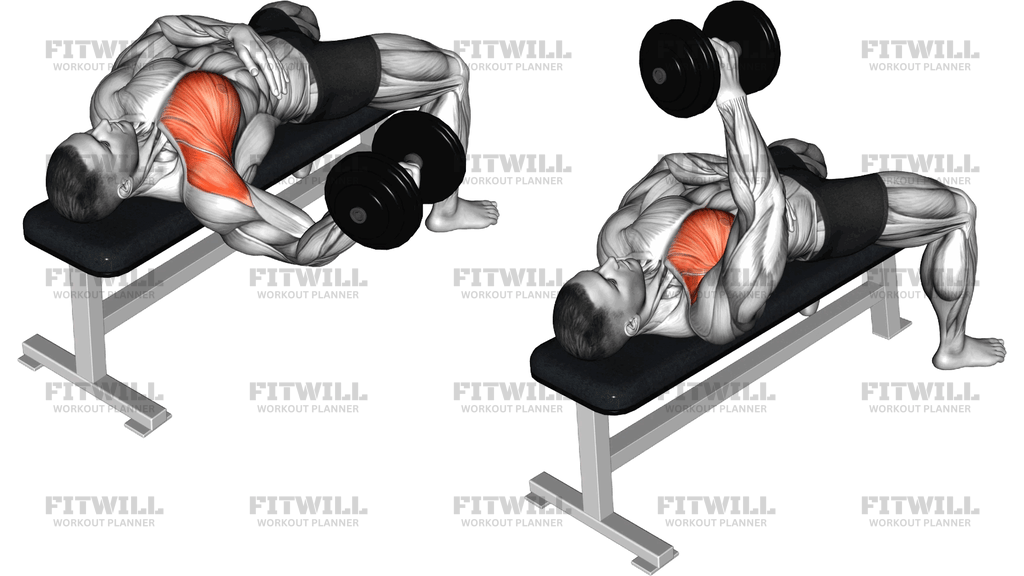
Dumbbell Single-Arm Alternate Fly
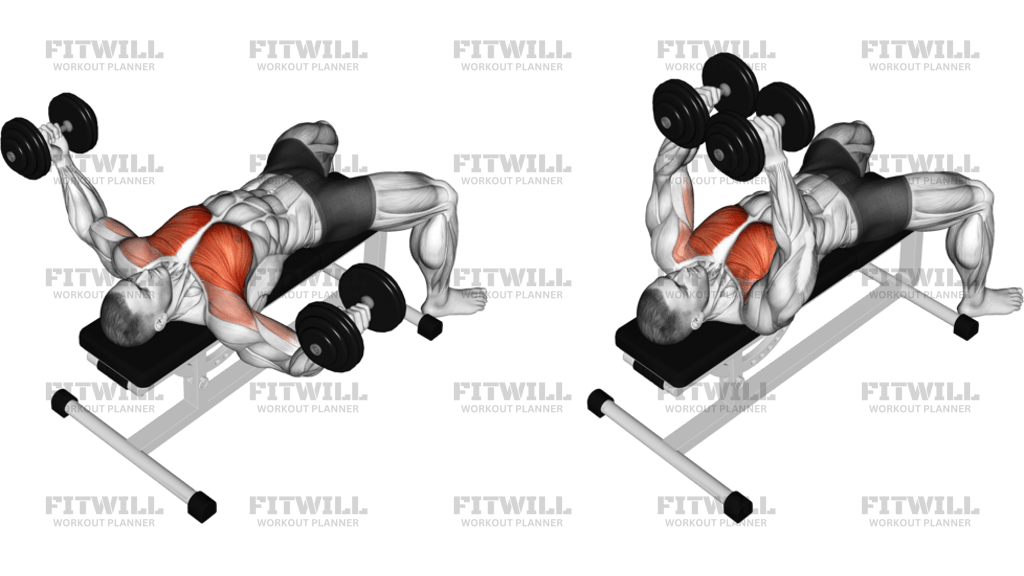
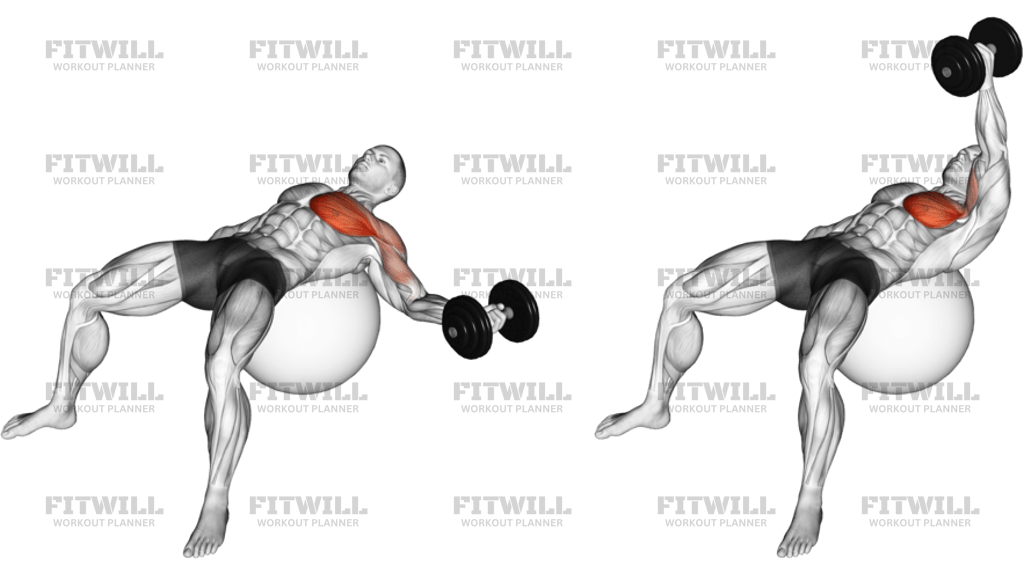
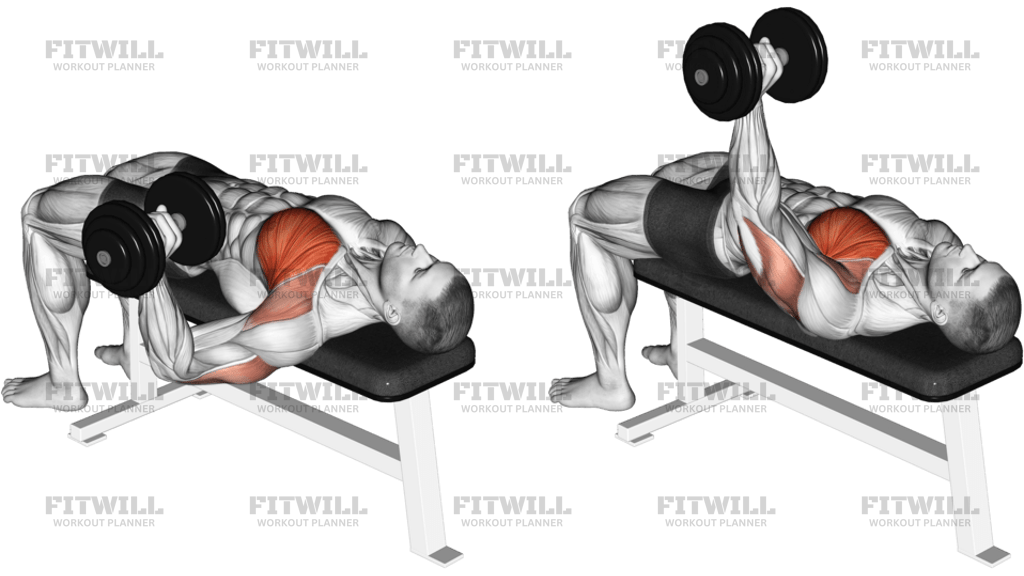
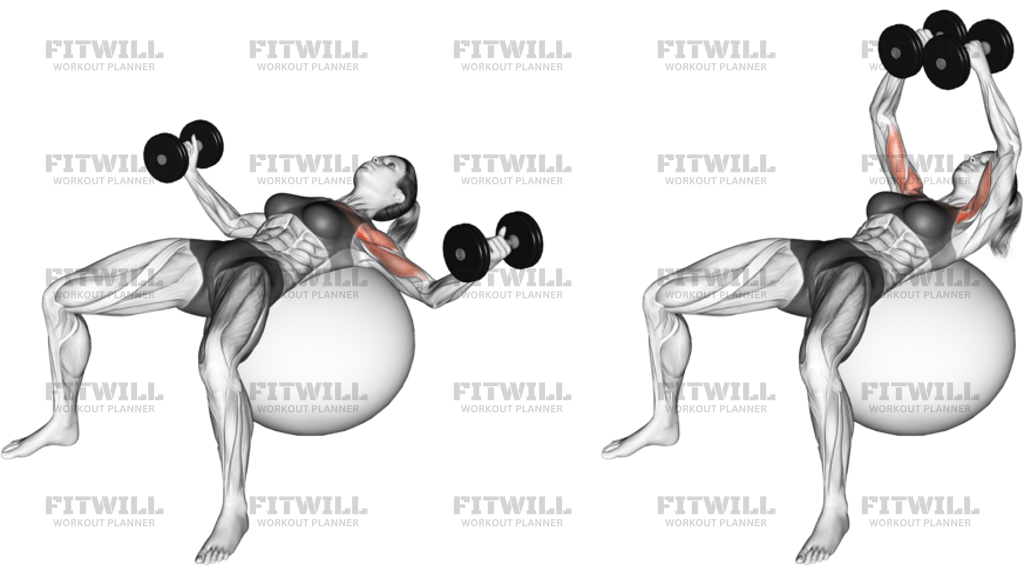
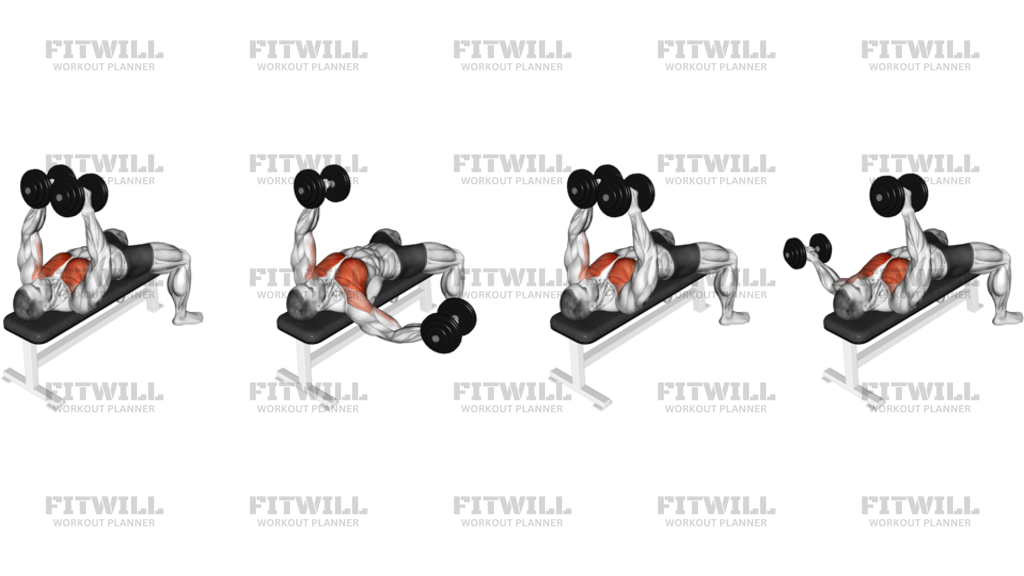
Dumbbell Single-Arm Alternate Fly is a flat-bench chest isolation exercise where one arm holds a dumbbell above the sternum while the other arm opens in a wide fly arc. The alternating pattern keeps one side working while the other stays stable, which makes the movement feel more controlled than a bilateral fly and also adds a strong anti-rotation demand through the trunk.
The main target is the chest, especially the pecs, with the front shoulders, triceps, and core helping keep the torso still and the dumbbell path clean. In anatomy terms, the primary work centers on the Pectoralis major, with support from the Anterior deltoid, Triceps brachii, and Rectus abdominis. That makes this a useful accessory movement when you want chest tension without turning the set into a pressing exercise.
Setup matters a lot here. Lie flat with the head, upper back, and hips supported by the bench, feet planted, and shoulder blades gently set so the chest stays open without over-arching the lower back. Hold the dumbbells above the chest with a soft bend in the elbows and straight wrists. The non-working arm should stay quiet and stacked over the shoulder so the torso does not twist as the moving arm lowers.
Each rep should follow the same arc: one dumbbell lowers out and down until the chest is stretched and the upper arm is near bench level, then it returns on the same path with the chest doing the work. Keep the elbow angle nearly fixed, avoid letting the shoulder roll forward at the bottom, and switch sides only after the dumbbell comes back over the chest. The goal is a smooth, repeatable fly pattern, not a deep stretch at the expense of the shoulder.
This exercise fits well in a chest accessory block, a higher-repetition hypertrophy session, or as a controlled finisher after pressing work. Use moderate or light loads, because the alternating pattern makes form breakdown easier when the weight is too heavy. If the front of the shoulder feels pinchy, shorten the range and stop the descent sooner. When done well, the movement builds chest awareness, unilateral control, and a cleaner line of tension through the pecs without relying on momentum.
[ Workout Log & Planner ]
Put your next workout in Fitwill
Keep your plan and training log ready when you are.


Instructions
- Lie flat on a bench with your head, upper back, and hips supported, feet planted on the floor, and a dumbbell held above your chest in each hand.
- Set your shoulder blades gently back and down, keep a soft bend in both elbows, and line your wrists up over your shoulders.
- Start with one dumbbell stacked over the middle of your chest while the other arm stays quiet and steady.
- Lower the moving arm in a wide arc out to the side until you feel a strong chest stretch and the upper arm reaches about bench level.
- Keep the elbow angle nearly fixed and avoid letting the shoulder roll forward as the weight lowers.
- Exhale and bring the dumbbell back over your chest by squeezing the pec, following the same arc you used on the way down.
- Once the first arm is back over the chest, switch sides and lower the other dumbbell while the first arm stays still.
- Keep your ribs down, hips quiet, and neck relaxed as you alternate sides for the planned number of repetitions.
Tips & Tricks
- Use lighter dumbbells than you would for a press; the single-arm pattern makes stabilization harder.
- Keep a slight elbow bend from start to finish so the chest, not the elbow joint, controls the rep.
- Lower the dumbbell only until you feel a chest stretch you can control; do not chase a deep bottom position if the shoulder shifts forward.
- Keep the non-working dumbbell stacked over the chest instead of drifting toward the face or rib cage.
- Plant both feet and keep the ribs from flaring, or the torso will start twisting to help the moving arm.
- Think about opening the arm wide from the shoulder, not dropping the weight straight down.
- Exhale as the dumbbell returns to center and inhale while it lowers into the fly.
- If the front of the shoulder feels irritated, shorten the range and slow the lowering phase before trying to load it heavier.
Frequently Asked Questions
What muscles does the dumbbell single-arm alternate fly work most?
The chest does most of the work, especially the pectoralis major, with the front shoulders, triceps, and core helping stabilize the bench position.
Why alternate one arm at a time instead of flying both arms together?
Alternating keeps the non-working arm stacked over the chest, which makes you control torso rotation and gives each side a cleaner chest contraction.
How low should the working dumbbell go?
Lower it only until the upper arm is near bench level or until you feel a strong but controlled chest stretch. Stop sooner if the shoulder rolls forward or pinches.
Should my elbow stay bent the whole time?
Yes. Keep a small, consistent bend so the movement stays a fly and does not turn into a press or a straight-arm shoulder swing.
What is the biggest mistake with this exercise?
The biggest mistake is twisting the torso or arching hard through the lower back to help the moving arm return to center.
Is this a beginner-friendly chest exercise?
Yes, but only with light dumbbells and a short, controlled range of motion. The alternating pattern is less forgiving than a basic chest press.
What grip should I use on the dumbbells?
A neutral or slightly turned-in grip works well as long as the wrists stay straight and the dumbbell remains stacked over the shoulder at the top.
How do I know if the weight is too heavy?
If the dumbbell drifts toward your face, the shoulder rolls forward, or your ribs pop up to finish the rep, the load is too heavy.