Walk Elliptical Cross Trainer
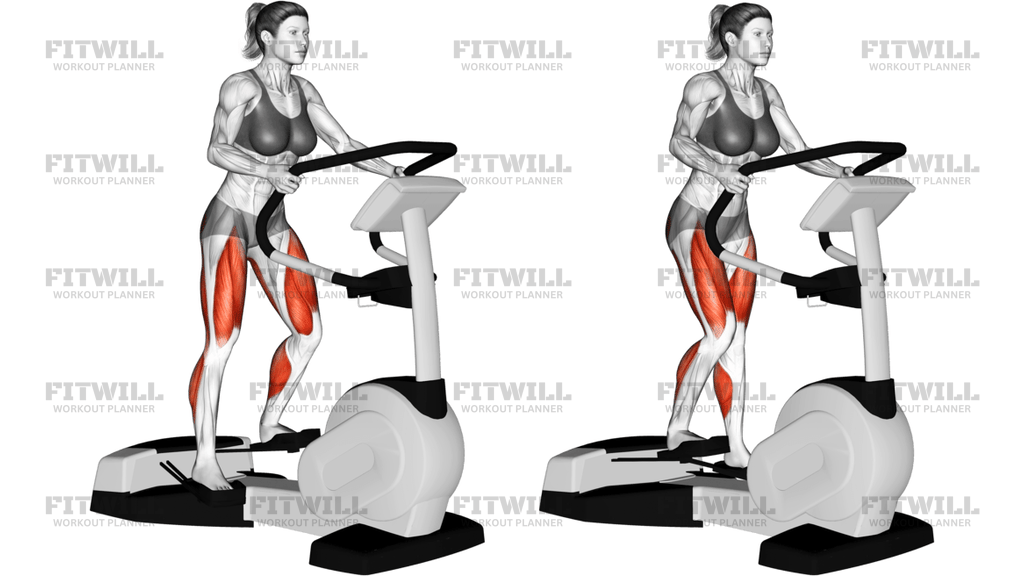
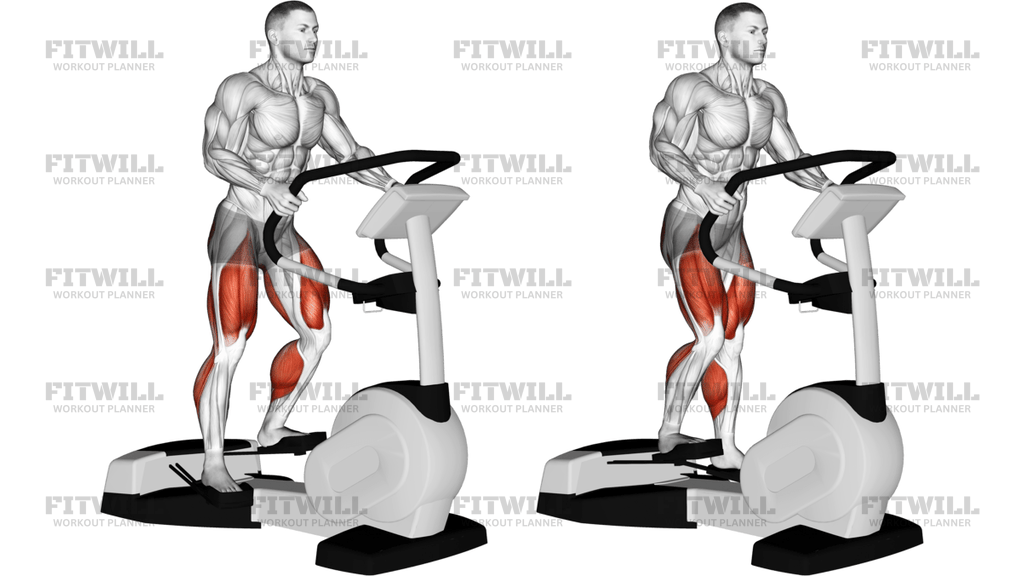
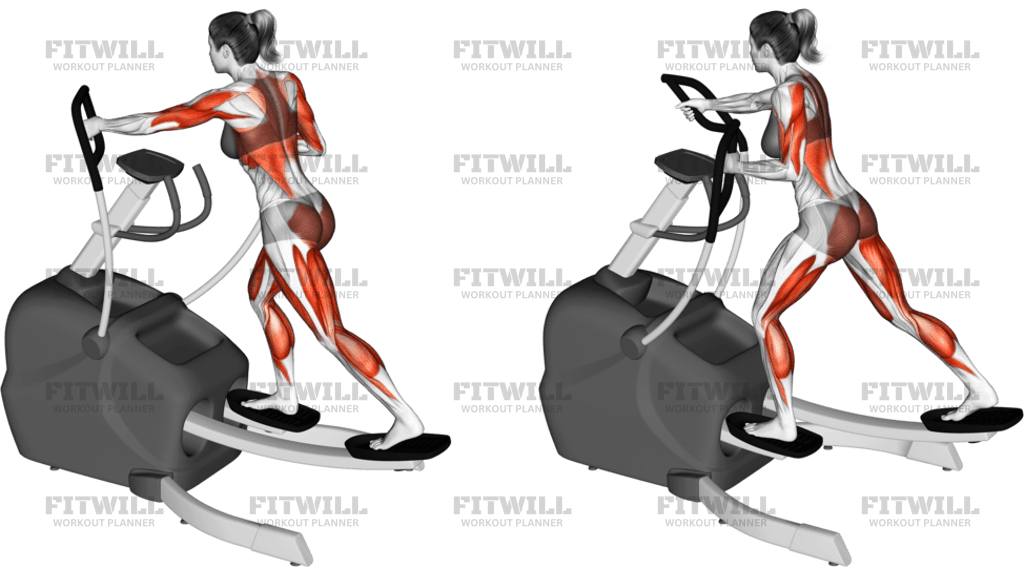
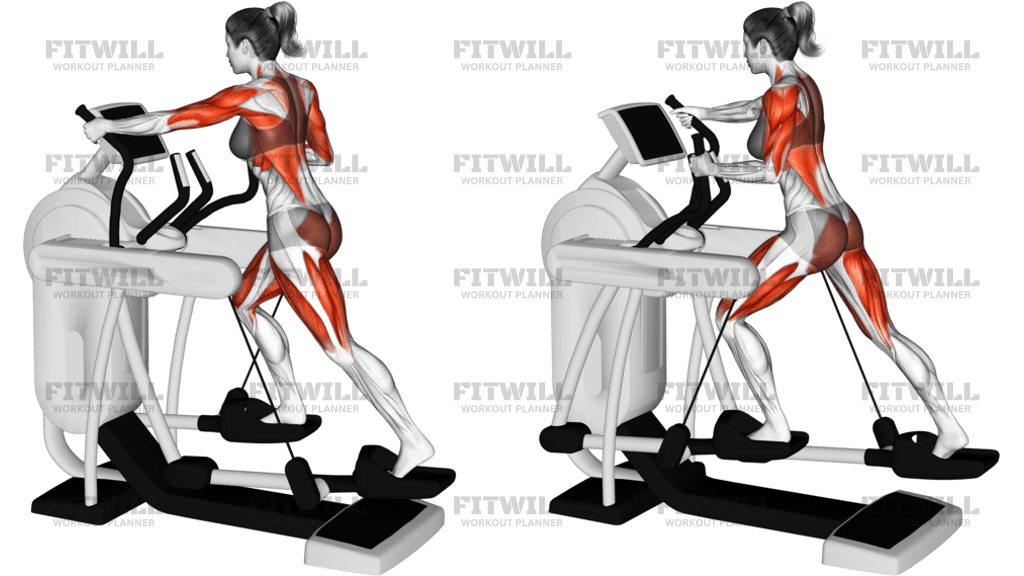
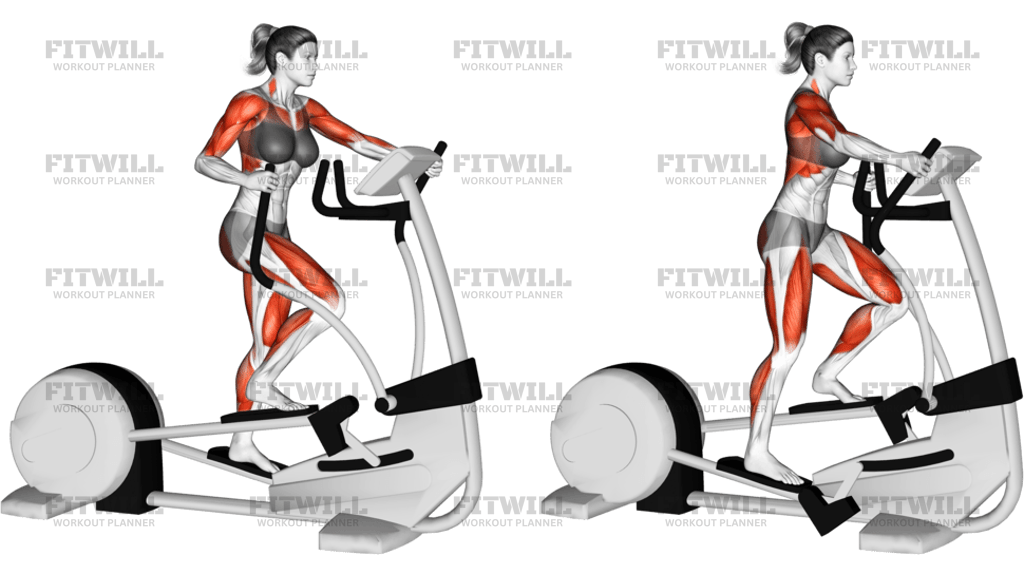
Walk Elliptical Cross Trainer is a low-impact cardio exercise performed on an elliptical machine with moving handlebars and independent foot pedals. It is designed to keep you moving in a smooth, continuous stride so you can build aerobic capacity without the pounding of running. The movement works best when you stay tall, keep the pedals under control, and let the arms and legs move together instead of bouncing through the machine.
The exercise trains the lower body and upper body at the same time. Your quads, glutes, hamstrings, calves, shoulders, back, and core all contribute to the stride, but the main purpose is sustained cardiovascular work. Because the machine guides the path, small posture errors can quickly turn into wasted effort: leaning hard into the handles, locking the knees, or overstriding usually makes the stroke feel jerky and less efficient.
Setup matters more than most people expect. Step onto the pedals first, then find a neutral stance with soft knees, a lifted chest, and relaxed shoulders. Adjust the resistance so the first few minutes feel smooth enough to control, not so heavy that you have to lunge or rock side to side. Once the rhythm is stable, keep the pressure even through the whole foot and use the handles to assist the stride, not to support your bodyweight.
During the workout, think smooth and synchronized. Push one pedal down as the opposite handle moves forward, then let the machine carry you through the transition without slamming the next step. Keep your hips level, head neutral, and breathing steady so the pace stays repeatable from the warm-up through the harder intervals. If the machine has moving and stationary grips, choose the version that matches the goal of the session: moving handles for more full-body work, light contact only when you want to emphasize the legs.
This exercise is useful for warm-ups, steady-state conditioning, interval training, and recovery sessions when you want cardio with less joint impact. It is beginner-friendly because the range is fixed, but it still rewards good mechanics. A clean stride, a controlled resistance level, and consistent posture will always produce a better training effect than trying to force speed or leaning on momentum.
[ Workout Log & Planner ]
Put your next workout in Fitwill
Keep your plan and training log ready when you are.


Instructions
- Step onto the foot pedals and hold the moving handles with a light, secure grip.
- Set your feet flat, soften your knees, and stand tall with your ribs stacked over your pelvis.
- Choose a resistance that lets the pedals glide smoothly instead of forcing you to bounce.
- Begin with a slow, even stride and coordinate the opposite arm and leg on each side.
- Press through the whole foot as you drive one pedal down and let the opposite handle move forward.
- Keep your chest lifted and your shoulders relaxed so you do not lean your bodyweight onto the handles.
- Breathe steadily through the rhythm, exhaling as the stride effort increases and inhaling on the recovery.
- Maintain a smooth cadence for the planned time or interval, then reduce the pace before stepping off.
- Use the stationary handles only if you want to emphasize the lower body and reduce upper-body involvement.
Tips & Tricks
- Think tall posture first; if your torso folds forward, you are probably using the handles to hold yourself up.
- Keep the knees tracking in line with the toes so the pedals do not drift inward or outward under load.
- Use the handles to guide the motion, not to yank yourself through each stride.
- If the stride feels choppy, lower the resistance before you try to move faster.
- Drive through the midfoot and heel rather than standing on your toes for the whole session.
- A slightly shorter stride is better than overreaching and letting your hips rock side to side.
- For interval work, increase resistance first and cadence second so form stays clean.
- If your hands start to bear most of your weight, lower the effort and reset your posture.
- Reverse pedaling can shift emphasis toward the glutes and hamstrings if the machine allows it.
Frequently Asked Questions
What muscles does Walk Elliptical Cross Trainer work?
It mainly trains the quads, glutes, hamstrings, calves, shoulders, back, and core while giving you a strong cardio stimulus.
Should I use the moving handles or the fixed handles?
Use the moving handles when you want more full-body work. Use the fixed handles, or only light contact, if you want to focus more on the legs and conditioning.
How do my feet sit on the pedals?
Keep each foot flat and centered on the pedal so pressure is spread through the whole foot instead of just the toes.
Why does the machine feel harder when I lean on the handles?
Leaning usually means the legs and core are not doing enough of the work, so the stride becomes less efficient and more fatiguing.
Can beginners use the elliptical cross trainer?
Yes. Start with low resistance, a short session, and a pace you can keep smooth without wobbling or gripping the handles too hard.
Is this a good replacement for running?
It can be a good low-impact alternative for cardio, especially when you want less stress on the joints than running or jumping.
What should I do if my knees hurt while using it?
Lower the resistance, shorten the stride, and make sure your knees are tracking straight instead of collapsing inward. Stop if pain continues.
Can I pedal backward on the cross trainer?
If the machine allows it, yes. Backward pedaling changes the feel of the stride and can place more emphasis on the glutes and hamstrings.
How hard should the pace feel?
Smooth and controlled is the target. For steady cardio, you should be able to keep the rhythm without bouncing or breath-holding.