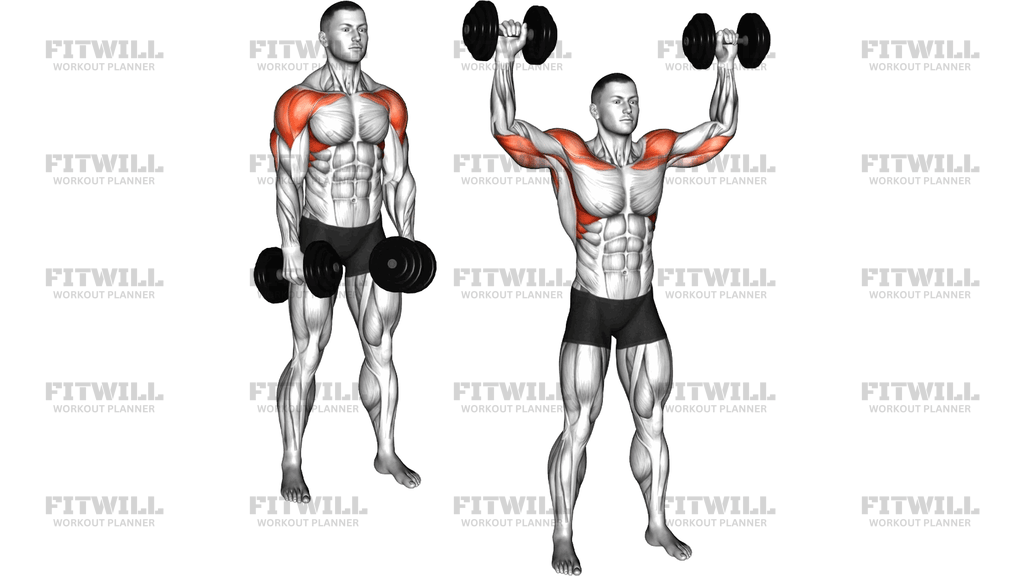
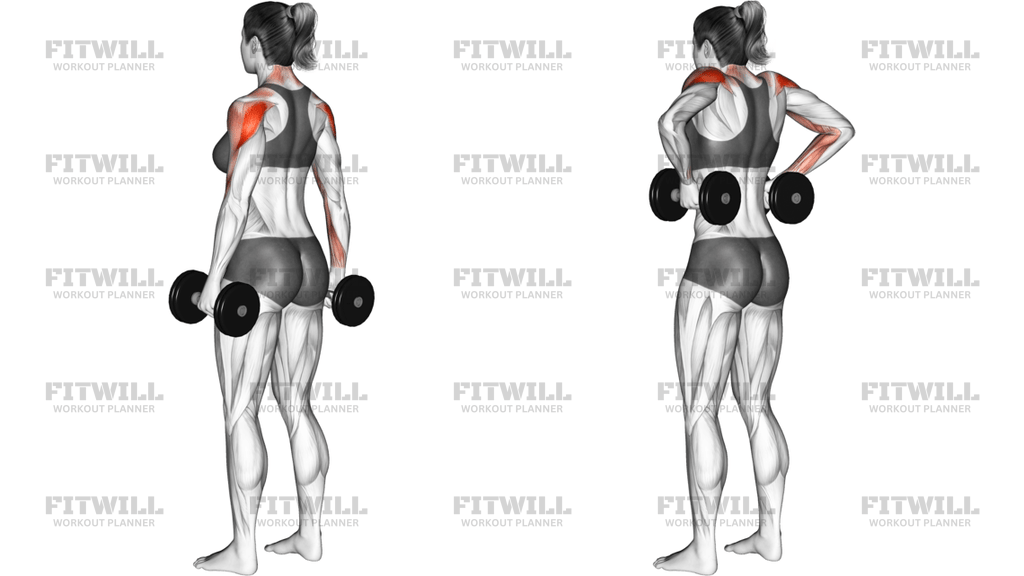
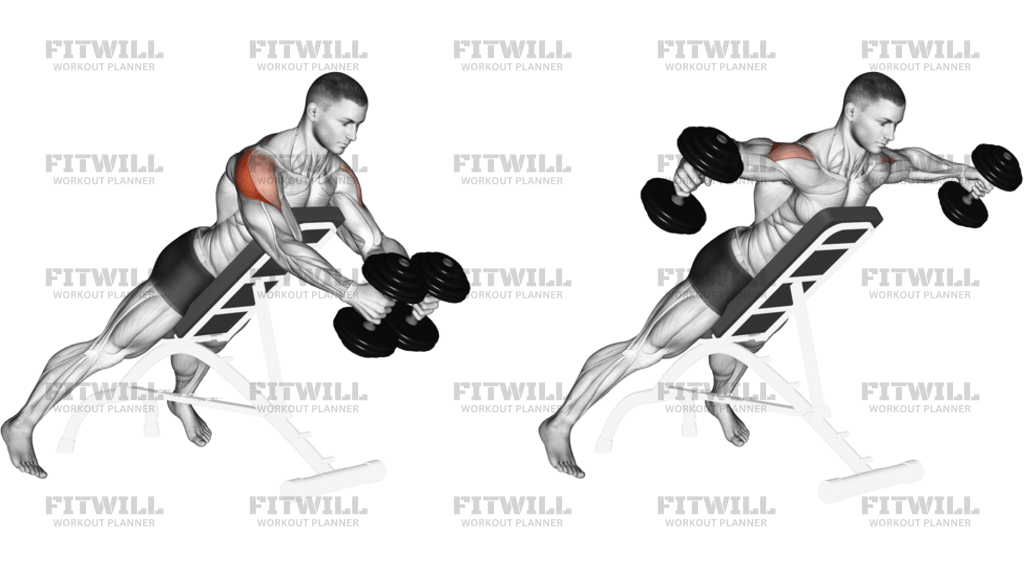
Dumbbell Rear Delt Raise
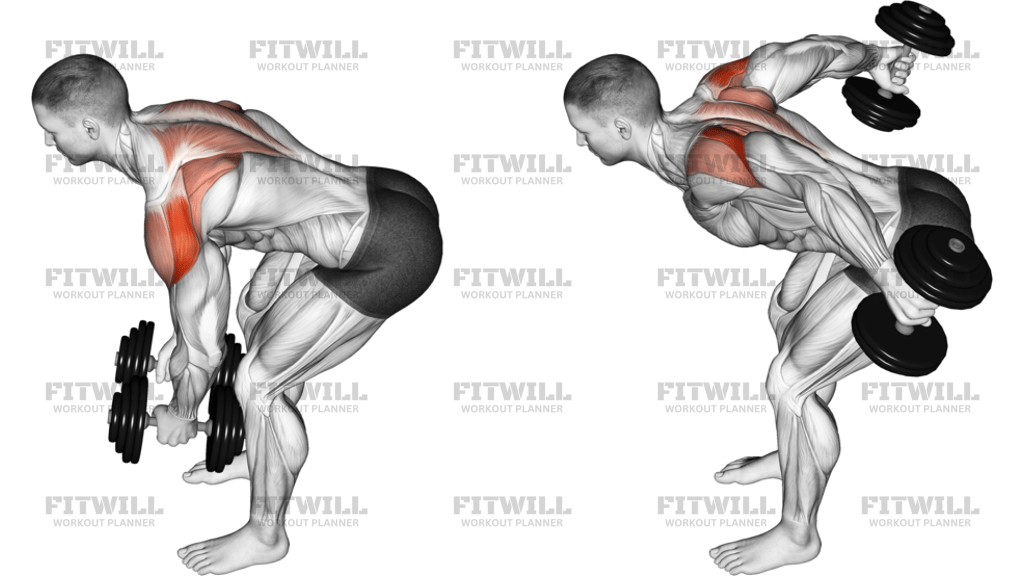
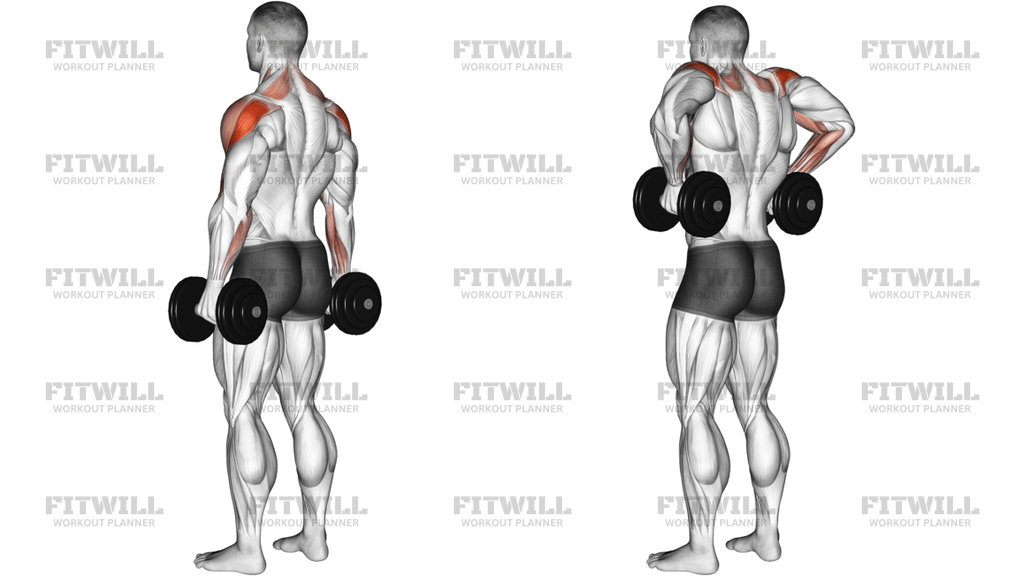
Dumbbell Rear Delt Raise is a rear-shoulder isolation exercise done here from a standing hip hinge with a dumbbell in each hand. The torso stays tipped forward, the arms hang below the shoulders, and the lift travels out and slightly back until the upper arms open wide through the back of the shoulder. It is a simple movement pattern, but the setup matters because the angle of the torso and the stillness of the trunk decide whether the rear delts do the work or the upper traps and momentum take over.
The main target is the rear portion of the deltoids, with the rhomboids, mid and lower trapezius, and forearms helping stabilize the path. In a good rep, the shoulder blades do not crank upward early and the neck stays long. The dumbbells should feel like they are being moved by the back of the shoulder rather than being swung by the torso. That makes the exercise useful for balanced shoulder development, posture work, and accessory training after presses, rows, or pull sessions.
Set the feet about hip-width apart, soften the knees, and hinge forward until the chest is angled toward the floor while the spine stays long. Let the dumbbells hang under the shoulders with a neutral grip, then start each rep by lifting the elbows out to the sides with a small bend in the arms. Keep the wrists mostly neutral and raise until the upper arms are close to shoulder height or slightly below if that is where the rear delts stay in control. Lower the weights slowly back to the hanging start without losing the hinge.
This exercise works best with light to moderate dumbbells and a deliberate tempo. If the weights get heavy enough that the torso rocks, the shoulders shrug, or the hands rise far above elbow level, the rear delts stop being the limiter. Use it for controlled hypertrophy work, warm-up activation, or as accessory volume when you want shoulder abduction without pressing. Beginners can learn it well with very light dumbbells, because the movement is easy to understand but still punishes sloppy posture and rushing.
[ Workout Log & Planner ]
Put your next workout in Fitwill
Keep your plan and training log ready when you are.


Instructions
- Stand with your feet about hip-width apart and hold a dumbbell in each hand with your arms hanging at your sides.
- Hinge forward at the hips until your torso is angled toward the floor, keeping a long spine, soft knees, and a fixed neck.
- Let the dumbbells hang below your shoulders with your palms facing each other and a slight bend in the elbows.
- Brace your torso so your chest stays still before the first rep starts.
- Lift both elbows out and slightly back in a wide arc until your upper arms approach shoulder height.
- Keep the wrists quiet and avoid turning the movement into a curl or a shrug.
- Pause briefly at the top when the rear shoulders are fully shortened.
- Lower the dumbbells slowly to the hanging start without losing the hip hinge.
- Reset your posture if your back rounds or your torso begins to sway.
Tips & Tricks
- Choose dumbbells that let you keep the torso angle fixed; if you need to stand up to finish reps, the load is too heavy.
- Think about moving the elbows, not the hands, so the rear delts stay in charge of the lift.
- Keep the shoulders away from the ears; a shrugging top position shifts work into the upper traps.
- Use a small elbow bend and keep it nearly the same through the whole rep to avoid turning this into a row.
- Stop the raise when the upper arms are about level with the shoulders; going much higher often trades tension for momentum.
- Lower the dumbbells slower than you lift them to keep tension on the back of the shoulder.
- Keep the ribcage braced so the low back does not extend as the weights rise.
- If the neck tightens, shorten the set and reduce the load before form breaks down.
Frequently Asked Questions
What muscle does the standing Dumbbell Rear Delt Raise target most?
It mainly targets the rear deltoids, with the upper back helping stabilize the shoulders.
How should my torso be positioned during the rep?
Keep a hip hinge with your chest angled toward the floor and your spine long, then keep that angle steady while you raise the dumbbells.
Should my elbows or hands lead the movement?
Let the elbows lead the arc. The hands just follow the dumbbells; if the wrists start doing the work, the rear delts lose tension.
How high should I raise the dumbbells?
Raise until the upper arms are close to shoulder height, or stop slightly lower if going higher makes you shrug or sway.
Can I do this with heavy dumbbells?
Heavy loads usually turn this into a swing. Light to moderate dumbbells work better because the rear delts respond to strict control more than brute force.
Why do my upper traps take over?
That usually happens when you shrug the shoulders, stand too upright, or use too much weight. Keep the neck long and the torso fixed.
Is a neutral grip correct for this exercise?
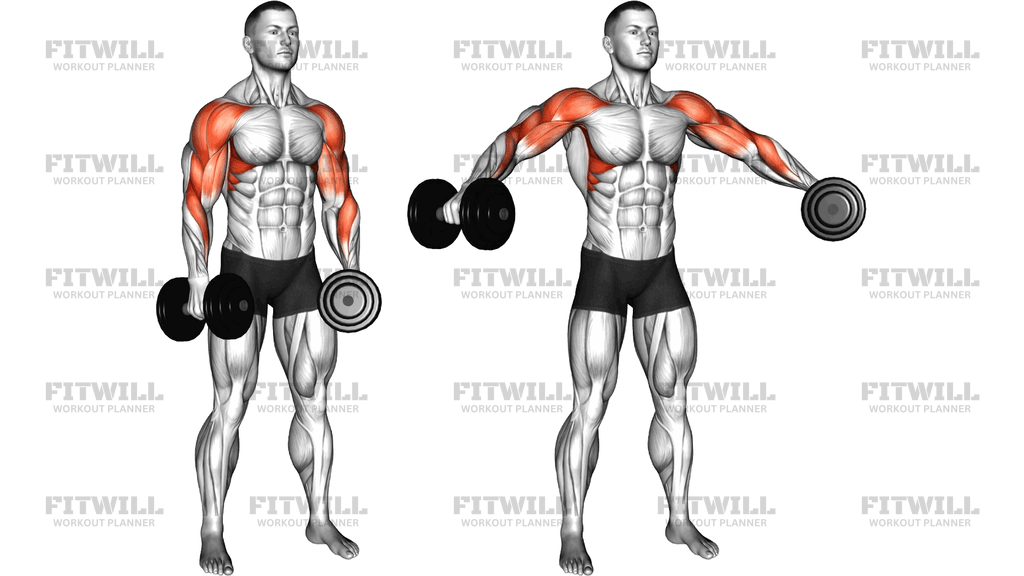
Yes. A palms-facing-each-other grip matches the image and helps keep the elbows tracking out cleanly.
What is the most common form mistake?
The biggest mistake is using body swing to throw the weights upward instead of keeping the hinge and lifting from the rear shoulder.