Dumbbell Sumo Squat
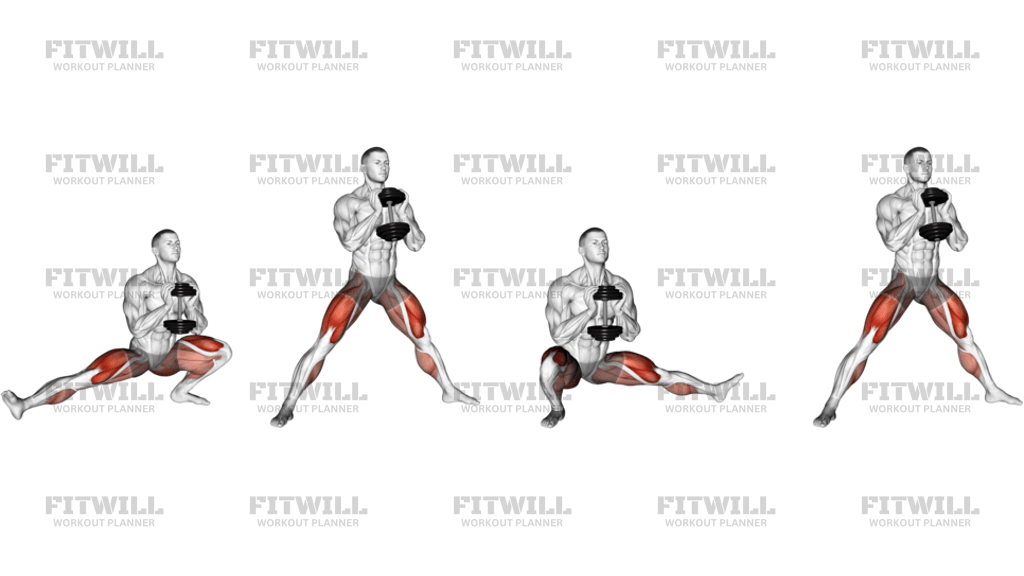
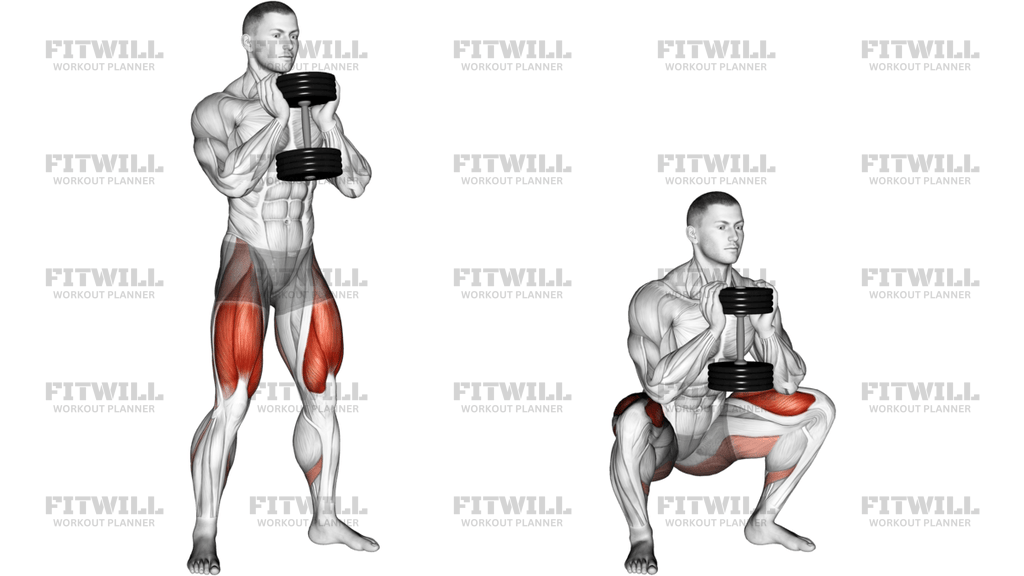
Dumbbell Sumo Squat is a wide-stance squat variation that places a single dumbbell low between the legs and shifts a lot of the work to the glutes, thighs, and inner thighs. The wide foot position changes the feel of the squat immediately: the hips open more, the torso can stay a little more upright, and the knees need room to track outward instead of folding inward. That makes the exercise useful when you want lower-body work that is simple to set up but still demands good control.
This movement is a practical choice for hypertrophy work, accessory strength work, and lower-body sessions where you want to train the squat pattern without a barbell on your back or shoulders. The hanging dumbbell keeps the load centered and easy to manage, but it also exposes sloppy stance choices very quickly. If the feet are too narrow, the weight drifts forward, or the knees cave in, the exercise stops feeling like a clean sumo squat and turns into a rough hinge.
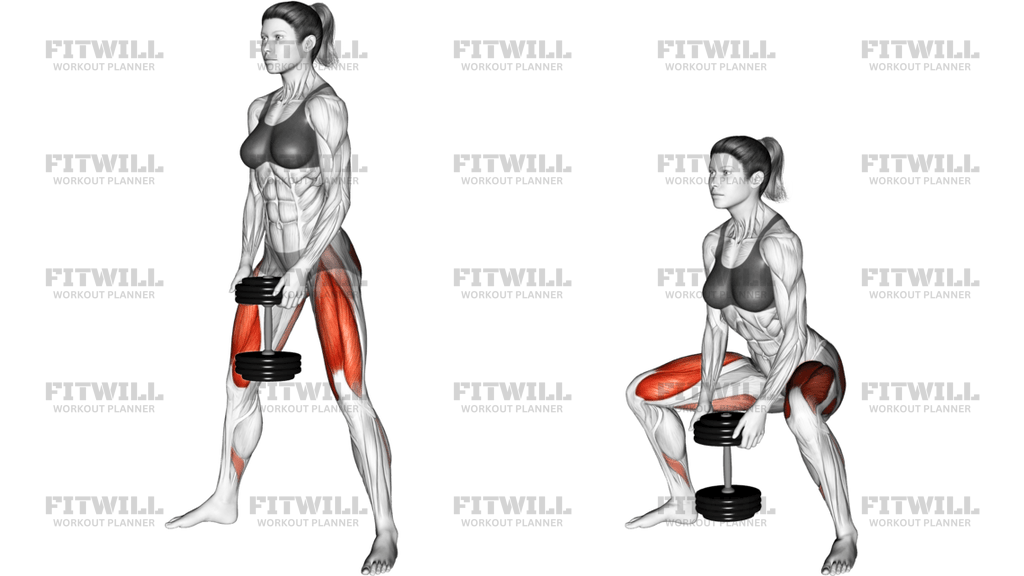
The setup matters more here than with many other squat variations. Stand with the feet wider than shoulder-width, turn the toes out, and let the dumbbell hang vertically from both hands between the thighs. Keep the chest tall and the ribs stacked over the pelvis before you lower, then sit the hips down between the knees while the knees track in line with the toes. The goal is a controlled descent that keeps the dumbbell centered and the heels flat.
At the bottom, stop where the hips can stay organized and the lower back does not round. Then drive the floor apart, push through the midfoot and heels, and squeeze the glutes to stand tall without leaning back at the top. Breathing should stay deliberate: inhale on the way down, brace before the turn, and exhale as you rise. Clean reps are the priority, because the exercise works best when every repetition looks and feels the same.
Dumbbell Sumo Squat is also easy to scale. Beginners can shorten the range and use a light dumbbell, while stronger lifters can slow the lowering phase or add load as long as the knees stay open and the torso remains stable. If the dumbbell touches the floor before you reach a useful depth, stop slightly higher or use a smaller plate diameter. Used well, this exercise gives you a straightforward way to train the legs and glutes with a wide stance that is easy to repeat session after session.
[ Workout Log & Planner ]
Put your next workout in Fitwill
Keep your plan and training log ready when you are.


Instructions
- Stand with your feet wider than shoulder-width and turn your toes out about 30 to 45 degrees.
- Hold one dumbbell vertically by the top end with both hands and let it hang between your thighs.
- Stack your ribs over your pelvis, lift your chest, and brace your abdomen before you descend.
- Sit your hips down and back while letting your knees travel out in line with your toes.
- Lower until your thighs are close to parallel or as deep as your hips can stay neutral and your heels stay down.
- Pause briefly at the bottom without relaxing the dumbbell or collapsing your knees inward.
- Drive through your heels and midfoot to stand, squeezing your glutes as you rise.
- Finish tall with your hips and knees extended, but do not lean back or thrust the dumbbell forward.
- Reset the stance and repeat for the planned number of repetitions.
Tips & Tricks
- Keep the dumbbell centered between your heels; if it drifts forward, the squat usually turns into a forward fold.
- Turn the toes out enough that your knees can open, but not so far that your arches collapse.
- If the dumbbell taps the floor too early, shorten the depth or use a smaller dumbbell plate diameter.
- Let the knees travel outward over the toes instead of letting them cave toward each other.
- Keep your chest proud on the descent so the weight stays in the hips instead of pulling you into a rounded back.
- Use a slower lowering phase if you feel the bottom position bouncing or losing tension.
- Choose a load you can hold with straight arms; bent elbows usually mean the dumbbell is too heavy or the stance is off.
- Stop the set when your heels start lifting or your lower back starts rounding before the hips do.
Frequently Asked Questions
What muscles does Dumbbell Sumo Squat work most?
It mainly trains the glutes, quads, and inner thighs, with the hamstrings and core helping to stabilize the torso.
How do I hold the dumbbell in Dumbbell Sumo Squat?
Hold one dumbbell vertically by the top end with both hands and let it hang straight down between your legs.
How wide should my stance be for Dumbbell Sumo Squat?
Use a stance wider than shoulder-width so your knees can open out and the dumbbell can stay centered between your heels.
Can beginners do Dumbbell Sumo Squat safely?
Yes. Start with a light dumbbell, a shorter range of motion, and a controlled tempo until your hips and knees track smoothly.
Why do my knees cave in during Dumbbell Sumo Squat?
Usually the stance is too narrow, the toes are too straight, or the load is too heavy. Turn the toes out a little more and push the knees in line with them.
How deep should I go in Dumbbell Sumo Squat?
Go only as deep as you can while keeping your heels down, your chest up, and your lower back neutral.
What if the dumbbell touches the floor before I reach depth?
Stop slightly higher or use a smaller dumbbell so the weight can hang vertically without forcing you to cut the rep short.
What is the main form mistake in Dumbbell Sumo Squat?
Letting the torso fold forward and the dumbbell drift away from the body. Keep the load centered and sit between the knees instead.