Dumbbell One-Arm Shoulder Press Version 2
Dumbbell One-Arm Shoulder Press Version 2 is a standing overhead press built around one dumbbell and one side of the body at a time. It trains the deltoids first, then asks the triceps, upper back, and core to keep the rep honest. Because only one arm is working, the exercise also challenges anti-rotation and side-to-side control, so the torso has to stay stacked while the load travels overhead.
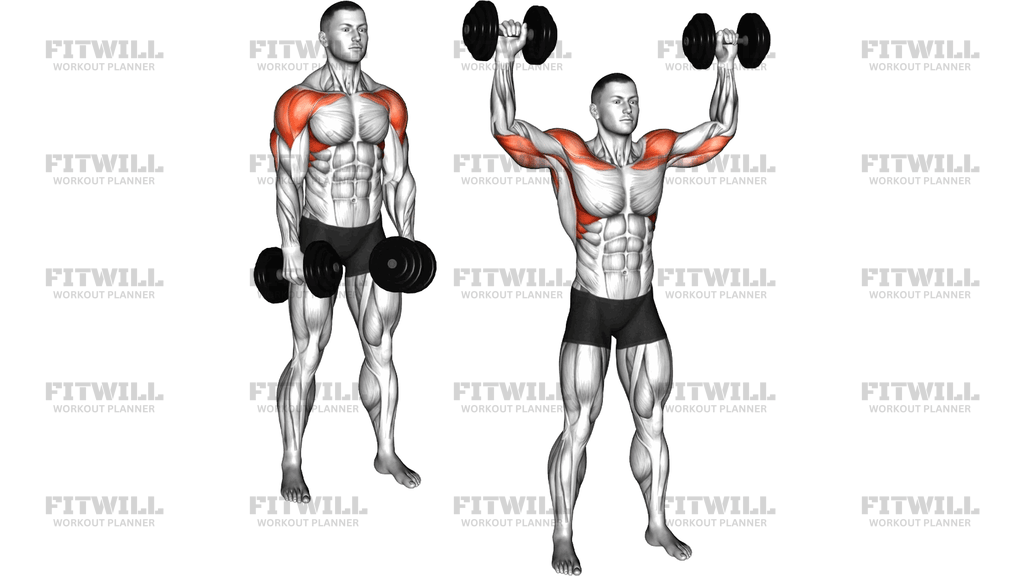
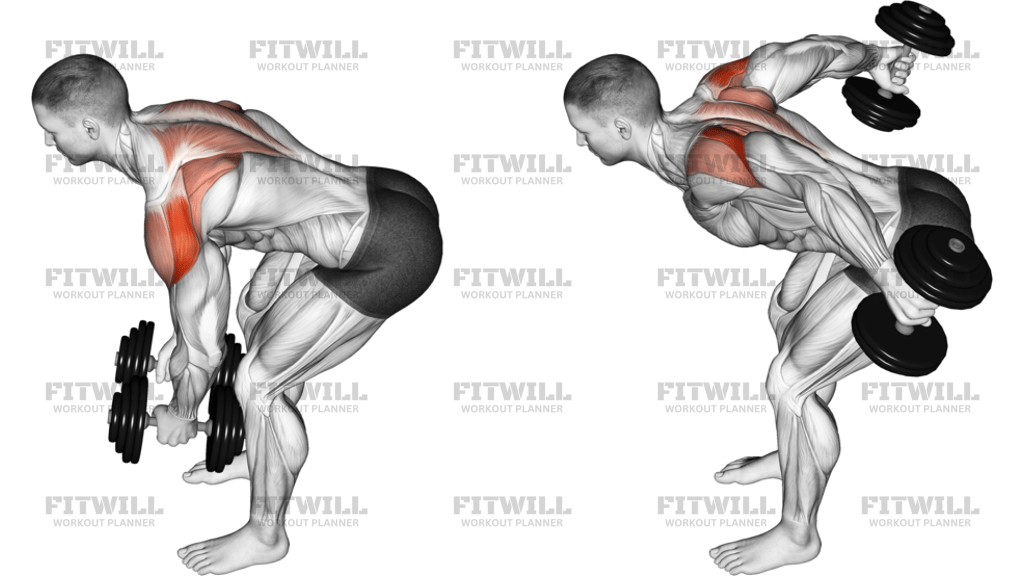
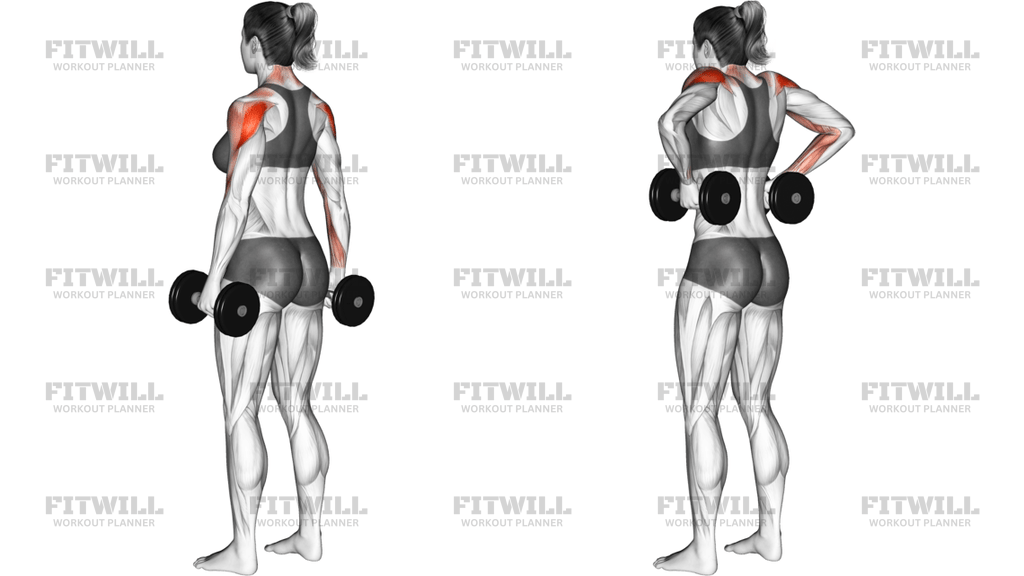
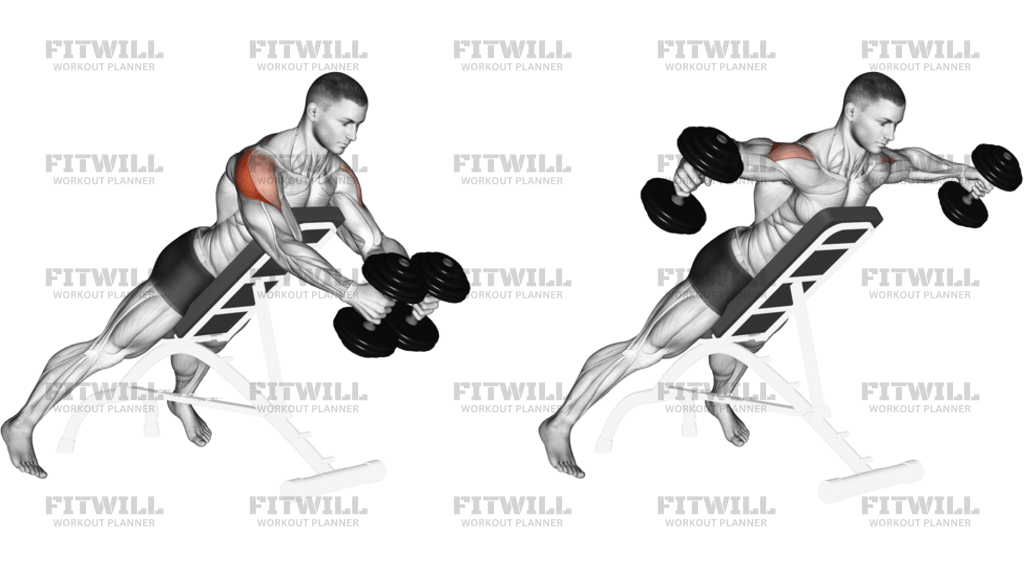
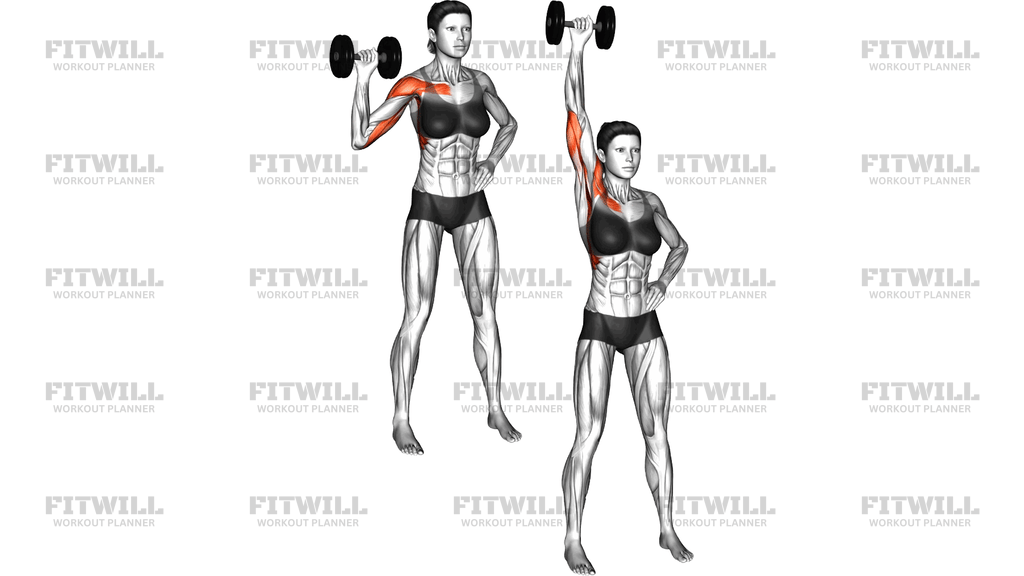
The image shows a classic standing press with the free hand parked on the hip for balance. That setup matters: if the ribs flare, the pelvis shifts, or the working shoulder drifts forward, the dumbbell usually turns into a lean-and-shrug instead of a clean press. A stable stance, wrist stacked over elbow, and a quiet torso make the shoulder do the work while the rest of the body resists unwanted movement.
Use a path that starts at shoulder height and finishes directly overhead, slightly behind the face so the arm ends in line with the ear. The dumbbell should travel in a controlled arc, not straight out in front. Pressing with the elbow under the wrist keeps force moving through the shoulder efficiently, while lowering slowly back to the rack position keeps tension on the delts and triceps without bouncing out of the bottom.
This exercise fits well in upper-body strength sessions, unilateral accessory work, and core-focused training where you want one side to work without the other side helping. It is especially useful when one shoulder is stronger than the other or when you want to clean up pressing mechanics side by side. Because balance demand is higher than with a seated or two-arm press, the load usually needs to be lighter than lifters expect.
Keep the rep pain-free and smooth. If the shoulder pinches overhead, reduce the load, shorten the range slightly, or switch to a more shoulder-friendly variation until the press path feels clean. The goal is a repeatable vertical press with a steady torso, not a forced grind that turns into a backbend.
Fitwill
Log Workouts, Track Progress & Build Strength.
Achieve more with Fitwill: explore over 9600 exercises with images and videos, access built-in and custom workouts, perfect for both gym and home sessions, and see real results.
Start your journey. Download today!




Instructions
- Stand tall with your feet about hip-width apart and hold one dumbbell at shoulder height on the working side, palm facing forward and elbow slightly in front of the torso.
- Place the free hand on the hip or ribcage, stack the wrist over the elbow, and keep the dumbbell just outside shoulder width instead of letting it drift in front of your face.
- Brace your abs and glutes before you press so the ribcage stays down and the torso does not lean away from the load.
- Press the dumbbell upward in a smooth line until the arm is straight and the biceps finishes close to the ear.
- Keep the shoulder from shrugging hard at the top; finish tall without bending backward through the lower back.
- Lower the dumbbell slowly back to shoulder height, keeping the forearm vertical and the elbow under the wrist.
- Let the weight settle under control at the bottom without bouncing off the shoulder or losing tension.
- Breathe out as you press and breathe in as you lower, then repeat all reps on one side before switching if that is how your program is written.
Tips & Tricks
- If your lower back wants to arch, lighten the dumbbell and think about pulling the ribs down before every rep.
- A slight elbow-forward position usually feels better on the shoulder than flaring the elbow straight out to the side.
- Keep the dumbbell in the scapular plane, which means slightly in front of the shoulder rather than directly out to the side.
- The free hand on the hip is useful for balance, but do not use it to twist the torso or shift the pelvis.
- Expect this to feel harder than a two-arm press because the torso must resist side bending and rotation.
- Stop the set if the dumbbell starts drifting forward and turning into a front raise instead of an overhead press.
- Control the lowering phase for a full shoulder-to-rack return instead of dropping into the bottom position.
- Use a weight that lets the pressing shoulder stay smooth at the top instead of grinding through a shrug.
Frequently Asked Questions
What does Dumbbell One-Arm Shoulder Press Version 2 work most?
It primarily trains the deltoids, with the triceps, upper back, and core helping to stabilize the rep.
Why is this version done one arm at a time?
Single-arm pressing exposes left-to-right strength differences and forces your trunk to resist rotation and side bending.
Should the dumbbell stay directly beside my head?
Not exactly. It should travel slightly in front of the shoulder in a natural press path so the arm can finish close to the ear.
Where should my free hand go?
The free hand can rest on the hip or ribcage, like in the image, as long as it does not push the torso off-center.
What is the most common mistake with this press?
Leaning away from the dumbbell and arching the low back. That usually means the load is too heavy or the ribs are flaring.
Can beginners do this exercise?
Yes, but it usually works best with a light dumbbell and a shorter set while you learn to keep the torso stacked.
Is a seated press easier than this version?
Usually yes. Seated pressing removes some balance and anti-rotation demand, so it is a useful regression if standing feels unstable.
How should I know if the weight is too heavy?
If you have to shrug early, lean to one side, or lose the vertical press path, the dumbbell is too heavy for clean reps.