Barbell Narrow Stance Squat
Barbell Narrow Stance Squat is a barbell back squat variation performed with the feet set narrower than a standard squat stance. The narrow base changes the balance demands and usually asks for a bit more ankle mobility, knee travel, and torso control while still training the lower body hard. It is a practical strength exercise when you want a squat pattern that stays compact, controlled, and easy to load with a barbell.
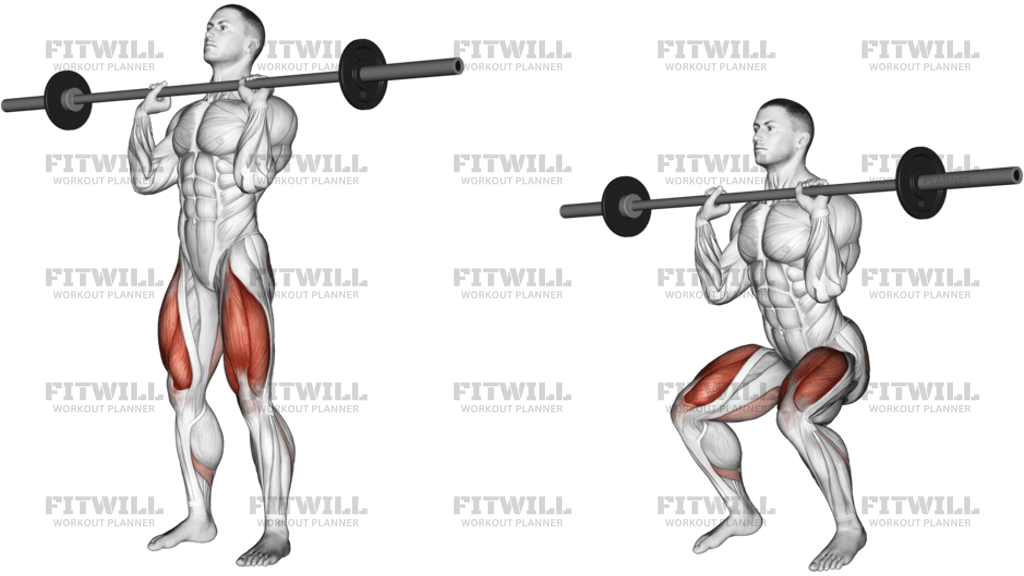
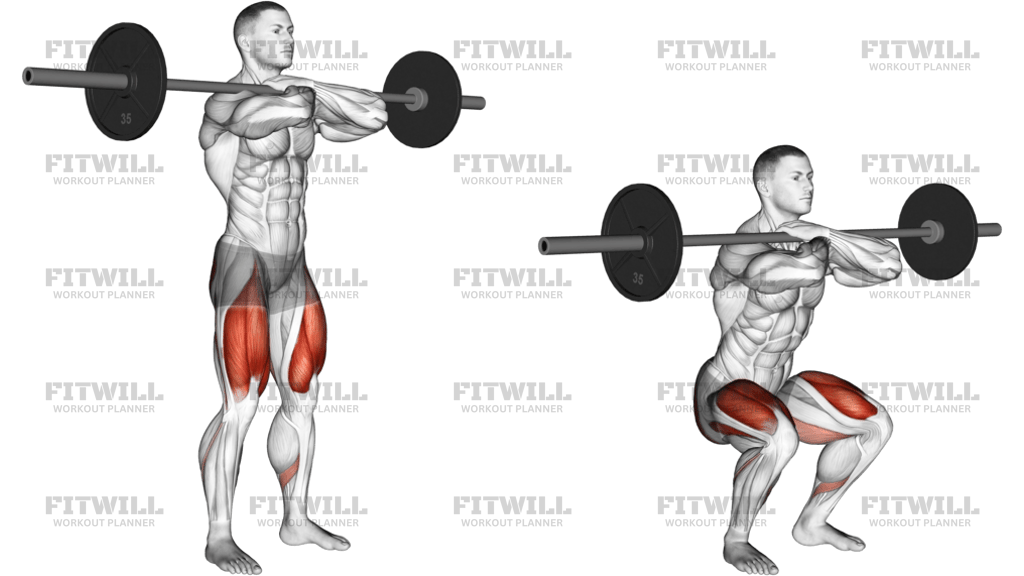
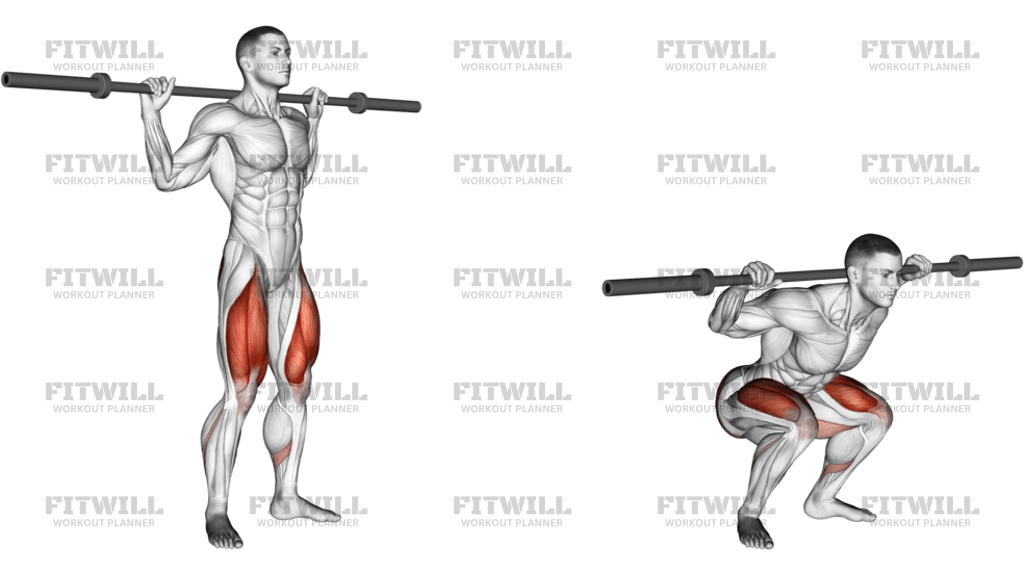
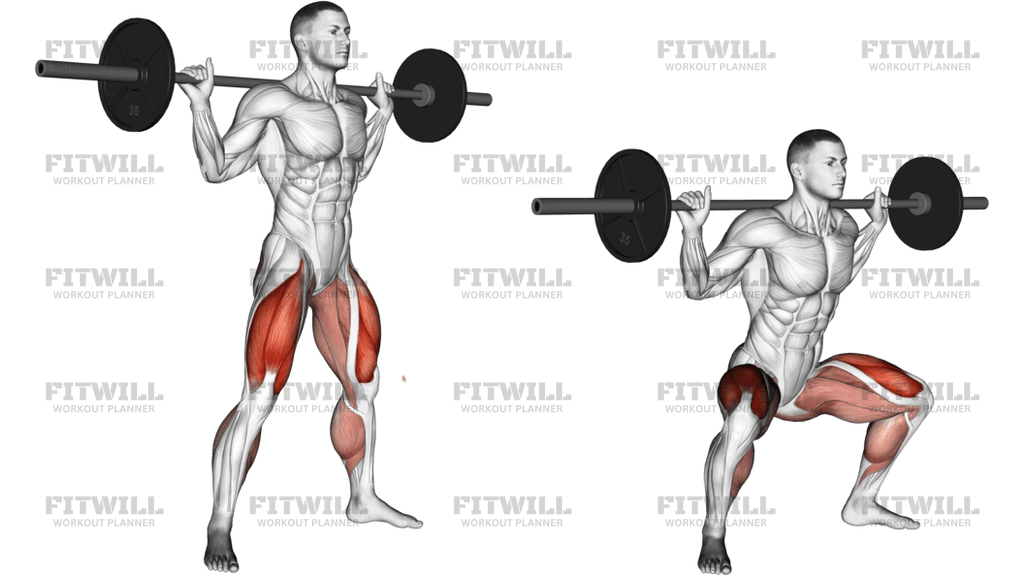
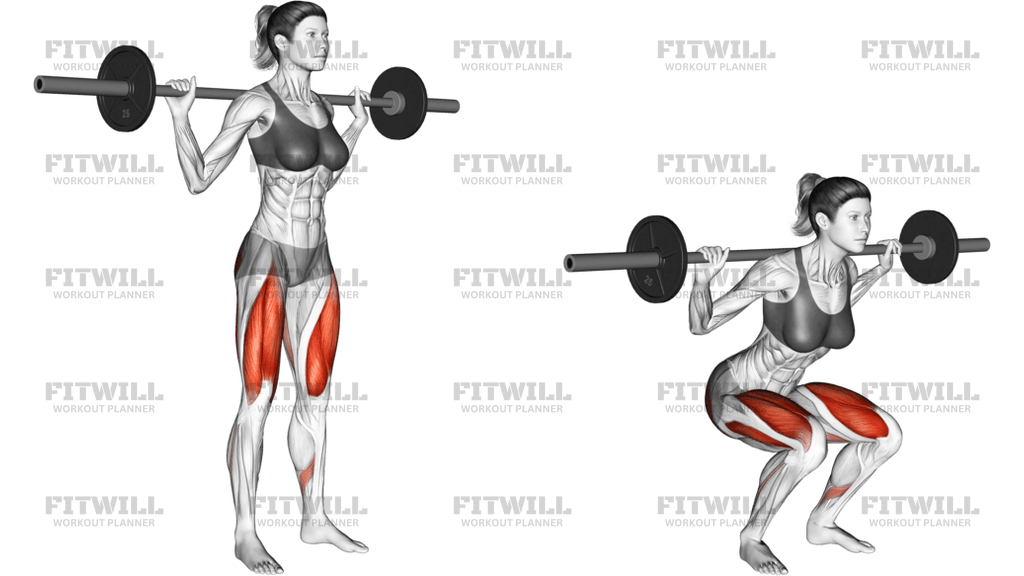
The image shows the bar resting across the upper back, with the chest up, elbows angled down and back, and the feet kept close enough that the lifter has to stay organized from hip to ankle. That setup puts the glutes and thighs to work together, with the gluteus maximus driving the ascent and the quads, hamstrings, core, and spinal erectors helping keep the trunk and knees stable. Because the stance is narrow, small setup errors become obvious quickly, so starting position matters more than brute force.
This squat is best treated as a controlled strength movement, not a bounce-and-rush drill. The descent should stay smooth, the heels should stay planted, and the knees should track in line with the toes as the hips drop between the heels. If you rush the bottom or lose midfoot pressure, the bar path gets inefficient and the torso usually folds forward. Clean reps come from consistent bracing, a repeatable depth, and enough mobility to keep the pelvis from tucking under at the bottom.
A narrow stance can be useful for lifters who want to emphasize quad and glute work in a back squat pattern, or for trainees who prefer a more compact setup under the bar. It also fits well in lower-body strength blocks, accessory work after a main lift, or technique-focused sessions where the goal is to build strong positions rather than chase speed. The tradeoff is that the stance can feel more demanding on the knees, ankles, and adductors, so load and depth should match what the body can control.
Use a rack with safeties set to a usable height, and choose a stance that is narrow but not forced. Slight toe turnout is usually enough; if the heels lift, the knees collapse inward, or the lower back rounds at the bottom, adjust the depth or widen the feet a little. Performed well, this squat builds strong legs, stable hips, and better control under the bar without relying on momentum or a sloppy rebound.
[ Workout Log & Planner ]
Put your next workout in Fitwill
Keep your plan and training log ready when you are.


Instructions
- Set the bar on a rack at upper-chest to shoulder height, duck under it, and place it across the upper back with the hands just outside shoulder width.
- Step back, then set your feet in a narrow stance that is still stable, usually just inside shoulder width, with toes turned out slightly.
- Stand tall, brace your core, and pull the ribs down so the torso stays stacked before you descend.
- Unlock the hips and knees together and sit straight down between the heels, keeping the bar over the midfoot.
- Let the knees travel forward and out in line with the toes while keeping the heels flat and the chest lifted.
- Lower until your depth is controlled and your pelvis stays neutral, or stop slightly above that point if mobility is limited.
- Drive up through the whole foot, pushing the floor away and keeping the knees from collapsing inward.
- Exhale as you pass the hardest part of the ascent, then reset your breath before the next repetition.
- Re-rack the bar only after standing fully upright and regaining balance.
Tips & Tricks
- Keep the stance narrow, but do not force the feet so close together that you lose balance or knee tracking.
- A slight toe-out angle usually helps the hips open enough to reach depth without twisting the knees.
- Think about lowering the hips between the heels instead of pushing them far back like a wide-stance squat.
- If the heels pop up, the stance is probably too narrow or the squat is deeper than your ankle mobility can support.
- Hold the bar firmly into the upper back so it does not drift or bounce as you rise.
- Keep pressure through the midfoot and heel; if the weight shifts to the toes, the torso will usually fold forward.
- Stop the rep when the lower back starts to round under the pelvis instead of chasing depth for its own sake.
- Use the rack safeties or pins, especially when the narrow stance makes the bottom position less forgiving.
Frequently Asked Questions
What muscle does Barbell Narrow Stance Squat target most?
The glutes are the primary target, with the quads doing a lot of work because the narrow stance keeps the knees traveling forward.
Can beginners perform this exercise?
Yes, but beginners should start light, use a rack with safeties, and shorten the depth if they cannot stay balanced in the bottom.
Where should the bar sit?
The bar should rest across the upper back in a stable back-squat position, not on the neck.
How narrow should my stance be?
Narrow enough to feel compact and controlled, but still wide enough that your knees can track over your toes without your heels lifting.
How deep should I squat?
Go as low as you can while keeping the spine neutral and the heels down; depth is only useful if you can keep control in the bottom.
What if my knees cave in?
Widen the stance slightly, turn the toes out a bit more, and reduce the load until you can drive the knees in line with the toes.
Is this different from a normal squat?
Yes. The narrower stance usually makes the movement feel more compact and can shift more demand to the quads and glutes while increasing balance demands.
What is the safest way to progress it?
Add load slowly only after you can repeat the same stance, depth, and bar path without losing heel pressure or torso position.