Dumbbell Rear Fly
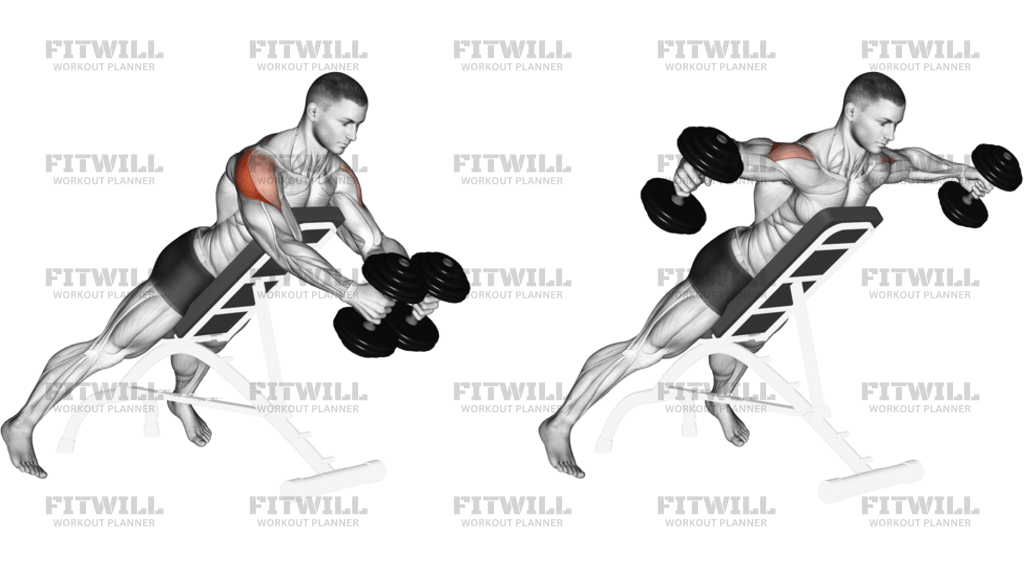
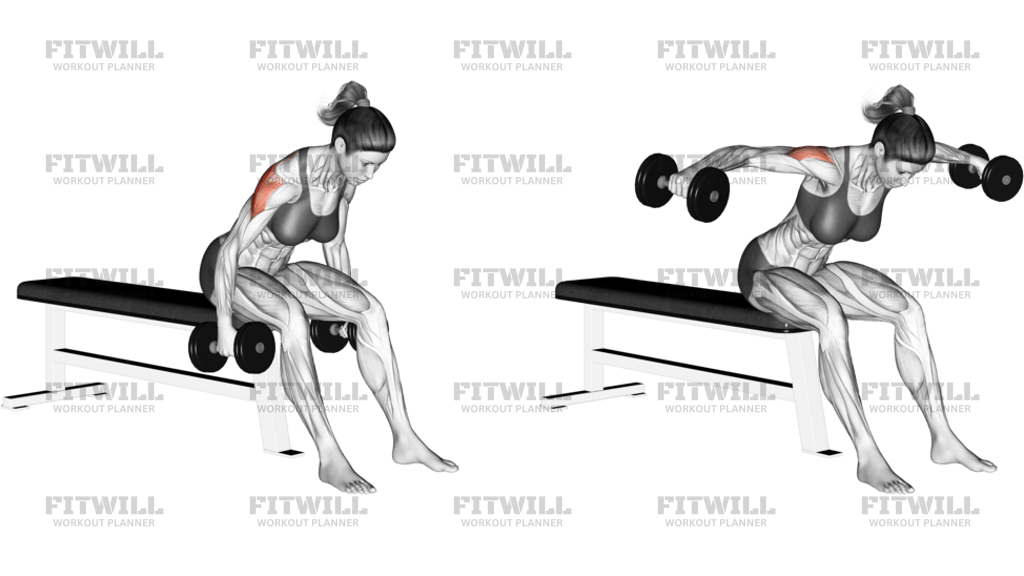
Dumbbell Rear Fly is a rear-delt isolation exercise performed from a seated, bent-over position with the dumbbells hanging under the shoulders and the chest angled toward the thighs. It is built to strengthen the posterior deltoids while also asking the mid traps, rhomboids, and upper back to control the shoulder blades and keep the torso steady.
The bench-supported setup matters because it removes a lot of the cheating that can happen in a standing hinge. When you sit tall on the bench edge, hinge forward, and let the arms hang with a soft elbow bend, the movement starts from the shoulders instead of the lower back or hips. That makes the rep cleaner and much easier to load with the right amount of tension.
As you lift the dumbbells, think about sweeping the arms out and slightly back in a wide arc until they reach about shoulder height. The elbows should stay slightly bent and lead the motion, while the wrists stay in line with the forearms. The top position should feel like the rear shoulders are doing the work, not like you are pinching the shoulder blades hard together or shrugging toward the ears.
This exercise is useful when you want to improve rear-delt size, shoulder balance, posture, or the control needed for pressing and pulling work. It often fits well after heavier compound lifts, or in a shoulder and upper-back accessory block where strict reps matter more than load. Light to moderate dumbbells usually produce better results than chasing heavy weights with momentum.
The safest version keeps the neck long, the torso quiet, and the return phase slow enough that the dumbbells do not drop back into the bottom position. If the lower back starts taking over, reduce the load or support the chest more firmly against the thighs. The goal is a controlled rear-shoulder fly that feels smooth, repeatable, and targeted from the first rep to the last.
[ Workout Log & Planner ]
Put your next workout in Fitwill
Keep your plan and training log ready when you are.


Instructions
- Sit on the edge of a flat bench and hinge forward until your chest is angled toward your thighs.
- Plant both feet flat, hold a dumbbell in each hand, and let the arms hang straight down under your shoulders.
- Keep a slight bend in the elbows and set your neck in a long, neutral position.
- Brace your torso before the first rep so your upper body stays still.
- Lift both dumbbells out to the sides in a wide arc, leading with the elbows.
- Raise until the upper arms are close to shoulder height and the rear delts are fully engaged.
- Lower the dumbbells slowly back to the hanging start without relaxing the torso.
- Repeat for the planned reps while keeping the motion smooth and even.
Tips & Tricks
- If your shoulders creep toward your ears, lower the weight and think about reaching the dumbbells wide instead of shrugging up.
- Keep the bend in your elbows nearly fixed; turning the movement into a row changes the emphasis away from the rear delts.
- Let the chest stay supported by the forward hinge on the bench edge so the lower back does not swing the weights.
- Stop the raise when the upper arms line up with the shoulders; going higher usually adds trap tension rather than better rear-delt work.
- Use a grip that keeps the wrists stacked over the handles so the forearms do not drift into the lift.
- Lower the dumbbells on a controlled count so the bottom position stays under tension instead of dropping quickly.
- Choose lighter dumbbells than you would for pressing or rowing; this movement responds best to clean, strict reps.
- Exhale as the arms open and inhale as you return to the hang to keep the torso braced without holding your breath the whole set.
Frequently Asked Questions
What muscle does Dumbbell Rear Fly target most?
The rear delts are the main target, with the rhomboids and mid traps helping control the shoulder blades.
Can beginners perform this exercise?
Yes. Beginners usually do best with very light dumbbells and a bench-supported hinge so the movement stays strict.
What should my body position look like on the bench?
Sit on the edge, hinge forward, keep your feet planted, and let the dumbbells hang directly under the shoulders before you start the raise.
Should I keep my elbows straight or bent?
Keep a small, fixed bend in the elbows. Straight arms can stress the joint, and a bigger bend turns the rep into more of a row.
Why use a seated bent-over setup instead of standing?
The seated position limits body swing and makes it easier to isolate the rear delts instead of using momentum from the hips and lower back.
Where should I feel the exercise most?
You should feel it mostly across the back of the shoulders, with some work in the upper back as the arms open and close.
What is the most common mistake with this fly?
Shrugging the shoulders or swinging the torso to get the dumbbells up usually means the load is too heavy.
How should I progress this exercise over time?
Add small amounts of weight only after every rep stays smooth, level, and controlled at the top and on the way down.