Bottoms Up
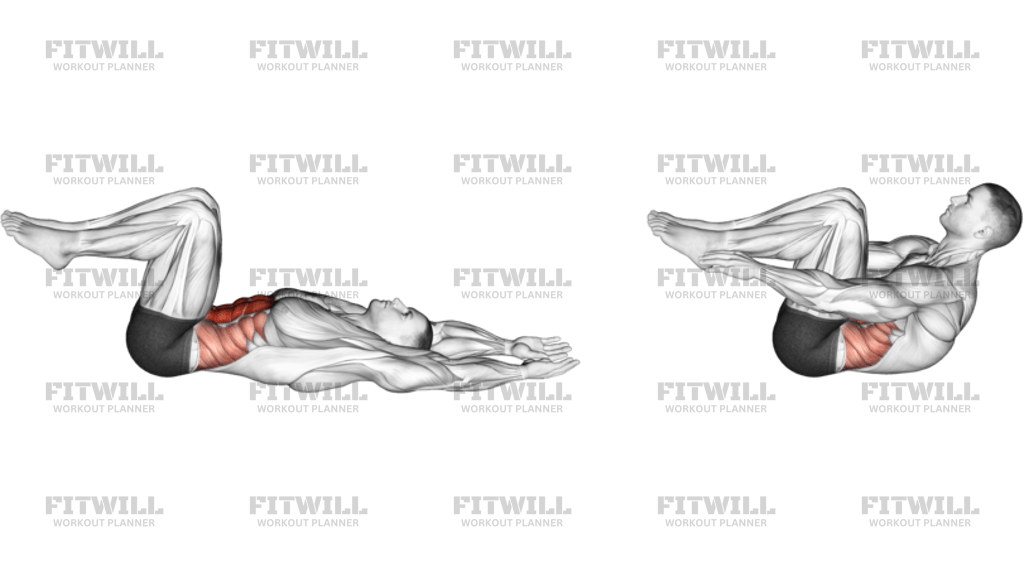
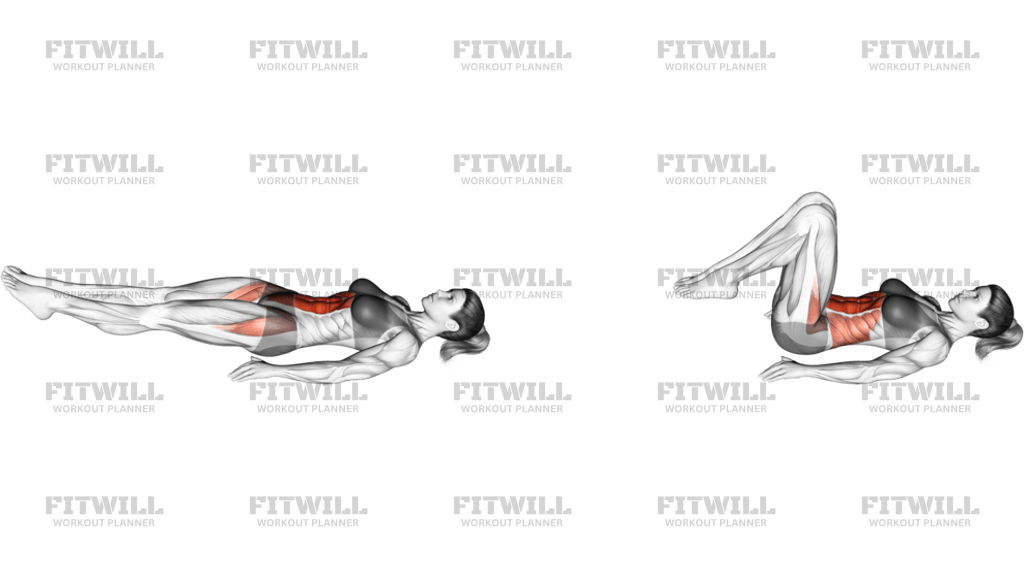
Bottoms Up is a floor-based core exercise that starts with the legs long and low, then finishes with the knees drawn in and the pelvis curling upward. The image shows a supine position with the hands by the sides, the lower back close to the floor, and the legs moving from a straight lever into a compact tuck. That makes this movement a reverse-crunch style drill rather than a sit-up or a standing ab exercise.
The main job of the exercise is to challenge the abs while the hip flexors and obliques help control the leg path and keep the pelvis from dumping into the lower back. In anatomy terms, the rectus abdominis does most of the work, with assistance from the external obliques, iliopsoas, and transversus abdominis. The useful training effect comes from keeping the torso quiet while the hips and legs move with precision.
Setup matters because this exercise is easiest to cheat once the legs start swinging. Lie flat on your back, place your hands beside your hips for balance, and set your shoulders and ribs down before the first rep. Keep the chin relaxed and the neck long. The lower back should start controlled, not aggressively arched, so the abs can initiate the movement instead of the hips yanking the body around.
Each repetition should begin with the legs extended and low enough to challenge the abs without losing contact and control. From there, pull the knees toward the chest, then curl the pelvis up so the tailbone lifts slightly off the floor. That small pelvic tuck is the key part of the rep. Lower the hips first, then extend the legs back out with control until you are back in the long-body position.
This is a strong choice for core-focused warmups, accessory work, or workouts where you want abdominal tension without loading the spine. It also works well for people who want a cleaner alternative to fast crunching because the floor gives clear feedback when the pelvis or ribs start to flare. Keep the reps smooth, use a range you can control, and stop the set when the low back starts to arch or the legs begin to swing instead of moving deliberately.
If you feel the exercise mostly in the front of the hips, shorten the leg lever slightly and focus on curling the pelvis first. If you feel it in the lower back, reduce range and keep the ribs heavy. When the form is right, the abs should feel like they are pulling the pelvis toward the ribs, not like the legs are simply lifting on their own.
[ Workout Log & Planner ]
Put your next workout in Fitwill
Keep your plan and training log ready when you are.


Instructions
- Lie on your back on the floor or a mat with your arms by your sides for support and your legs extended long.
- Set your ribs down, keep your neck relaxed, and lightly brace your abs before the first rep.
- Start with your heels hovering low or your legs fully extended, depending on how much control you can maintain.
- Exhale as you pull your knees toward your chest and begin to curl your pelvis off the floor.
- Lift the tailbone only a small amount; the movement should come from the lower abs, not from a swing.
- Pause briefly at the top when the knees are close to the torso and the pelvis is tucked.
- Lower your hips back to the floor first, then extend your legs out slowly to the start position.
- Keep the motion smooth and repeat for the planned number of reps without letting the lower back arch.
Tips & Tricks
- Treat the pelvic curl as the real rep: if the tailbone never leaves the floor, you are mostly just moving the legs.
- Keep the arms quiet beside your hips so you do not use them to rock your torso upward.
- Shorten the lever by bending the knees more if your lower back starts to arch during the lowering phase.
- Lower the legs only as far as you can keep the ribs down and the abs braced.
- Think about bringing the pubic bone toward the ribs instead of trying to throw the knees up fast.
- Use a slow return to the long position; that eccentric phase is where the abs often lose tension.
- Exhale through the curl and tuck, then inhale as you lengthen back out under control.
- Stop the set once the movement turns into a leg swing or your hips stop lifting cleanly.
Frequently Asked Questions
What muscle does Bottoms Up target most?
The abs are the main target, especially the lower portion of the rectus abdominis that controls the pelvic curl.
Can beginners perform this exercise?
Yes. Beginners should keep the legs higher, bend the knees more, and focus on a small, controlled tuck instead of a big lift.
What should my starting position look like on the floor?
Lie flat with your arms beside you, ribs down, and legs long or slightly bent so you can start each rep without swinging.
Should my shoulders leave the floor during the rep?
No. The shoulders stay relaxed on the mat while the pelvis curls up; this is not a sit-up.
Why do I feel this in my hip flexors?
The hip flexors help lift the knees, but if they dominate, reduce the range and emphasize the abdominal tuck before the legs move.
What is the biggest technique mistake with this exercise?
Letting the legs swing while the lower back arches. Keep the motion smooth and let the abs control the curl.
How low should my legs go on the way down?
Only as low as you can keep your ribs heavy and your lower back from popping off the floor.
How can I make Bottoms Up harder without adding weight?
Straighten the legs more, slow the lowering phase, and pause longer in the tucked position.