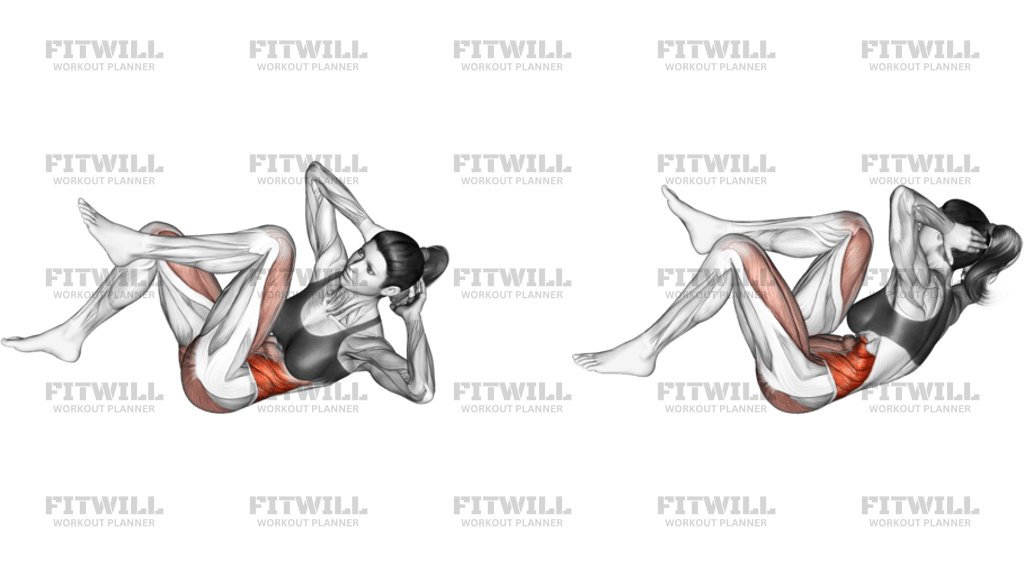
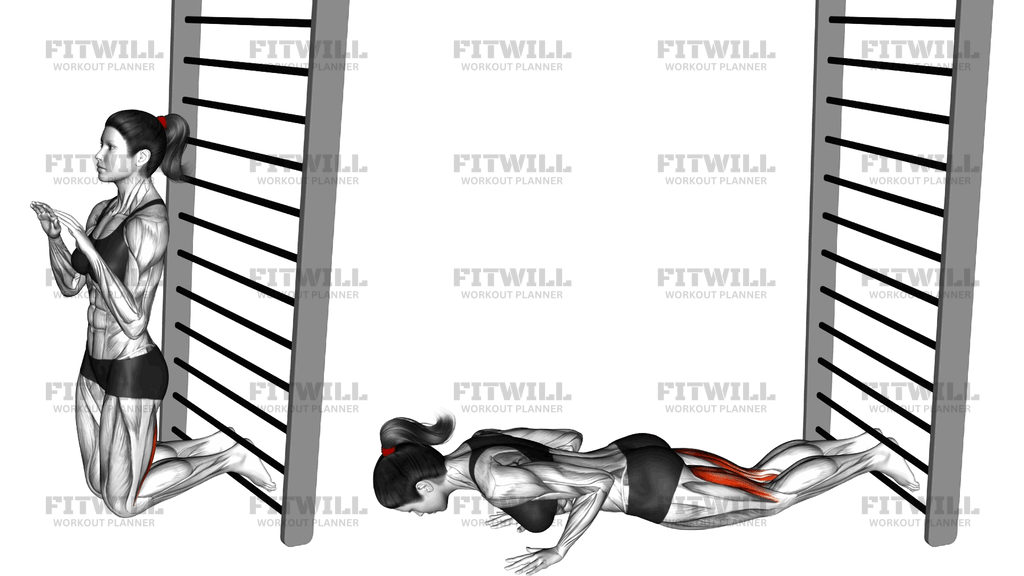
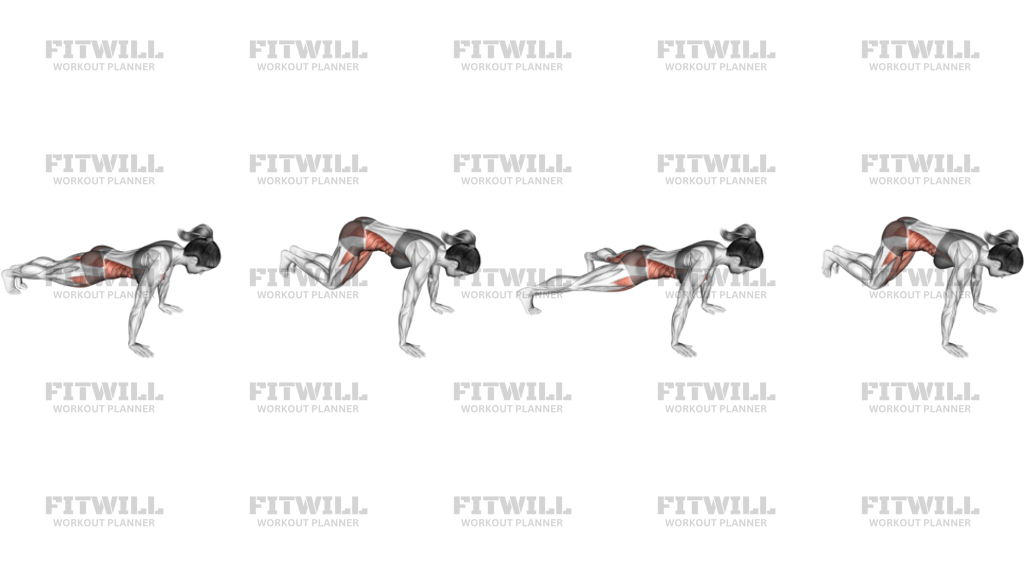
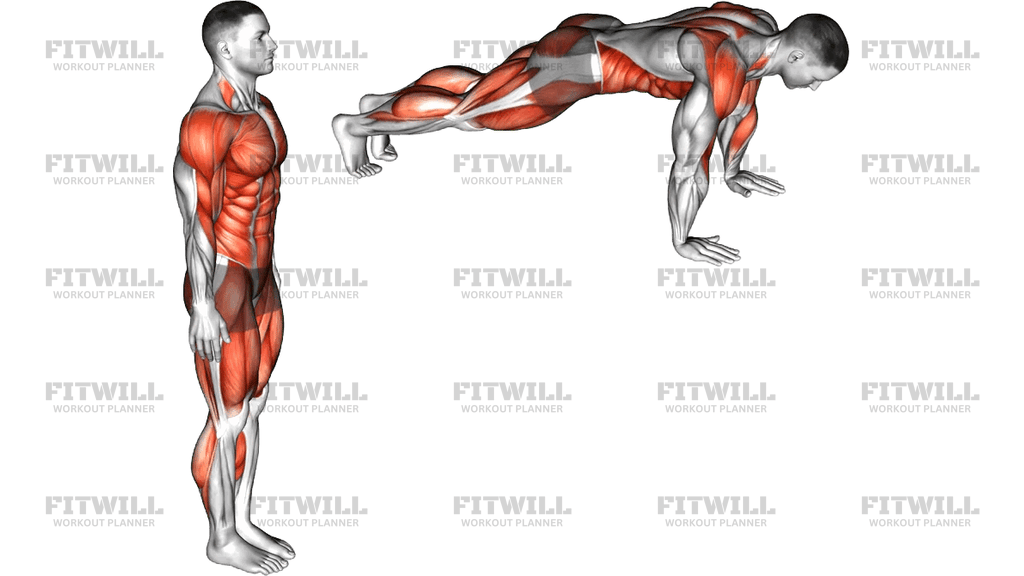
Standing Side Crunch
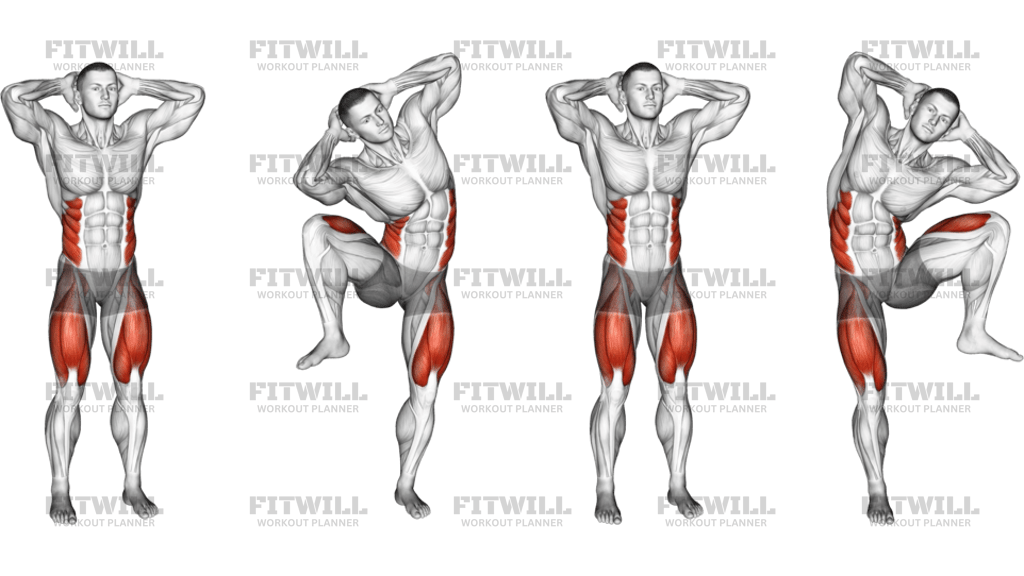
Standing Side Crunch is a bodyweight standing core exercise that trains the obliques through a side-bending crunch with a knee lift. The goal is not just to raise the knee, but to shorten the same side of the torso without losing balance, hunching the shoulders, or swinging the hips.
Because the hands stay behind the head, the upper body has to stay organized while the ribs move toward the lifted knee. That makes this a useful movement for learning how to flex the waist under control and how to keep the pelvis stacked while one side of the trunk works harder than the other. The visible target area is the waist, but the abs, hip flexors, and deep stabilizers all contribute.
The setup matters more than it looks. A narrow but stable stance, tall posture, wide elbows, and a quiet neck give you room to crunch cleanly instead of collapsing forward. If you start with your weight drifting onto one leg or your chest already folded, the rep turns into a balance drill instead of a controlled side crunch.
Each rep should feel like a deliberate meeting point between the elbow and the knee on the same side. Lift the knee, bend through the waist, and bring the rib cage down toward the hip with control. Then reverse the path slowly and reset to a tall, stacked position before switching sides or repeating the next rep.
Use Standing Side Crunch when you want a simple core accessory that is easy to teach, easy to scale, and effective for high-quality reps. It works well in warm-ups, core circuits, or conditioning sessions, especially when you want trunk control without equipment. Keep the motion strict enough that the obliques do the work instead of the lower back, neck, or momentum.
[ Workout Log & Planner ]
Put your next workout in Fitwill
Keep your plan and training log ready when you are.


Instructions
- Stand tall with your feet about hip-width apart and place your hands lightly behind your head.
- Keep your elbows open, your chest lifted, and your weight evenly distributed between both feet.
- Brace your core and set your ribs over your pelvis before you start the first rep.
- Lift one knee upward while bending the same side of your torso toward it.
- Bring the elbow and knee toward each other without pulling the neck forward or closing the chest.
- Pause briefly at the top when the side crunch is strongest and the standing leg still feels stable.
- Lower the knee and torso with control until you are tall again and the trunk is fully reset.
- Repeat on the other side, alternating sides for the planned number of repetitions.
- Exhale as you crunch and inhale as you return to the standing start position.
Tips & Tricks
- Keep your hands only as a light guide behind the head; do not yank the neck forward to fake a bigger crunch.
- Think about pulling the lower ribs toward the lifted hip, not just lifting the knee higher.
- Stay tall through the standing side so the support leg does not collapse as the working knee rises.
- Keep the elbows wide enough that the chest stays open at the start of each rep.
- Use a slow return so the obliques have to control the torso instead of dropping back to center.
- If your balance is shaky, shorten the knee lift slightly and clean up the trunk path before chasing height.
- Avoid twisting the shoulders hard toward the floor; this is a side crunch, not a full rotational swing.
- Stop the set when the neck starts leading the movement or the standing foot begins to hop.
Frequently Asked Questions
What does Standing Side Crunch train most?
It mainly trains the obliques on the side that crunches, with help from the hip flexors and deep core muscles.
Should my elbow touch my knee on every rep?
No. Bring them toward each other with control, but do not force contact if it makes you round forward or lose balance.
Why are my hands behind my head instead of at my sides?
That position helps you keep the chest open and makes the torso work harder to side-crunch without using the arms to swing.
What is the most common mistake in this exercise?
Pulling the head forward or collapsing the chest instead of bending cleanly through the waist.
Can I do this exercise with both knees lifting together?
No. The standard version is an alternating standing side crunch, one knee and one side at a time.
Is this a good exercise for beginners?
Yes, if they keep the range small, move slowly, and avoid using momentum or neck strain.
What should I do if I lose my balance during the knee lift?
Shorten the range of motion and keep more pressure through the standing foot until the torso stays controlled.
How can I make Standing Side Crunch harder?
Increase the range only if it stays strict, slow the lowering phase, or add a light external load without changing the torso path.