Cable Middle Fly
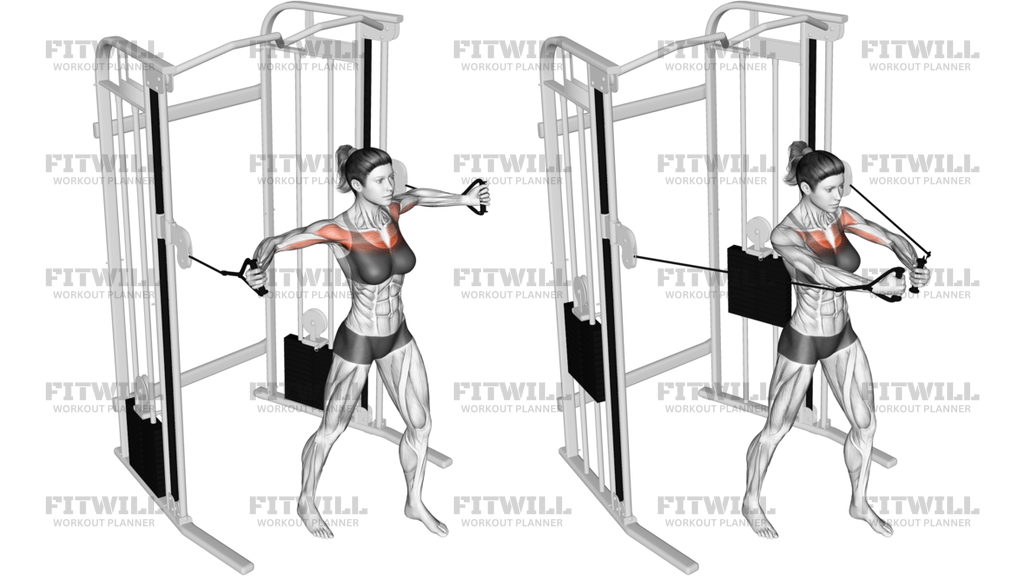
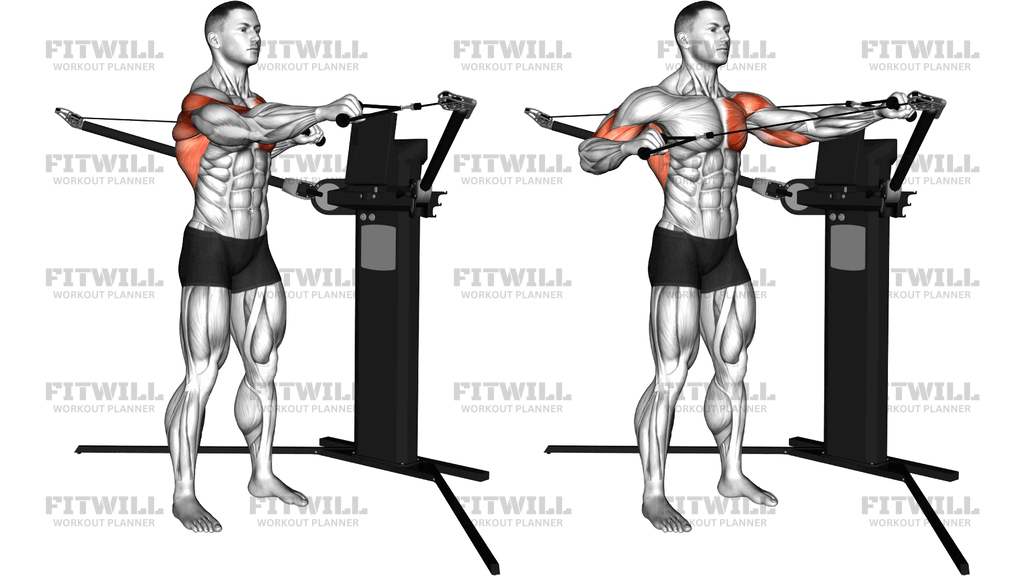
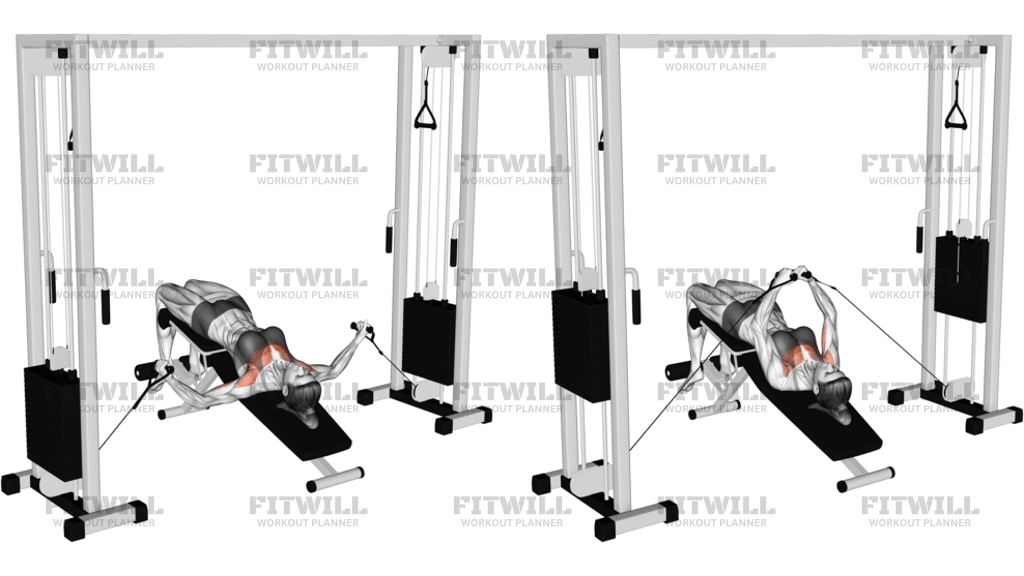
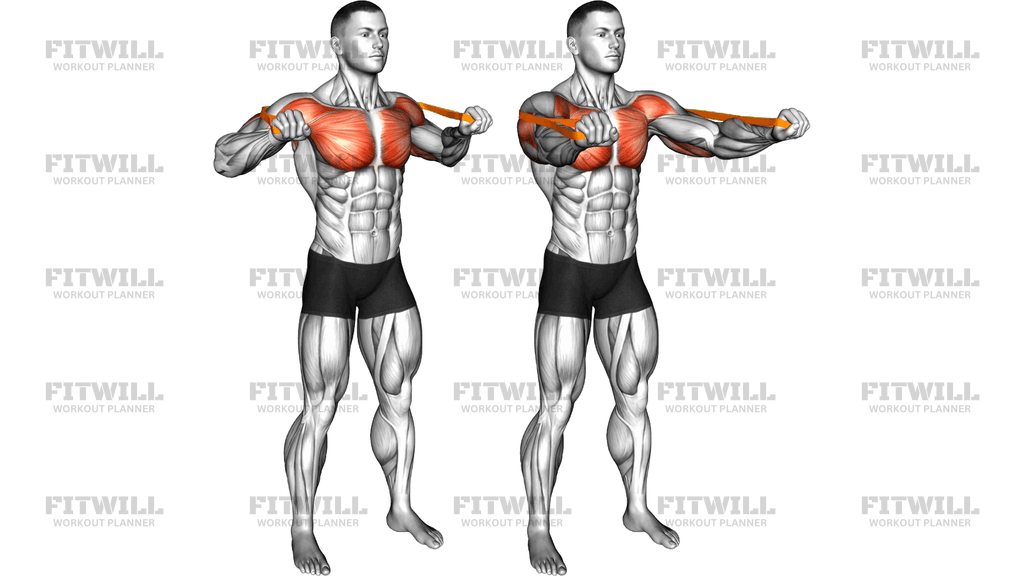
Cable Middle Fly is a standing cable chest fly performed with the handles set around mid-chest height. It trains horizontal adduction of the arms, so the chest has to do the main work while the front shoulders, upper back, core, and grip help you keep the body steady. Because the cables keep constant tension, the exercise rewards clean positioning more than brute force.
The setup matters a lot. If you start too upright, too far from the stacks, or with your elbows drifting, the movement turns into a shoulder-dominant sweep instead of a chest fly. A stable split stance, a small forward lean, and a soft bend in the elbows let you keep the handles on the right line and make each rep feel smooth from the stretch to the squeeze.
At the bottom of the rep, open the arms until the chest is stretched but the shoulders are still packed and comfortable. From there, sweep the handles in a wide arc until they meet in front of the sternum, not up near the face and not down at the waist. The elbows stay slightly bent the whole time, and the wrists should stay stacked so the arms move together instead of the hands bending away from the line of pull.
Cable Middle Fly is useful when you want chest work with less loading than presses and more continuous tension than dumbbells. It fits well in hypertrophy blocks, accessory work, and controlled chest sessions, especially when you want to practice keeping the ribcage still and the shoulders from shrugging. Use a load that lets you pause, control the return, and finish every rep without losing the line of the cables or letting momentum take over.
Fitwill
Log Workouts, Track Progress & Build Strength.
Achieve more with Fitwill: explore over 9600 exercises with images and videos, access built-in and custom workouts, perfect for both gym and home sessions, and see real results.
Start your journey. Download today!




Instructions
- Set the pulleys at mid-chest height and attach the handles.
- Stand centered between the stacks with one foot slightly in front of the other.
- Hold a handle in each hand with your palms facing in and a slight bend in both elbows.
- Step forward until the cables are taut and your arms open slightly behind the line of your torso.
- Set your ribs down, keep your chest tall, and lock in a soft, athletic knee bend.
- Sweep both handles in a wide arc toward the center of your chest.
- Bring the handles together in front of your sternum without shrugging or turning it into a press.
- Pause briefly at the squeeze, then return slowly until you feel the chest open again.
- Reset your stance and breathing before the next repetition.
Tips & Tricks
- Keep the handles on a mid-chest path; if the pulley line is much lower or higher, the exercise changes into a different angle.
- Treat the elbows like fixed hinges. A bigger bend halfway through usually means the movement is turning into a press.
- Let the shoulders stay down and wide. If they creep toward your ears, the front delts will take over.
- Stop the inward path when the hands meet over the sternum. Crossing far past the midline usually adds shoulder stress without giving the chest more work.
- Use a split stance and a small forward lean so the torso stays stable when the cables try to pull you backward.
- Choose a load that lets you control the stretch on the way out. If the stack yanks your arms open, it is too heavy.
- Exhale as the handles close and inhale as the arms open under control.
- If your wrists bend back, shorten the range and keep the knuckles stacked over the forearms.
Frequently Asked Questions
What does Cable Middle Fly work most?
It is a chest-dominant fly. The chest moves the handles together while the front shoulders, core, and upper back help stabilize the motion.
How high should the cable handles be?
Set both pulleys around mid-chest height so the arms travel on a mostly horizontal line through the rep.
How much bend should I keep in my elbows?
Keep a small, fixed bend in both elbows from start to finish. The angle should stay nearly the same while the shoulders and chest move the handles.
Why do I feel this more in my shoulders than my chest?
That usually means the load is too heavy, the pulleys are set too high, or the shoulders are shrugging forward at the squeeze.
How far back should I let the handles travel?
Open the arms until you feel a strong chest stretch, but stop before the shoulders roll forward or the ribcage flares.
Can I do Cable Middle Fly one arm at a time?
Yes. Single-arm reps can help you clean up the path and stop the torso from twisting, especially if one side takes over.
Is this a good beginner chest exercise?
Yes, as long as the weight is light enough to keep the elbows fixed and the return slow. The cable line makes it easier to learn than many free-weight fly variations.
What should I do if my wrists or forearms get tired first?
Reduce the load and keep the handles in line with the forearms. If needed, shorten the range slightly so the chest, not the grip, stays in charge.