Lever Seated Crunch
Lever Seated Crunch is a machine-based abdominal flexion exercise that targets the rectus abdominis while also demanding control from the obliques, deep core, and hip flexors. The seated lever setup fixes your lower body and lets you load spinal flexion directly, so the quality of the seat position, back pad contact, and handle position determines whether the rep stays on the abs or turns into a tug-of-war with the hips and arms.
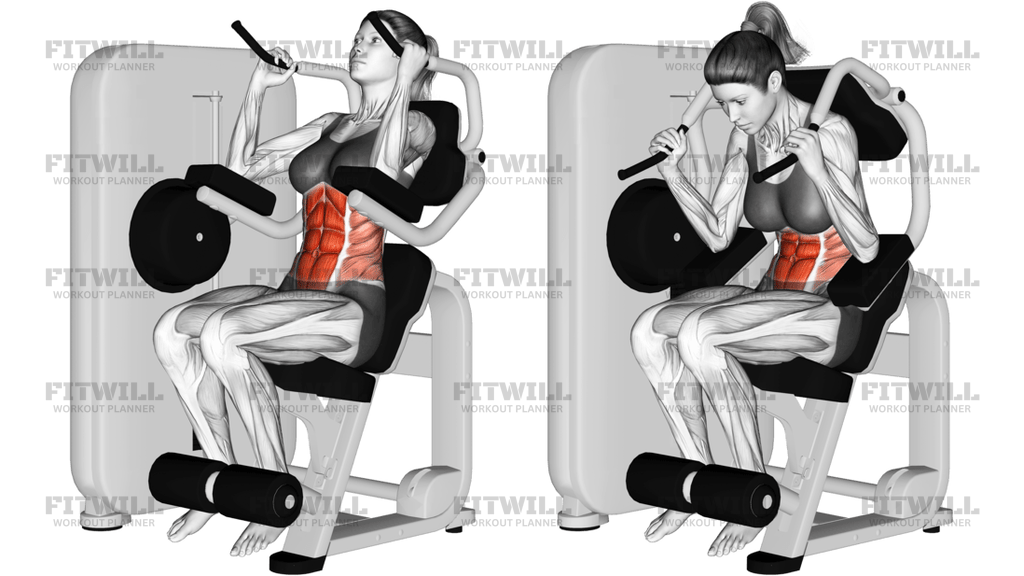
The image shows a seated crunch machine with the torso upright against a back pad, the shoulders and upper back supported by the machine, the hands gripping the handles near the head, and the lower legs pinned under a roller. That arrangement matters because it helps isolate trunk flexion while preventing you from sliding forward or turning the movement into a hip hinge. When the setup is right, the abdominals shorten the rib cage toward the pelvis in a smooth arc instead of the body collapsing or jerking down.
A good repetition starts with a strong brace and a tall but relaxed chest position. From there, you exhale and curl the sternum downward, bringing the ribs toward the hips while keeping the head and hands quiet. The elbows should stay in line with the machine handles, and the shoulders should not shrug hard into the top pad. At the bottom, the torso should be flexed hard without bouncing off the stack or letting the hips drive the movement.
Because the machine provides a fixed path, it is useful for controlled hypertrophy work, accessory ab training, and higher-rep core conditioning. It is also a practical option for beginners who need external support to learn trunk flexion without balancing or stabilizing against free weight demand. The tradeoff is that sloppy setup is easy to hide, so a small change in seat height or pad placement can shift tension away from the abs and into the hip flexors.
Use a load that lets you flex the trunk through a clear range, pause under control, and return slowly without losing contact with the pad. Keep the neck long, avoid yanking with the arms, and stop the set when the torso starts shortening the range or the lower back peels away from the backrest. The best reps feel like a deliberate ribcage curl, not a fast sit-up.
Fitwill
Log Workouts, Track Progress & Build Strength.
Achieve more with Fitwill: explore over 9600 exercises with images and videos, access built-in and custom workouts, perfect for both gym and home sessions, and see real results.
Start your journey. Download today!




Instructions
- Adjust the seat so your thighs are secured under the lower roller and your upper back and shoulders sit firmly against the back pad.
- Grip the side handles near head height, keep your elbows bent, and plant your feet flat on the foot support if the machine has one.
- Sit tall to start, draw your ribs down slightly, and set a firm brace before any movement begins.
- Exhale and curl your torso forward, bringing your sternum toward your pelvis while the hips stay fixed on the seat.
- Keep your hands and elbows quiet so the movement comes from trunk flexion instead of pulling with the arms.
- Continue crunching until your abdominals are fully shortened, then hold the bottom position for a brief controlled pause.
- Inhale as you reverse the motion slowly, letting the back pad guide you back to the start without bouncing the stack.
- Reset each rep with the shoulders settled into the pad and the neck relaxed before starting the next crunch.
Tips & Tricks
- Set the seat height so the machine bends you at the waist instead of forcing your shoulders up into the top pad.
- Think about curling the rib cage toward the pelvis, not driving the chest down with your hands.
- Keep the hips pinned to the seat; if they slide forward, the hip flexors usually start taking over.
- Let the neck stay long and neutral so you do not chin-tuck hard or crane the head into the rep.
- Use a resistance level that allows a smooth bottom pause without bouncing off the weight stack.
- Exhale through the crunch and avoid holding your breath for the entire set.
- Lower the machine under control for two to three seconds so the abs do the braking work.
- Stop the set when your range shortens or you start pulling with the elbows and shoulders.
Frequently Asked Questions
What muscle does Lever Seated Crunch target most?
The rectus abdominis is the main target, with the obliques and deeper core muscles helping control the crunch.
Can beginners perform this exercise?
Yes. The machine makes it beginner-friendly as long as the seat is set correctly and the resistance stays light enough for a clean curl.
Where should my hands and elbows be on the handles?
Grip the handles lightly near head level and keep the elbows bent and quiet. They should stabilize the torso, not pull the movement down.
What is the most common form mistake on the crunch machine?
People often yank with the arms or let the hips slide forward. The rep should come from curling the rib cage toward the pelvis.
Should I move my hips during the repetition?
No. The seat and lower roller should keep the pelvis fixed so the spine does the work instead of turning the rep into a hip hinge.
Why does the back pad matter so much on this machine?
It gives you a consistent starting point and keeps the motion focused on trunk flexion instead of letting you lean back or swing through the set.
Is this better for strength or for core conditioning?
It can be used for both, but it is especially useful for controlled hypertrophy and higher-rep abdominal work.
How do I know if the weight is too heavy?
If you cannot pause at the bottom, the shoulders shrug hard, or the range gets shorter rep to rep, the stack is too heavy.