Barbell Reverse-Grip Bent-Over Row
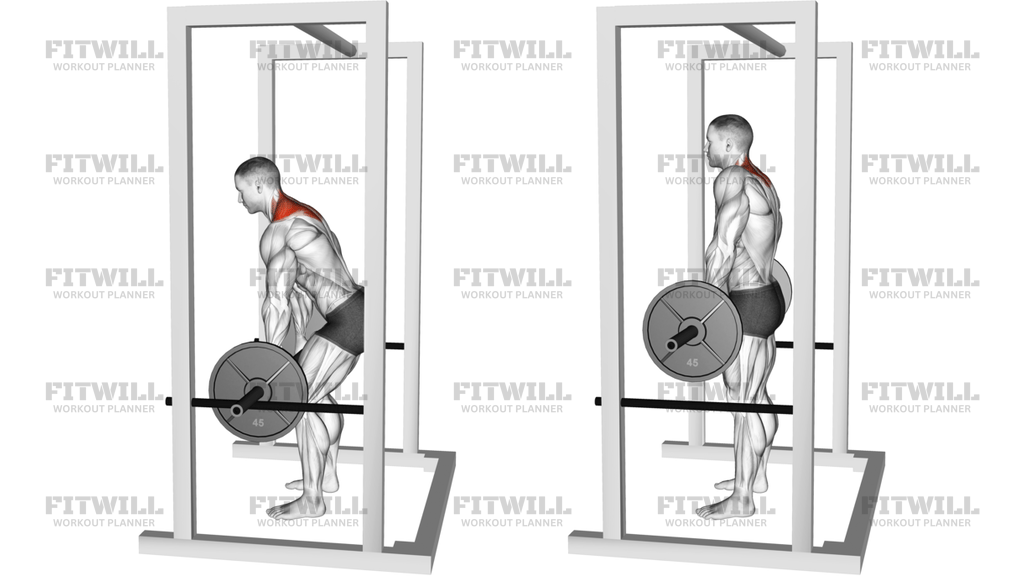
Barbell Reverse-Grip Bent-Over Row is a bent-hip pulling exercise that uses an underhand grip to load the upper back, lats, and biceps while teaching you to hold a strong torso angle. The reverse grip changes the feel of the row compared with an overhand version: the elbows usually travel a little closer to the body, the bar tends to finish lower on the torso, and the biceps contribute more to the pull.
This movement is useful when you want a row that trains back thickness without taking away the hinge position work of a free-weight pull. It reinforces the link between the hips, trunk, and shoulder blades, so the rep should feel deliberate rather than explosive. The goal is not to stand up and yank the bar, but to keep the torso fixed and row the weight with the back and arms.
The setup matters because the hinge position creates the space for the bar to travel cleanly. With the bar over the midfoot, soften the knees, hinge until your chest is angled toward the floor, and keep the spine long from the back of the head to the tailbone. A reverse grip should be narrow enough to feel natural at the wrists and elbows, but not so narrow that the bar drifts into the thighs or forces the shoulders forward.
Each repetition should start from a dead, controlled hang under the shoulders, then finish with the bar pulled toward the lower ribs or upper abdomen. As the bar comes up, think about drawing the elbows back and slightly in, then squeezing the shoulder blades without shrugging hard into the neck. Lower the bar with the same control and keep the hinge locked in place so the set stays on the back instead of turning into a partial deadlift.
Barbell Reverse-Grip Bent-Over Row works well as a strength accessory on back day, pull day, or any program that needs more upper-back volume with a strict free-weight setup. It can be scaled for beginners with lighter loading and a shorter range, but it rewards good positioning more than brute force. If your lower back is doing most of the work, the torso is too upright, the bar is too heavy, or the reps are getting sloppy.
Fitwill
Log Workouts, Track Progress & Build Strength.
Achieve more with Fitwill: explore over 9600 exercises with images and videos, access built-in and custom workouts, perfect for both gym and home sessions, and see real results.
Start your journey. Download today!




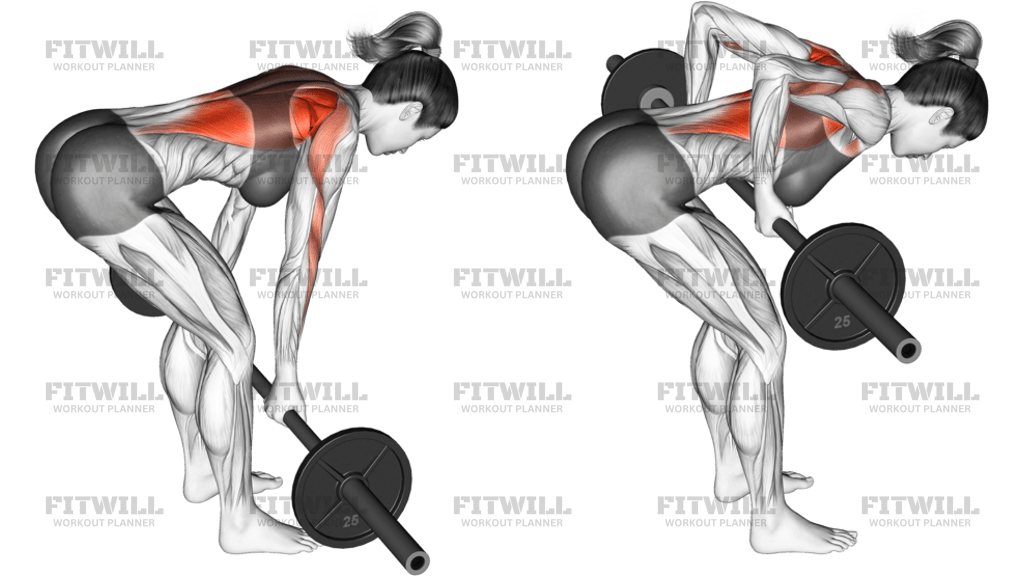
Instructions
- Stand with your feet about hip-width apart and hold a barbell with an underhand grip just outside your thighs.
- Hinge at your hips until your torso is nearly parallel to the floor, soften your knees, and let the bar hang below your shoulders with straight arms.
- Set your chest proud, keep your neck long, and brace your trunk before the first pull.
- Pull the bar toward your lower ribs or upper abdomen by driving your elbows back and slightly in.
- Keep your torso fixed in the hinge and avoid straightening up as the bar rises.
- Squeeze your shoulder blades together at the top without shrugging your shoulders toward your ears.
- Lower the bar slowly until your arms are straight again and the plates settle under control.
- Reset your brace and repeat for the planned reps, then stand up only after the bar is fully still.
Tips & Tricks
- If the bar touches your thighs on every rep, widen your grip slightly so the bar can travel cleanly to the torso.
- Keep the bar close to your legs and torso; letting it swing forward makes the hinge feel unstable and shifts work away from the back.
- Think about pulling the elbows behind your body, not curling the bar with your hands.
- Stop the set before your lower back starts lifting you out of the hinge.
- A slight pause against the lower ribs makes it easier to feel the lats and mid-back instead of rushing the row.
- Keep your wrists stacked over the forearms so the underhand grip does not collapse into wrist extension.
- Use a narrower chest angle and lighter load if the reverse grip irritates your elbows or wrists.
- Exhale as the bar comes up and inhale as it lowers so your trunk stays braced through the whole set.
Frequently Asked Questions
What does Barbell Reverse-Grip Bent-Over Row work most?
It mainly targets the upper back and lats, with the biceps helping because of the underhand grip.
Why use an underhand grip on Barbell Reverse-Grip Bent-Over Row?
The underhand grip usually lets you keep the elbows closer to your sides and makes the lats and biceps feel more involved.
Where should the bar touch on Barbell Reverse-Grip Bent-Over Row?
A good finish is usually the lower ribs or upper abdomen, not the chest and not the hips.
Should my torso stay still during the row?
Yes. Your torso should hold the same hinge angle while the arms move the bar, otherwise the set turns into a body swing.
Is Barbell Reverse-Grip Bent-Over Row good for beginners?
Yes, if you use a light barbell and keep the hinge strict. Beginners usually need less load than they think to keep the position stable.
What are the most common mistakes with this row?
The biggest ones are standing up during the pull, letting the bar drift away from the body, and shrugging the shoulders at the top.
What if the reverse grip bothers my wrists or elbows?
Use a lighter load, take a slightly wider grip, or switch to a neutral-grip row if the discomfort does not settle quickly.
How low should I lower the bar between reps?
Lower it until the arms are straight and the shoulders stay packed, then let it settle before the next pull.
What should I feel working during Barbell Reverse-Grip Bent-Over Row?
You should feel tension across the upper back, lats, and arms, with the lower back working mainly to hold the hinge.