Dumbbell Lateral Step-Up
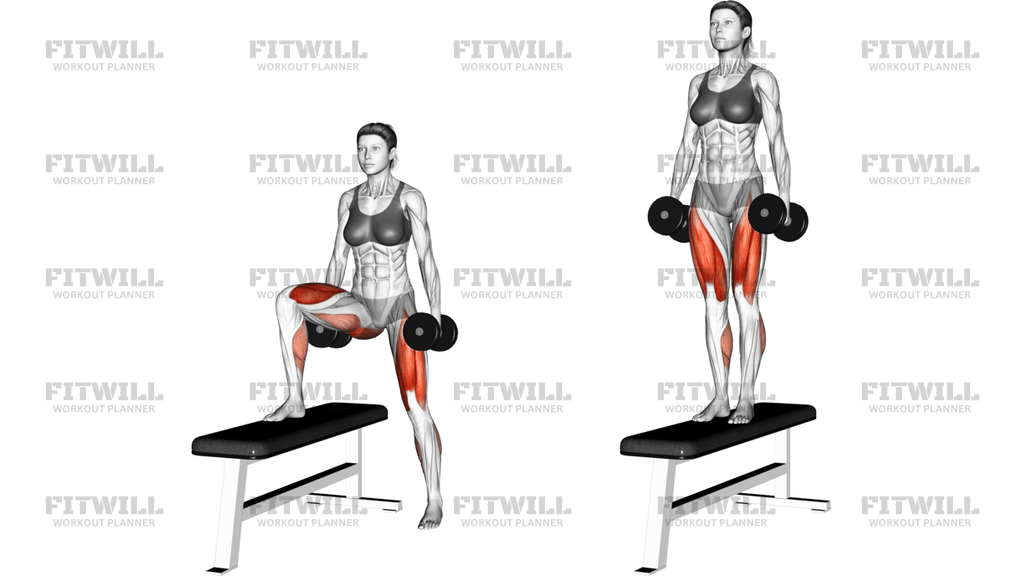
Dumbbell Lateral Step-Up is a unilateral lower-body exercise built around stepping sideways onto a bench or box while holding a dumbbell in each hand. The lateral setup changes the feel of the movement compared with a forward step-up because you have to control hip position, knee tracking, and balance from the side instead of simply driving straight ahead. It is especially useful when you want glute and leg work that also challenges coordination and trunk control.
The main work comes from the glutes and quads, with hamstrings, core, and the muscles around the hip and ankle helping you stay stacked over the step. Because the load hangs at your sides, the torso has to stay quiet while the working leg does the lifting. That makes setup important: if the bench is too high or the foot is only half on the platform, the rep turns into a wobble instead of a clean step.
Use the leg closest to the bench as the working leg and place that whole foot on the step before you drive upward. Keep the knee lined up with the toes, push the floor away through the midfoot and heel, and stand tall on top without rocking the dumbbells. Lower yourself by sending the hips back just enough to keep control, then place the trailing foot back to the floor before resetting for the next rep.
This exercise fits well in lower-body strength sessions, accessory work, or conditioning blocks where you want one-leg work without a barbell on your back. It can also help expose side-to-side differences in hip strength and control, which is useful if one leg collapses inward or you lose balance on split squats and step-ups. A moderate step height and clean tempo usually produce better glute loading than chasing a tall platform.
Keep the motion smooth and repeatable. If you feel the lower back taking over, the bench is probably too high, the dumbbells are too heavy, or you are swinging the free leg for momentum. A controlled descent, a brief balance check at the top, and a stable foot on the bench make Dumbbell Lateral Step-Up a simple but demanding lower-body pattern that rewards precision more than speed.
[ Workout Log & Planner ]
Put your next workout in Fitwill
Keep your plan and training log ready when you are.


Instructions
- Place a sturdy bench or box beside you and stand next to it with the working foot closest to the platform, dumbbells hanging at your sides.
- Put the whole working foot flat on the bench, with your toes pointing forward and your knee tracking over the middle toes.
- Keep your chest tall, ribs stacked over your hips, and brace your torso before you start the rep.
- Press through the heel and midfoot of the foot on the bench to lift your body sideways until the working leg straightens.
- Bring the trailing leg up under control, finishing tall on the platform without leaning or bouncing.
- Squeeze the glute of the working side for a moment at the top while keeping the dumbbells quiet.
- Lower the trailing foot back to the floor first, then follow with the working foot while keeping tension on the stepping leg.
- Reset both feet, repeat for the target reps, then switch sides before starting the other leg.
Tips & Tricks
- Use a bench height that lets the working knee bend deeply without the pelvis twisting.
- Keep the full working foot on the bench; letting the heel hang off makes the glute work less stable.
- Let the dumbbells hang still beside your thighs instead of drifting forward in front of your body.
- Drive through the bench foot; if the floor leg is doing the push, the set gets too easy and less targeted.
- Keep the knee from caving inward as you stand; think knee over the second and third toe.
- Control the way down; a soft tap to the floor is enough, no need to drop off the bench.
- If balance is the limiter, reduce the load before reducing range or speed.
- Match both sides with the same bench height and rep tempo so the weaker leg does not cheat.
Frequently Asked Questions
What muscle does Dumbbell Lateral Step-Up target most?
It mainly trains the glutes and quads, with hamstrings, core, and the smaller hip stabilizers helping you stay balanced on the step.
Is Dumbbell Lateral Step-Up more of a glute exercise or a quad exercise?
It can emphasize both, but the glutes do more work when you drive through the heel and midfoot and keep the torso tall instead of lunging forward.
How high should the bench be for Dumbbell Lateral Step-Up?
Use a step height that lets you stand up without twisting your hips or bouncing off the floor leg. Most people do best with a low to moderate bench height.
Should I keep the trailing foot on the floor or bring it onto the bench?
In this variation, both feet finish on the bench at the top, then you step back down the same way you came up. That makes it more of a true lateral step-up than a partial side tap.
Can beginners do Dumbbell Lateral Step-Up?
Yes, but start with bodyweight or very light dumbbells and a low bench until you can stay balanced and keep the knee tracking cleanly.
What if my knee caves inward when I step up?
Lower the load and think about pushing the knee slightly out in line with the toes as you stand. If it still collapses, the bench is probably too high for the current strength level.
Do I need to use dumbbells for this exercise?
No. Bodyweight is fine for learning the pattern, and dumbbells are useful once you can step up without wobbling or rushing the descent.
How is Dumbbell Lateral Step-Up different from a forward step-up?
The side-on setup makes you manage hip stability and balance differently, and many people feel more glute engagement because they must control the pelvis laterally as they rise.