3/4 Sit-Up
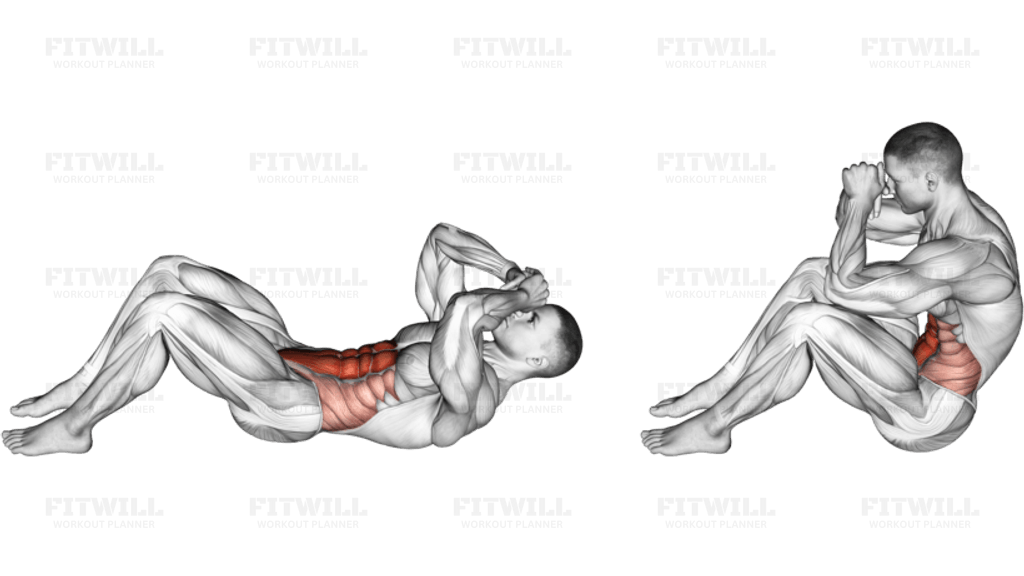
3/4 Sit-Up is a floor-based abdominal exercise that uses body weight to train controlled trunk flexion without taking you all the way to a full seated position. The movement is short on purpose: you curl up hard through the midsection, then lower with control before the hips take over or the neck starts doing the work.
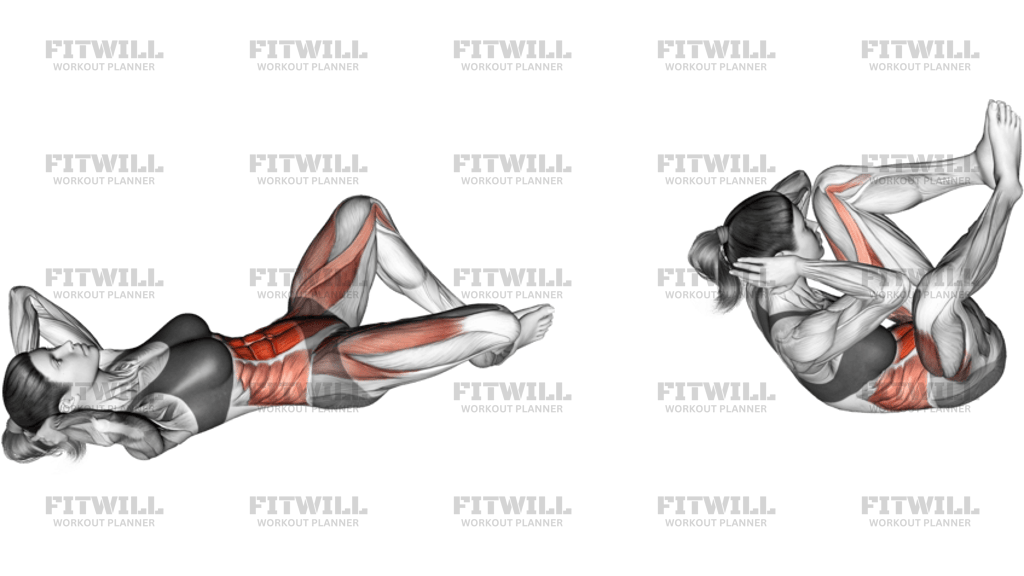
This exercise is usually used to build strength and endurance in the abs while also asking the obliques and hip flexors to stabilize the torso. In anatomy terms, the main work centers on the rectus abdominis, with help from the external obliques, iliopsoas, and transversus abdominis. That makes the 3/4 Sit-Up useful when you want a direct ab-focused movement that still feels manageable for higher-rep core work.
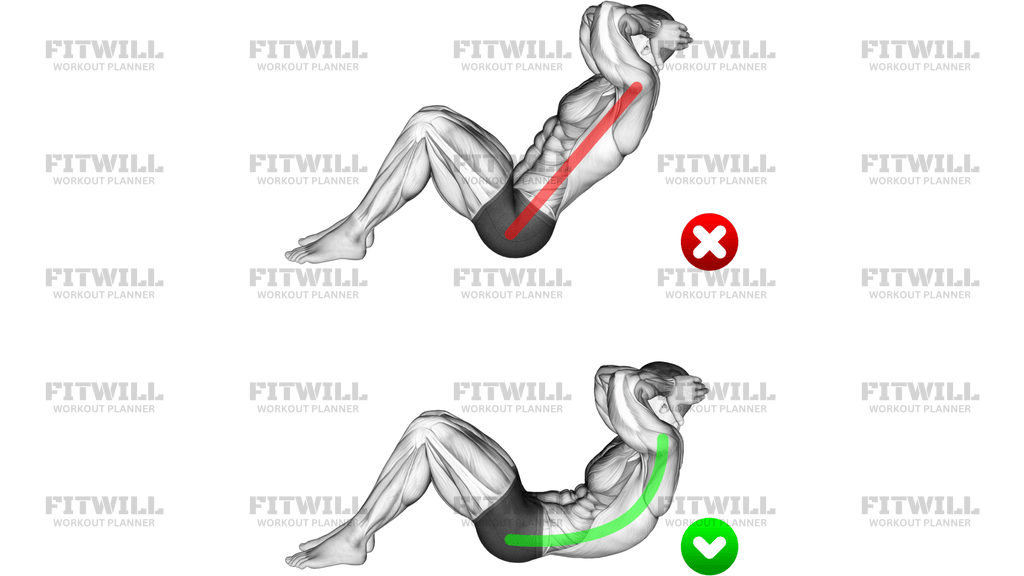
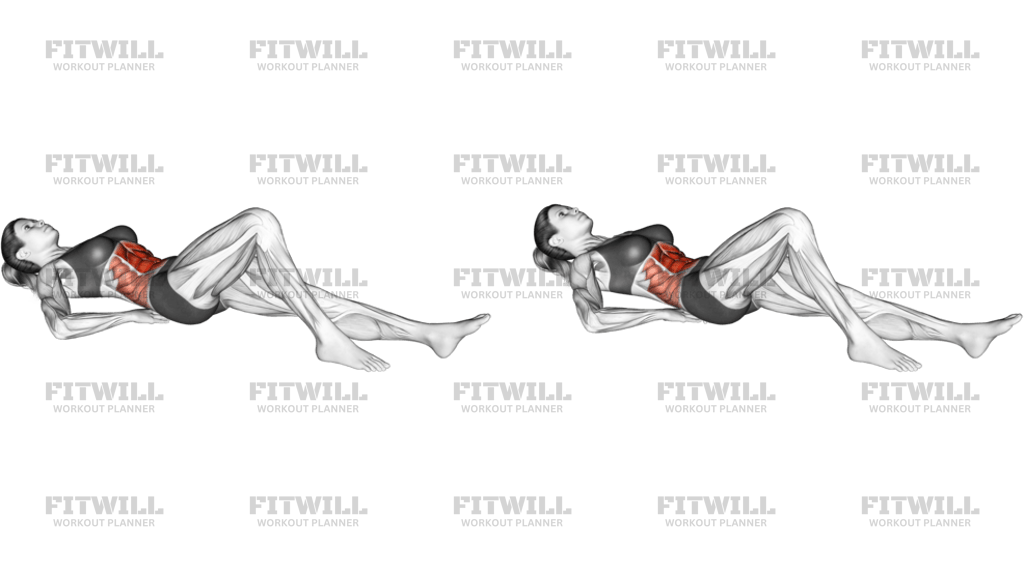
The setup matters because the hips, feet, and head position change how cleanly the rep starts. Lie on your back with your knees bent, feet planted, and your hands lightly supporting the sides of your head. Keep the elbows open instead of pulling forward, and start each rep by tightening the trunk before you curl your shoulders off the floor.
At the top, stop before you collapse into a full sit-up or jerk yourself upright. The goal is to lift the upper back and ribcage toward the knees, then control the descent until your shoulders touch down again. That shorter range keeps tension on the abs and reduces the temptation to swing through the repetition.
3/4 Sit-Up fits well in core circuits, abdominal finishers, warmups, and bodyweight conditioning sessions where you want a simple movement that can be repeated cleanly for time or reps. It is a practical option for beginners, but only if they can keep the neck relaxed and avoid yanking on the head. If the low back arches hard or the movement turns into momentum, shorten the range and slow the lowering phase.
For programming, use it where you want repeated quality reps instead of maximal loading. A clean set should feel like the abs are doing the curl while the shoulders and head stay relaxed, not like the body is being thrown upward to chase more range. If you need an easier version, keep the hands across the chest; if you need more challenge, slow the descent or add a light plate only after the bodyweight version stays crisp.
[ Workout Log & Planner ]
Put your next workout in Fitwill
Keep your plan and training log ready when you are.


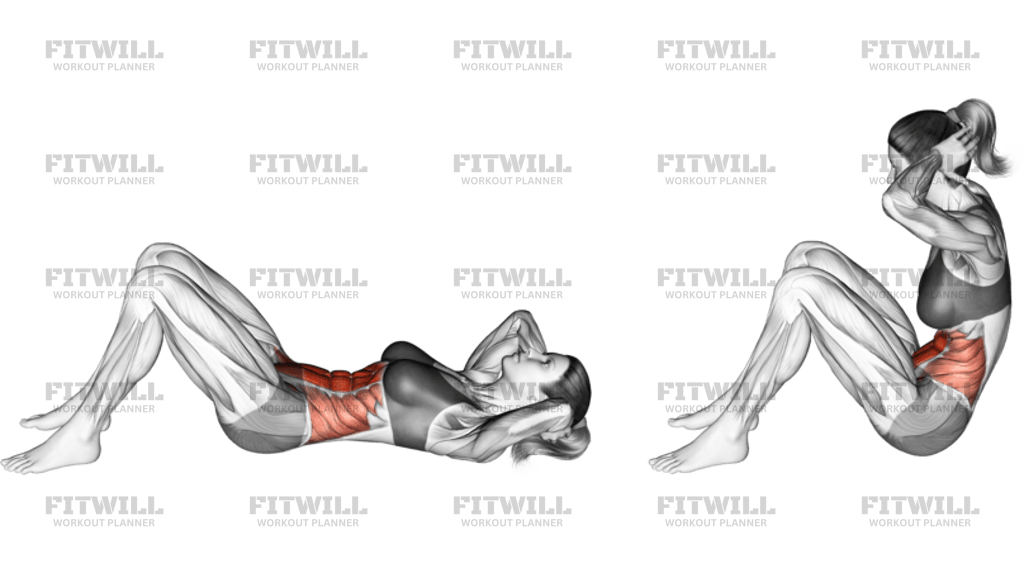
Instructions
- Lie on your back on the floor with your knees bent, feet flat, and your heels close enough to stay planted as you curl up.
- Place your hands lightly behind your head or at the sides of your temples, then keep your elbows open instead of pulling on your neck.
- Set your ribs down and lightly brace your abs before every rep so the movement starts from a still torso.
- Exhale and curl your shoulders and upper back off the floor until your ribcage travels about three-quarters of the way toward your thighs.
- Keep the chin slightly tucked and let the chest rise without driving the elbows forward or yanking the head.
- Pause briefly near the top position, stopping before you sit all the way up or let the hips take over.
- Inhale and lower yourself back down under control until your shoulders and upper back touch the floor again.
- Reset your brace at the bottom, then repeat for the planned reps without bouncing off the floor.
Tips & Tricks
- Think about curling the ribcage toward the pelvis; if the hips start to flex hard, the rep is getting too far into a full sit-up.
- Keep the elbows in your side vision and the neck long so your hands stay supportive rather than becoming a pulling aid.
- A small pause at the top makes the abs do more of the work and reduces the urge to swing through the rep.
- If your lower back pops off the floor too early, slow the first third of the curl and tighten the abs before lifting.
- Let the heels stay heavy on the floor; lifting the feet usually turns this into a hip-flexor-dominant rep.
- Lower under control for at least as long as the curl up so you do not turn the exercise into a quick bounce.
- Use a smaller range of motion if your neck tightens, especially if you tend to crane the head forward on the way up.
- Higher reps work well here, but stop the set when the torso starts jerking or the elbows begin to collapse inward.
- If bodyweight is too easy, slow the descent before adding load so the abdominal tension stays clean.
- On each rep, exhale through the curl and inhale as you return to the floor to keep the trunk from bracing too late.
Frequently Asked Questions
What muscles does the 3/4 Sit-Up train most?
The main target is the rectus abdominis, with the obliques and deep core helping stabilize the torso. The hip flexors assist, especially if you let the rep turn into a full sit-up.
Is the 3/4 Sit-Up good for beginners?
Yes, as long as the hands stay light behind the head and the range stays short and controlled. Beginners usually do best with slow reps and no added load.
How high should I come up on a 3/4 Sit-Up?
Come up until your shoulder blades are clearly off the floor and your ribcage is moving toward your thighs, but stop before you fully sit upright. The top should still feel like an abdominal curl, not a hip-driven crunch into a seated position.
Should my hands pull on my head during the 3/4 Sit-Up?
No. Your hands should only support the head lightly; pulling forward usually strains the neck and shortens the work on the abs.
What is the difference between a 3/4 Sit-Up and a full sit-up?
A 3/4 Sit-Up stops short of a full seated position, so the abs stay under tension and the hips do less of the finish. A full sit-up usually brings more hip flexor involvement and more momentum.
Why do my hip flexors take over on the 3/4 Sit-Up?
Usually the feet are too light, the range is too long, or the torso is getting yanked upward too fast. Keep the heels planted and focus on curling the ribcage instead of sitting straight up.
How many reps should I do on the 3/4 Sit-Up?
It is commonly used for moderate to higher reps because the bodyweight loading is usually modest. Choose a rep target that keeps the lowering phase smooth and the neck relaxed.
Can I do the 3/4 Sit-Up if my neck gets sore easily?
Yes, but keep the chin slightly tucked, avoid pulling the head forward, and shorten the range if needed. If your neck still does the work, try crossing the arms over the chest instead of holding the head.
Where should I feel the 3/4 Sit-Up most?
You should feel it mainly in the front of the abdomen, with some help from the obliques and hip flexors. If the low back or neck becomes the main sensation, the rep is probably losing its shape.