Dumbbell Biceps Curl
Dumbbell Biceps Curl is a straightforward isolation exercise for the upper arms that builds elbow flexion strength and teaches the biceps to do the work without help from body swing. It is a good fit when you want direct arm training, cleaner movement control, or an accessory lift that complements pulling work such as rows and pull-downs. The standing position also makes it easy to see whether each rep is strict, balanced, and under control.
The main muscles are the biceps, with the brachialis and brachioradialis assisting through the lower half of the lift. Because the movement is simple, the setup matters more than people expect: feet should stay planted, ribs should stay stacked over the pelvis, and the shoulders should remain relaxed instead of rolling forward. When those pieces are stable, the curl becomes a focused arm exercise instead of a full-body heave.
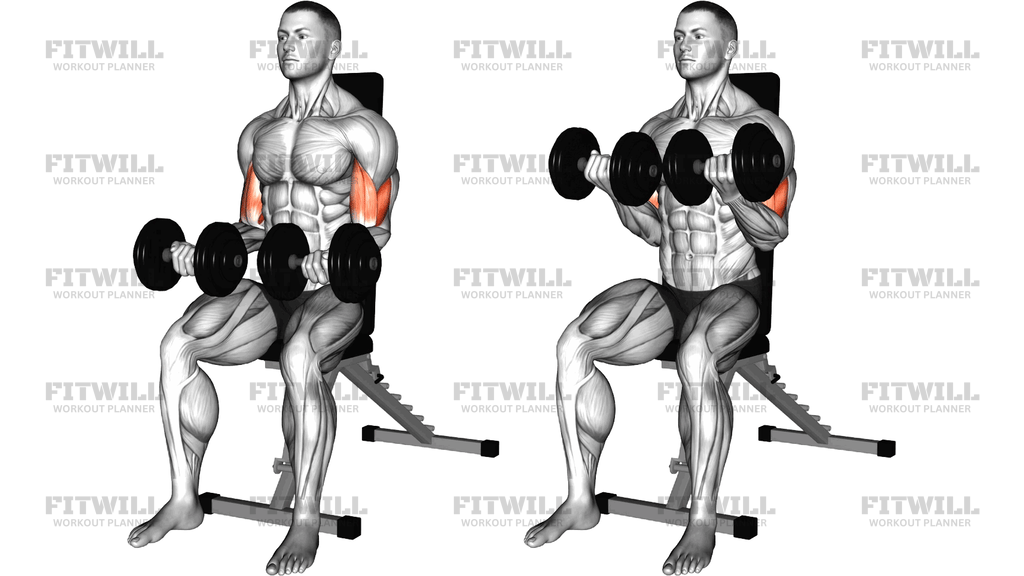
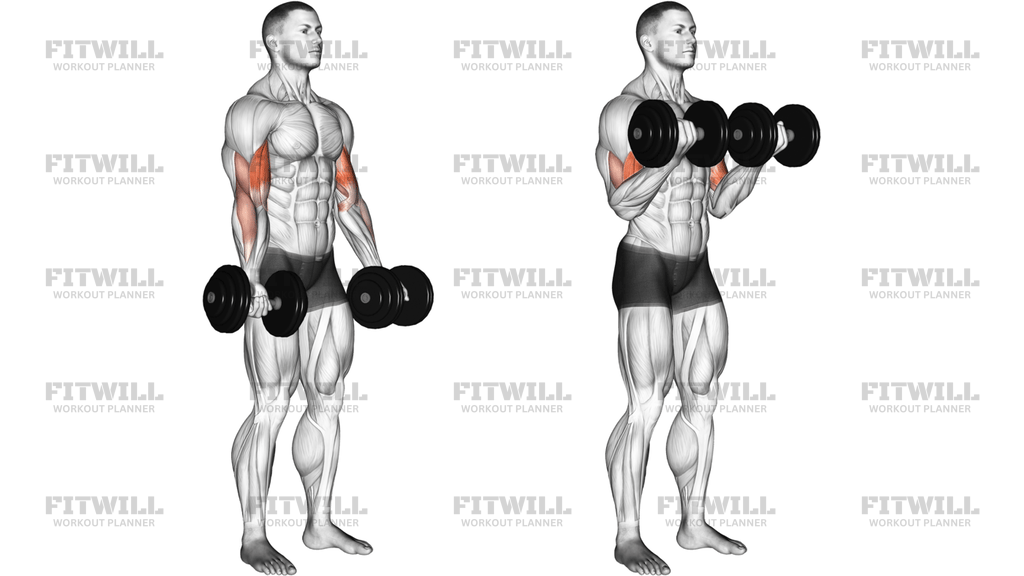
Start with the dumbbells hanging at your sides and your palms turned forward, as shown in the movement image. Keep your elbows close to your ribs and let the upper arms stay quiet while the forearms travel upward. The dumbbells should arc toward the front of the shoulders without the torso leaning back, the elbows drifting far forward, or the wrists bending away from neutral. The cleaner the path, the more tension stays on the biceps instead of shifting into the shoulders and lower back.
At the top, squeeze briefly without shrugging, then lower the weights slowly until the arms are long again. A controlled eccentric phase is especially useful here because it keeps the rep honest and usually exposes when the load is too heavy. If the dumbbells start to swing, the shoulders take over, or the wrists crumple backward, reduce the weight and rebuild the pattern before chasing more repetitions.
Dumbbell Biceps Curl is commonly used in arm-focused sessions, upper-body accessories, or full-body training when direct arm volume is needed. It works well for beginners because the range is easy to learn, but it still rewards experienced lifters who want strict tension and symmetrical reps. Use a weight that lets you keep the same body position from the first rep to the last, and stop the set before the movement turns into a hip-driven swing.
[ Workout Log & Planner ]
Put your next workout in Fitwill
Keep your plan and training log ready when you are.


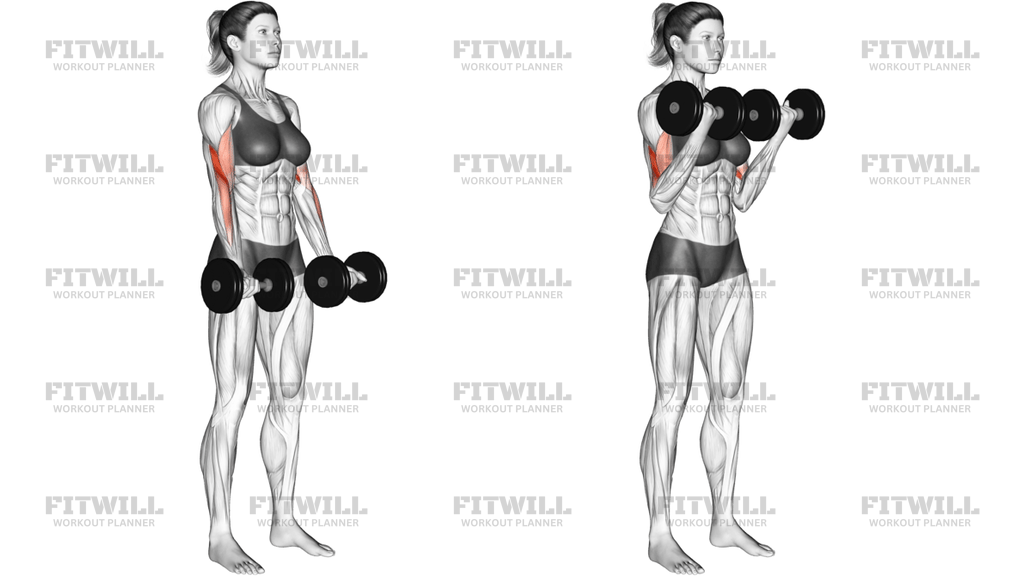
Instructions
- Stand tall with a dumbbell in each hand at your sides, palms facing forward, feet about hip-width apart, and your weight spread evenly through both feet.
- Keep your elbows close to your ribs and let the dumbbells hang just in front of your thighs with your wrists straight.
- Set your chest tall, stack your ribs over your pelvis, and brace lightly so your torso does not lean back when the curl starts.
- Curl the dumbbells upward by bending only at the elbows, keeping your upper arms still and your shoulders relaxed.
- Bring the dumbbells toward the front of your shoulders until your biceps are fully shortened without letting your elbows drift far forward.
- Pause briefly at the top while keeping your wrists neutral and your neck relaxed.
- Lower the dumbbells slowly until your arms are almost straight and the weights return to the starting line beside your thighs.
- Exhale as you curl up, inhale as you lower, and reset your stance before the next repetition or before racking the dumbbells.
Tips & Tricks
- If your torso leans back on the way up, the dumbbells are too heavy for a strict Dumbbell Biceps Curl.
- Keep the elbows pinned near your sides so the front shoulders do not turn the rep into a mini front raise.
- Let the wrists stay in line with the forearms; if they bend back, the load is usually too aggressive.
- Lower the dumbbells under control for a full count instead of dropping them and bouncing into the next rep.
- Stop the curl when the dumbbells reach the front of the shoulders; chasing extra height usually just moves the elbows forward.
- A brief pause at the bottom removes swing and makes each rep start from a dead stop.
- If one arm cheats more than the other, switch to alternating reps so each side has to earn the same range.
- Choose a load that lets you keep the shoulders down and the neck relaxed for every rep.
Frequently Asked Questions
What muscles does Dumbbell Biceps Curl work?
The biceps do most of the work, with the brachialis and brachioradialis helping as the elbow bends.
Can beginners perform this exercise?
Yes. Start with light dumbbells and focus on keeping the elbows still and the torso upright before adding load.
Should I curl both dumbbells at the same time or one arm at a time?
Both versions work. Curling both together matches the image and is efficient, while alternating reps can make it easier to keep the torso from swinging.
How high should the dumbbells come up in Dumbbell Biceps Curl?
Bring them toward the front of the shoulders, then stop. If the elbows keep traveling forward, the shoulders start taking over.
Why do my shoulders or lower back feel the movement more than my arms?
That usually means the weight is too heavy or you are leaning back to finish the rep. Reduce the load and keep the ribcage stacked over the pelvis.
Is a neutral grip better than palms-up for Dumbbell Biceps Curl?
The palms-up position is the standard version shown here. A neutral grip becomes a hammer curl variation and shifts more work toward the brachialis and forearms.
What is the biggest form mistake in Dumbbell Biceps Curl?
Swinging the dumbbells with the hips or letting the elbows travel far in front of the torso are the most common errors.
How should I breathe during Dumbbell Biceps Curl?
Exhale as you lift the dumbbells and inhale as you lower them back down under control.
Can I use the wall to keep the reps strict?
Yes. Standing a few inches from a wall can help prevent back lean, as long as your elbows still travel freely and do not press into it.