Dumbbell Incline Row
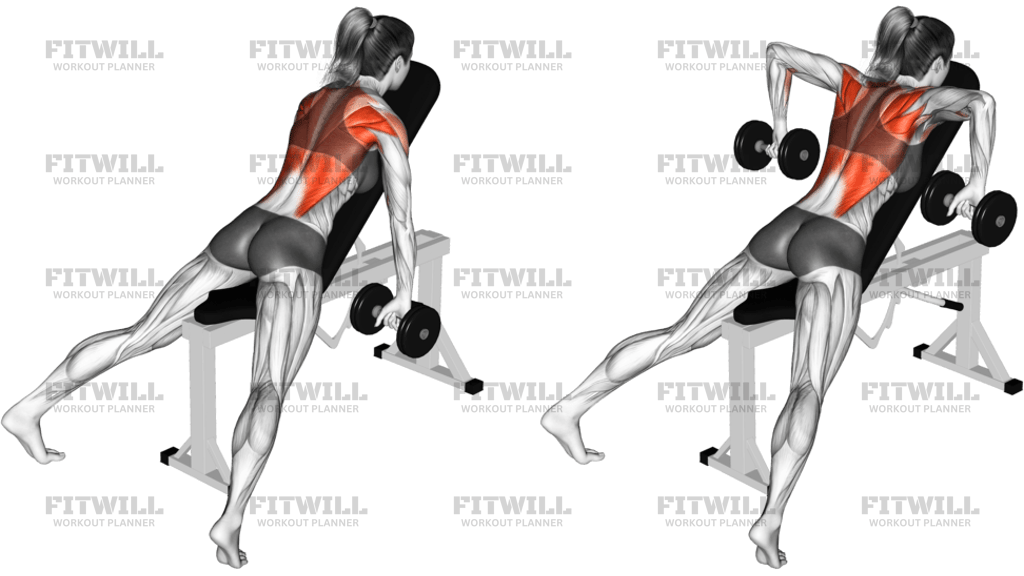
Dumbbell Incline Row is a chest-supported rowing exercise that uses an incline bench and dumbbells to train the upper back with very little lower-back fatigue. With the torso fixed against the pad, the row becomes a strict pull instead of a body English movement, so the lats, rhomboids, mid traps, rear delts, and biceps have to do the work.
The setup matters because the bench angle, chest contact, and foot placement decide how stable the rep feels. When the pad is set at a moderate incline and the chest stays glued to it, you can pull from a dead hang and finish each rep with a clean squeeze between the shoulder blades. That makes the exercise useful for building back thickness, improving posture, and reinforcing better scapular control.
Start each rep with the dumbbells hanging under the shoulders, the neck long, and the ribs anchored to the bench. Pull the elbows back and slightly out until the dumbbells reach the lower rib or upper waist line, then lower them slowly until the arms are straight again. The goal is a smooth row path with no bouncing off the pad, no shrugging, and no twisting through the torso.
This movement is a good choice for accessory back work, upper-body hypertrophy, or any session where you want rowing volume without loading the lumbar spine. It is also helpful when a lifter needs stricter technique than a bent-over row can provide. Keep the load honest, maintain a neutral head position, and stop the set when the chest starts to lift away from the bench or the elbows can no longer finish the pull cleanly.
[ Workout Log & Planner ]
Put your next workout in Fitwill
Keep your plan and training log ready when you are.


Instructions
- Set an incline bench to a moderate angle and lie chest-down with your upper ribs supported and your feet planted wide for balance.
- Hold a dumbbell in each hand under your shoulders with your arms fully extended and your palms facing in.
- Keep your chin slightly tucked, neck long, and ribs pressed into the pad before the first pull.
- Brace your midsection so your lower back does not arch as the weights leave the floor.
- Pull both elbows back and slightly out, driving the dumbbells toward your lower ribs or upper waist.
- Squeeze your shoulder blades together at the top without shrugging your shoulders toward your ears.
- Lower the dumbbells slowly until your arms are straight again and your shoulders stay controlled.
- Exhale as you row and inhale as the weights return to the bottom.
- Repeat for the planned reps, resetting the chest position before each pull.
Tips & Tricks
- Choose a bench angle that lets your chest stay in contact with the pad while your arms hang straight down.
- Row toward the lower-rib line, not straight up toward the armpits, if you want more mid-back and lat tension.
- Keep your shoulders down as the dumbbells rise so the set does not turn into a shrug.
- Use a lighter load than a bent-over row; the chest support removes cheating and makes the top squeeze feel harder.
- If your chest lifts off the bench, shorten the range and lower the weight before form breaks down.
- Let the elbows travel a little away from the torso, but do not flare them so wide that the movement becomes a rear-delt fly.
- Lower the dumbbells under control for at least two counts to keep tension on the back instead of dropping into the bottom.
- Keep your feet wide and your toes anchored so you do not slide forward when the weights get heavier.
- A neutral grip is usually the most comfortable on the shoulders and wrists for this row angle.
Frequently Asked Questions
What muscles does Dumbbell Incline Row work?
It mainly trains the lats, rhomboids, mid traps, rear delts, and biceps while the chest-supported position keeps the lower back quiet.
Why use an incline bench instead of rowing bent over?
The bench removes most torso swing, so the row is stricter and easier on the lumbar spine while still hitting the upper back hard.
Where should the dumbbells travel at the top?
Aim for the lower rib or upper waist line, with the elbows moving back and slightly out rather than straight up.
Can beginners do this exercise safely?
Yes. Beginners usually do well with a lighter pair of dumbbells and a moderate bench angle that keeps the chest stable on the pad.
Should my elbows stay close to my sides?
Keep them in a natural rowing path, usually a little away from the body, so the shoulder blades can retract without turning the set into a shrug.
What is the most common mistake on this row?
Using too much weight and losing chest contact with the bench, which usually leads to shrugging, twisting, or jerking the dumbbells up.
What bench angle works best?
A moderate incline is usually best because it supports the chest without forcing the shoulders into an awkward position.
Can I use this as a lat-focused exercise?
Yes, especially if you keep the elbows tracking back toward the hips and avoid flaring them too wide.
How should I breathe during the set?
Exhale as you pull the dumbbells up and inhale as you lower them back to the start.