Dumbbell Alternate Shoulder Press
Dumbbell Alternate Shoulder Press is a standing overhead pressing exercise that trains the shoulders one side at a time while the other arm stays in the rack position. It is useful when you want direct delt work without losing control of trunk position, because the alternating pattern exposes side-to-side differences in strength, stability, and shoulder mobility.
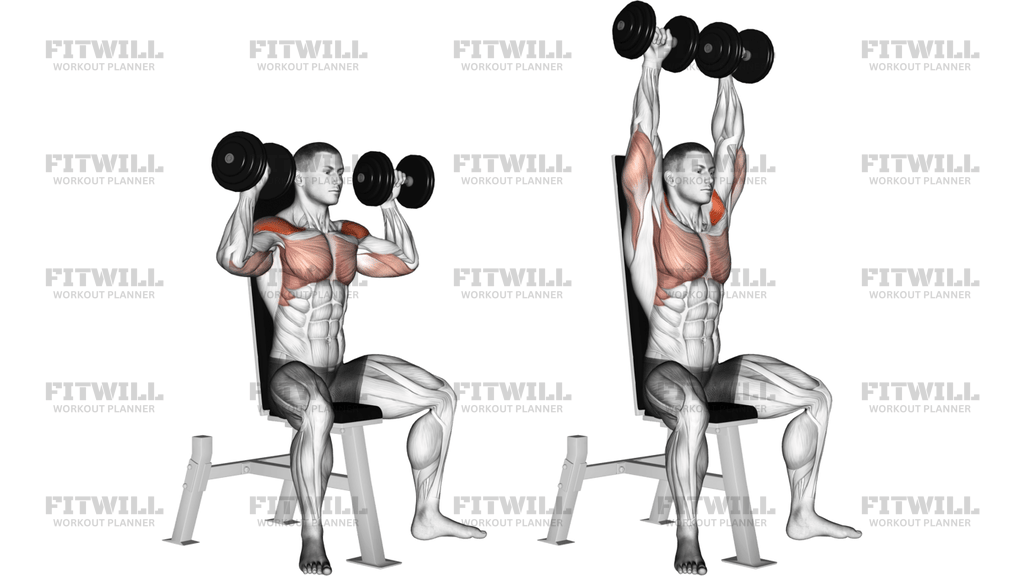
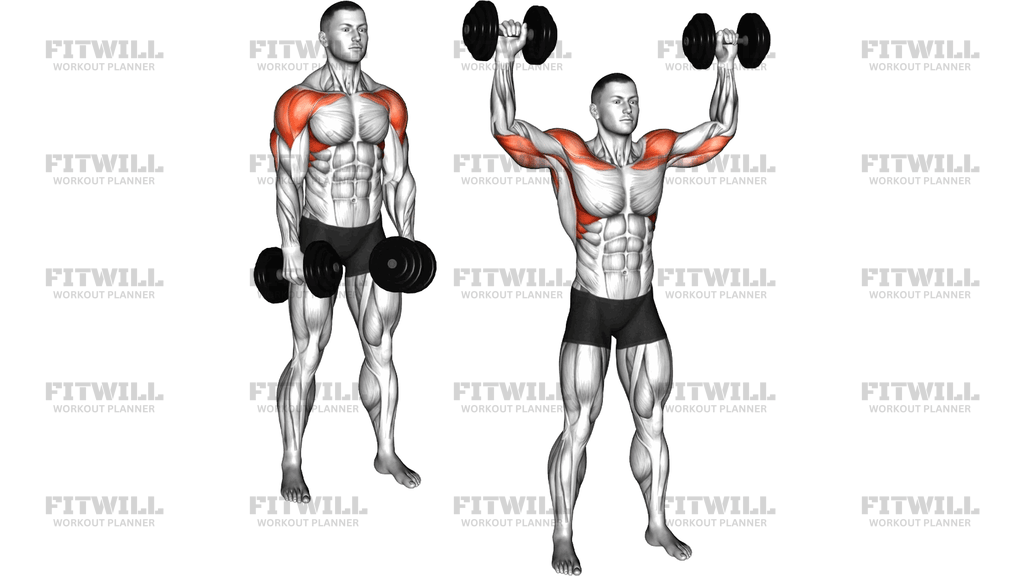
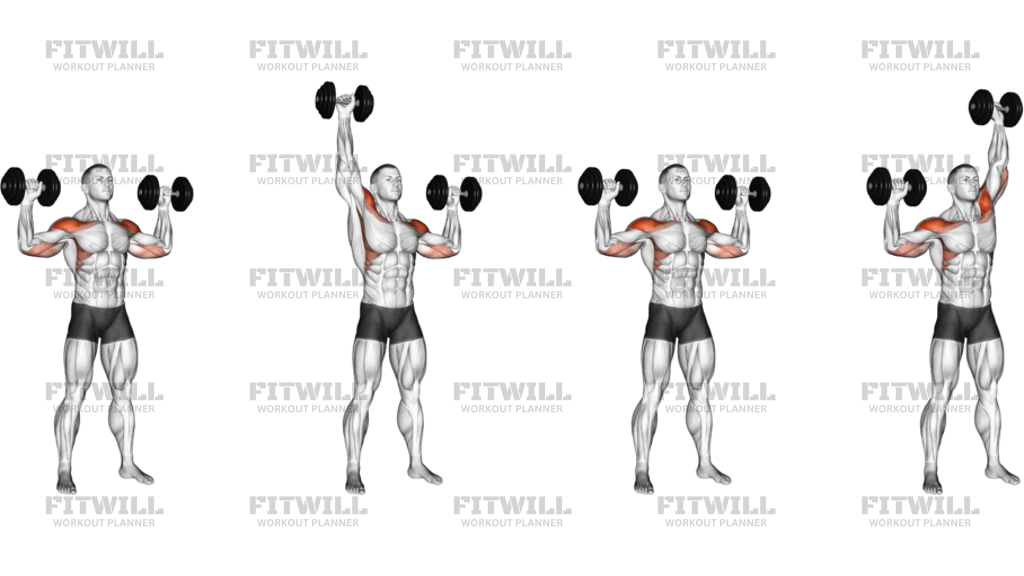
The image shows a tall, upright stance with both dumbbells started near shoulder height, elbows under the hands, and one arm pressing overhead while the other stays quiet at the shoulder. That setup matters: if the ribs flare, the lower back arches, or the elbows drift too far forward, the movement turns into a bodyweight lean instead of a clean shoulder press. The goal is a stacked line from wrist to elbow to shoulder as the dumbbell moves straight up.
This exercise primarily targets the deltoids, with the triceps and upper traps assisting through the top half of the press and the upper back helping keep the shoulders organized. Because only one arm is moving at a time, the non-working side has to resist twisting and shrugging, which makes the press demanding even with moderate loads. That is why alternating presses often feel lighter on the arms than simultaneous pressing but harder on posture.
Use a stance that lets you stay balanced without bouncing through the legs. Drive the dumbbell overhead until the arm is fully extended or nearly locked out, then lower it under control back to shoulder height before switching sides. Keep the neck long, the chin neutral, and the torso still enough that each rep starts from the shoulders rather than from momentum. If a rep becomes crooked, shorten the set before your lower back starts helping.
This movement fits well in shoulder-focused strength sessions, upper-body accessories, or conditioning blocks where you want controlled overhead work and unilateral stability. It is also a practical option for lifters who want to train overhead pressing without a bench. Start lighter than you think, keep the path smooth, and increase load only when both sides can press with the same tempo and the same body position.
[ Workout Log & Planner ]
Put your next workout in Fitwill
Keep your plan and training log ready when you are.


Instructions
- Stand tall with your feet about hip-width apart and hold a dumbbell in each hand at shoulder height, palms facing forward or slightly inward.
- Stack each wrist over its elbow and keep the elbows just in front of the torso rather than flaring directly out to the sides.
- Brace your midsection and keep the ribs down so your torso stays upright before the first rep starts.
- Press one dumbbell straight up until the arm is nearly locked out overhead while the other dumbbell stays parked at the shoulder.
- Keep the moving arm close to your ear as it rises, and avoid letting the dumbbell drift forward in an arc.
- Lower the dumbbell back to shoulder height under control until the elbow returns to the starting rack position.
- Switch sides and repeat the same press on the opposite arm without leaning, twisting, or bouncing through the legs.
- Exhale as the dumbbell travels upward, inhale as it lowers, and keep the breathing rhythm steady through the set.
- Finish the set with both dumbbells back at the shoulders and lower them safely only after you have control of both arms.
Tips & Tricks
- If one side is weaker, let that side set the tempo rather than racing through the stronger arm.
- Keep the non-pressing dumbbell quiet at shoulder level; shrugging it upward usually means the torso is helping too much.
- Use a weight that lets you finish both arms without leaning back to clear the top of the press.
- A slight front-of-body elbow position is safer than flaring the elbows hard out to the sides.
- Stop the rep if the dumbbell starts traveling in front of your face instead of finishing over the shoulder line.
- Keep the glutes lightly tight so the lower back does not take over the last few inches of the press.
- Lowering phase control matters here; let the dumbbell come down slowly instead of dropping it to the rack.
- If your wrists bend back, reduce the load and reset the dumbbell over the forearm before pressing again.
Frequently Asked Questions
What muscles does Dumbbell Alternate Shoulder Press work?
It primarily trains the deltoids, with the triceps and upper traps helping finish the press and the upper back helping keep you stable.
Why keep one dumbbell at shoulder height while the other presses?
That rack position gives the working side a stable start and forces the torso to resist twisting while you press.
Should I alternate every rep or do all the reps on one side first?
Both can work, but alternating each rep is the version shown here and it keeps the shoulders and trunk working more evenly.
Can I do this seated instead of standing?
Yes, but the standing version adds more core and balance demand. If you sit, keep the same vertical press path and avoid leaning back.
Where should my elbow and wrist be at the start?
The wrist should stay stacked over the elbow, with the elbow slightly in front of the torso and the dumbbell near shoulder level.
What if I feel my lower back arching during the press?
Lower the load, squeeze the glutes, and keep the ribs stacked over the pelvis so the press stays in the shoulders instead of the spine.
Is this a good beginner shoulder exercise?
Yes, as long as the weight is light enough to keep the torso still and the dumbbell path clean.
What is the most common mistake with this movement?
Leaning back or twisting to help the dumbbell reach the top instead of pressing straight overhead with a stacked arm.