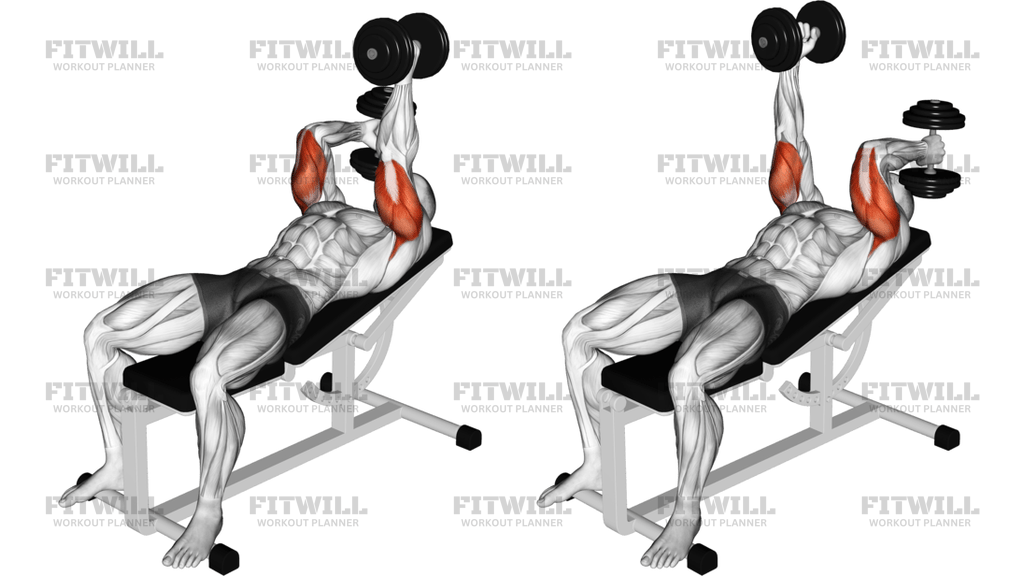
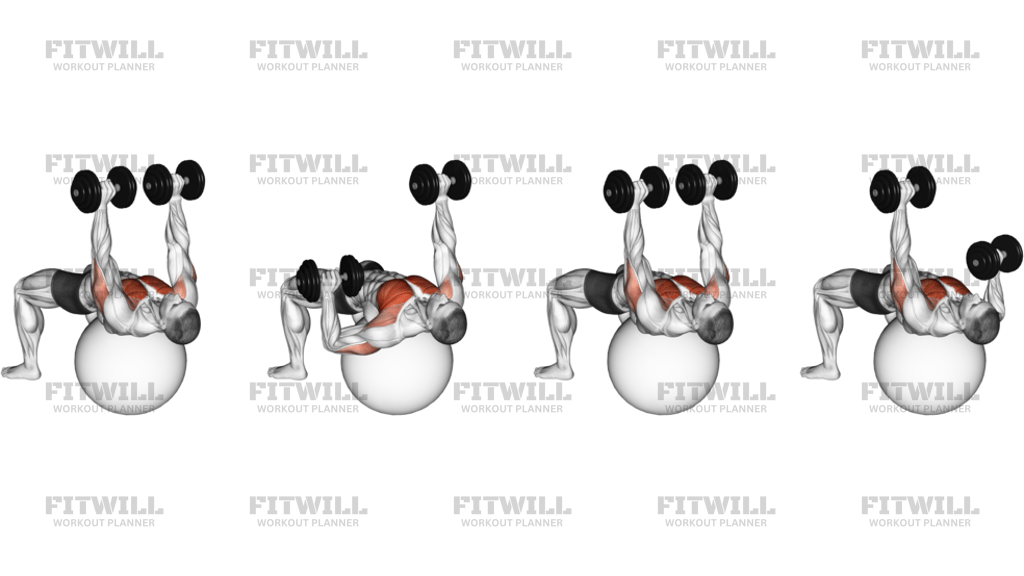
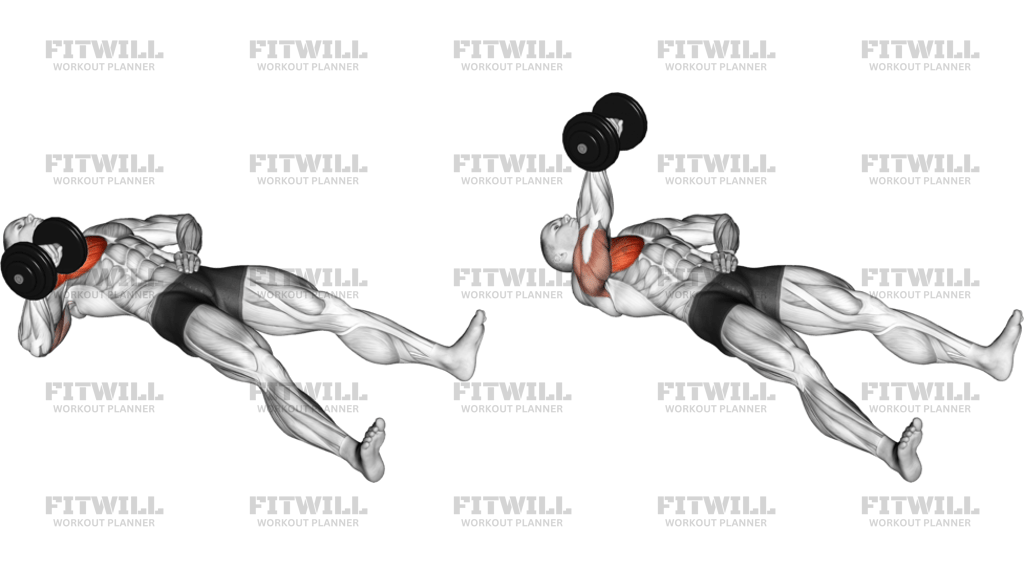
Dumbbell Incline Fly
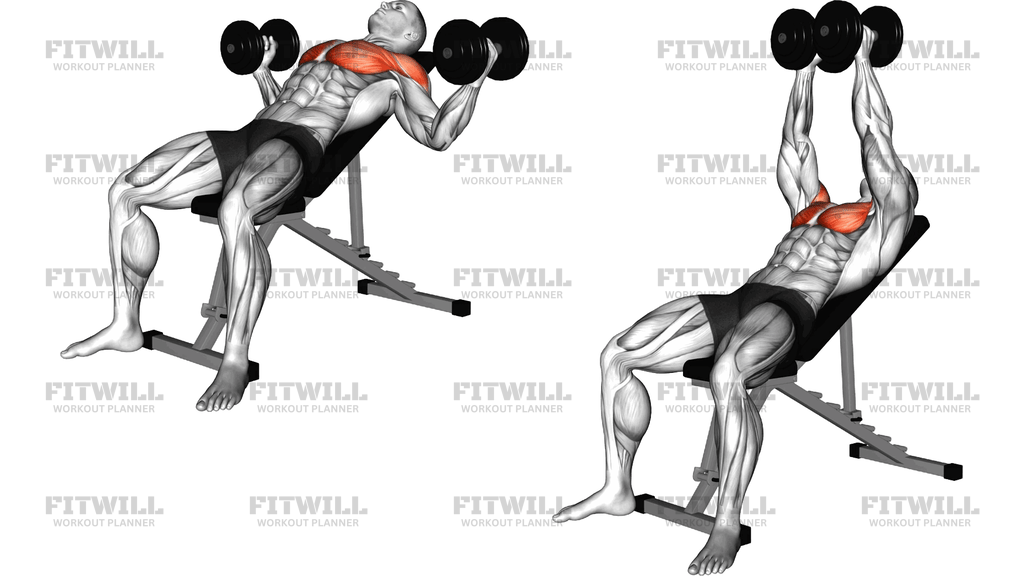
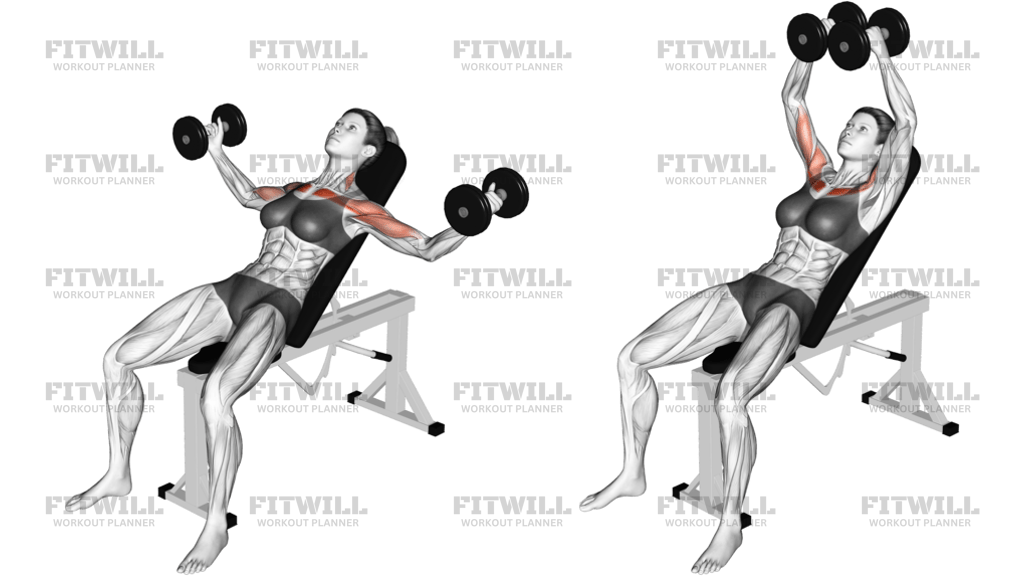
Dumbbell Incline Fly is a chest isolation exercise performed on an incline bench with a pair of dumbbells. The incline angle shifts more of the work toward the upper chest than a flat fly, while the front delts and the muscles that stabilize the shoulder joint help control the long arc of the movement. It is not a pressing pattern. The goal is to open and close the arms with a fixed elbow bend so the chest does the majority of the work while the shoulders stay organized.
The bench setup matters because the fly exposes the shoulder to a long lever arm. A moderate incline, usually around 30 to 45 degrees, gives enough support for the upper back and head while keeping the chest in a strong line of pull. If the bench is too steep, the movement starts to resemble a shoulder raise and the front delts take over. If the dumbbells are too heavy, the lower back, wrists, and neck usually start compensating before the chest gets useful tension.
In the lowered position, the arms travel out in a wide arc with the elbows slightly bent and the palms generally facing each other. The dumbbells should descend only as far as the shoulders can tolerate without pain or loss of position. You should feel a stretch across the chest, not a sharp pinch in the front of the shoulder. On the way up, think about sweeping the upper arms back together over the mid-chest rather than pressing the weights together or locking them out aggressively.
This exercise is useful when you want targeted chest tension without the triceps limiting the set, or when you want to add a controlled accessory movement after pressing work. It also works well as a lighter hypertrophy drill when you want to practice scapular control, ribcage position, and consistent tempo. Because the range is long and the shoulder joint is involved, clean form matters more than load or rep count. The best sets look smooth, symmetrical, and repeatable from the first rep to the last.
Use a controlled lowering phase, keep the elbows softly bent, and stop the set if the shoulders start to roll forward or the wrists begin to drift. The dumbbell incline fly should feel like a chest-focused stretch and squeeze, not a bouncing or jerking motion. When it is done well, it builds chest tension with a clear line of motion and very little wasted movement.
Fitwill
Log Workouts, Track Progress & Build Strength.
Achieve more with Fitwill: explore over 9600 exercises with images and videos, access built-in and custom workouts, perfect for both gym and home sessions, and see real results.
Start your journey. Download today!




Instructions
- Set an incline bench to about 30 to 45 degrees and lie back with your head, upper back, and glutes supported.
- Plant both feet flat on the floor and keep your ribs down so your torso stays stable against the bench.
- Hold a dumbbell in each hand above the upper chest with your palms facing each other and a soft bend in the elbows.
- Draw the shoulders gently back and down before the first rep so the chest is set to move without shrugging.
- Lower the dumbbells in a wide arc until your upper arms are roughly in line with your torso or you feel a deep, controlled chest stretch.
- Keep the elbow angle nearly fixed as the weights open so the movement stays a fly rather than turning into a press or curl.
- Exhale and sweep the dumbbells back up in the same arc, bringing them over the mid-chest without banging them together at the top.
- Pause briefly at the top with the chest still engaged, then repeat for the planned reps while keeping each lowering phase smooth.
Tips & Tricks
- Choose lighter dumbbells than you would use for an incline press; flyes get difficult quickly because of the long lever arm.
- Keep the elbows softly bent and freeze that bend throughout the rep so the load stays on the chest instead of the triceps.
- Use a moderate bench angle; the steeper the bench, the more the front delts try to take over.
- Lower only until the shoulders feel stretched and supported, not until the dumbbells pull the upper arms far behind the torso.
- Think about hugging a large barrel on the way up rather than pressing the dumbbells together.
- Keep your wrists stacked over the forearms so the handles do not drift back into the fingers at the bottom.
- Slow the lowering phase to keep tension on the chest and reduce the urge to bounce out of the stretched position.
- Stop the set if one shoulder starts to open more than the other or if your neck and traps begin to tense up.
Frequently Asked Questions
What does the Dumbbell Incline Fly train most?
It primarily trains the chest, with extra help from the front shoulders and the muscles that stabilize the shoulder joint.
Why use an incline bench instead of a flat bench?
The incline shifts the line of pull toward the upper chest and usually makes the top half of the chest feel more involved than a flat fly.
How deep should I lower the dumbbells?
Lower them only until you feel a strong chest stretch without pain or shoulder pinching. For most lifters, that is around the point where the upper arms are roughly in line with the torso.
Should my elbows stay bent the whole time?
Yes. Keep a small, consistent bend so the movement stays a fly and does not turn into a press.
Can I rotate my wrists or turn this into a press at the top?
No. Keep the palms mostly facing each other and bring the dumbbells back together along the same arc without turning it into a pressing motion.
Is this exercise beginner friendly?
Yes, if you start with light dumbbells and a controlled range. Beginners usually need less load and more attention to shoulder position than they expect.
What is the most common mistake on incline flyes?
Using too much weight and turning the rep into a press or letting the shoulders roll forward at the bottom.
When should I stop the set?
Stop when the chest no longer controls the arc, one shoulder starts to feel pinched, or your neck and traps begin taking over.