Barbell Sumo Deadlift
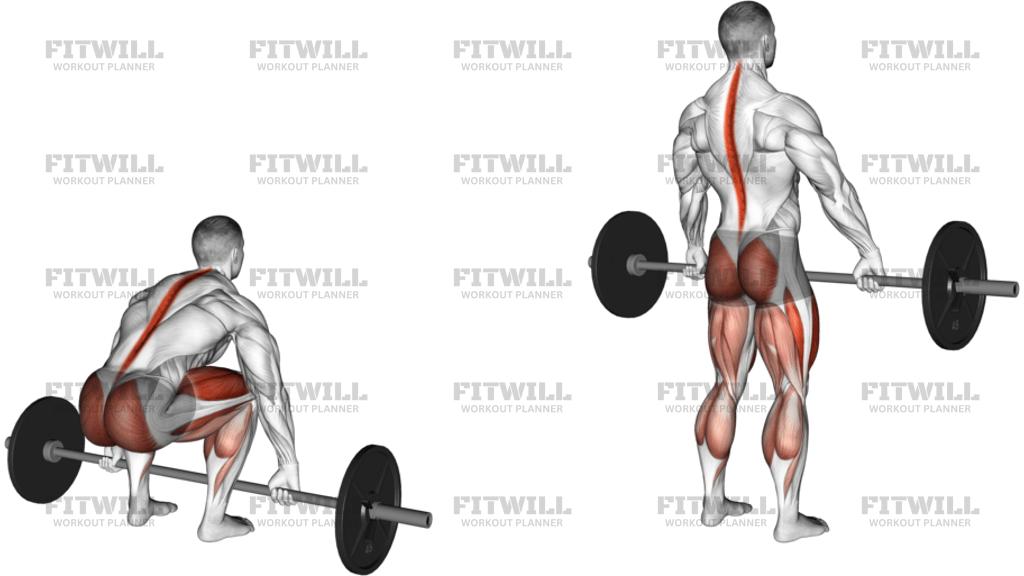
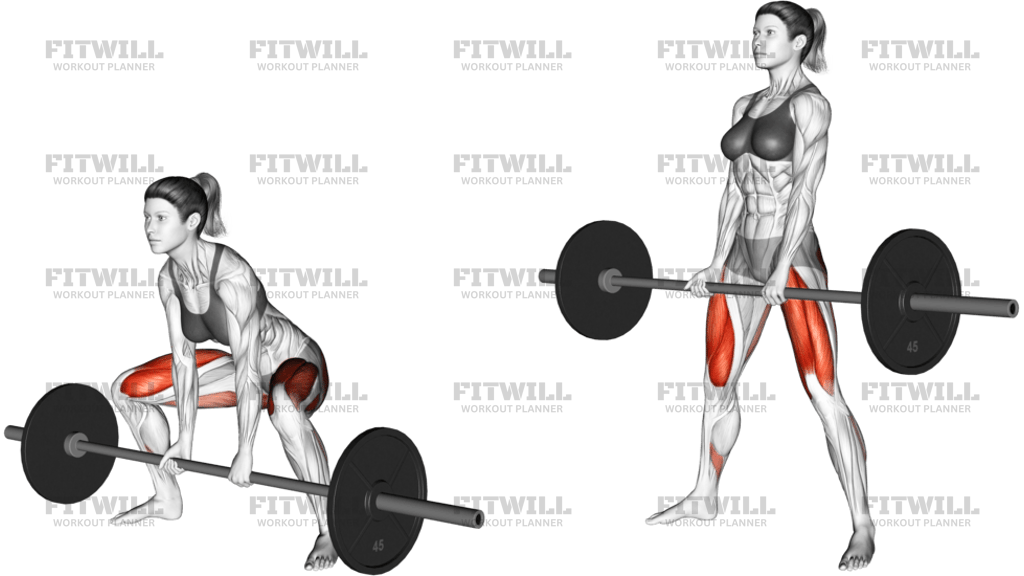
The barbell sumo deadlift is a wide-stance hinge that builds strength through the hips, glutes, adductors, hamstrings, and trunk while teaching you to keep the bar close and the torso organized. The sumo setup changes the leverage of the pull: your feet are set wider than shoulder width, your toes turn out, and your hands travel inside the legs so you can wedge yourself into the bar before the first rep.
That setup matters because a clean sumo deadlift starts before the bar leaves the floor. If the stance is too narrow, the knees drift inward, or the hips sit too low, the lift turns into a hard squat pull instead of a controlled hinge. When the stance is right, the shins stay fairly vertical, the knees track out over the toes, and the bar can rise in a straight line with less drag on the legs.
Each repetition should feel like a deliberate drive from the floor to a full standing lockout. You brace, pull the slack out of the bar, push the floor apart, and extend the hips until you are tall without leaning back. The descent is just as important: guide the bar down close to the body, hinge at the hips, and bend the knees only as much as needed to return the plates to the floor under control.
This exercise is commonly used for posterior-chain strength, lower-body power, and general deadlift practice when lifters benefit from a wider stance or a shorter range of motion than the conventional deadlift. It is especially useful for building leg drive while demanding a strong upper back and grip position. Because the bar starts from the floor, the setup should never be rushed, and every rep should be reset if your stance, brace, or bar position changes.
Use a manageable load that lets you keep the bar path tight, the chest proud, and the knees tracking out. If your hips or adductors feel pinned at the bottom, reduce the stance width slightly or lower the weight until you can maintain a stable start position. Good sumo deadlifting feels powerful, but it should never rely on yanking the bar, rounding the back, or twisting out of the hole.
[ Workout Log & Planner ]
Put your next workout in Fitwill
Keep your plan and training log ready when you are.


Instructions
- Stand with your feet wider than shoulder width, toes turned out, and the bar over the middle of your feet.
- Hinge down and grip the bar inside your knees with both arms straight, then bring your shins close to the plates.
- Set your chest up, keep your back flat, and pull the slack out of the bar before the plates leave the floor.
- Brace hard and drive the floor apart as you push through your feet to lift the bar.
- Keep the bar sliding close to your shins and thighs while your knees open outward to make room for the bar.
- Stand tall at the top by extending the hips fully without leaning backward.
- Lower the bar by sending your hips back first, then bending the knees enough to return the bar to the floor under control.
- Reset your breath and stance before the next rep if the bar drifts or your position changes.
Tips & Tricks
- The bar should start directly over midfoot, not out in front of your toes.
- Turn the toes out enough that your knees can track over them without collapsing inward.
- Think about pulling the chest up while keeping the ribs stacked, so the torso does not overextend at lockout.
- Keep the arms long like straps; do not curl the bar or try to row it off the floor.
- Use the lats to keep the bar close, especially through the first few inches off the floor.
- If the plates clang forward on the way up, the hips are probably shooting up faster than the chest.
- At the top, finish by squeezing the glutes and standing tall, not by leaning back.
- If your adductors or hips feel pinched, shorten the stance slightly before you add load.
Frequently Asked Questions
What does the barbell sumo deadlift work?
It heavily trains the glutes, adductors, quads, hamstrings, and spinal stabilizers, with the barbell forcing a strong braced torso and upright pull.
What makes the sumo stance different from a conventional deadlift?
Your feet are wider, your toes are turned out, and your hands stay inside the legs, which usually shortens the range of motion and changes the emphasis toward the hips and inner thighs.
How wide should my feet be in this lift?
Wide enough that your hands can hang inside your knees and your shins stay fairly upright, but not so wide that your hips pinch or your knees cave inward.
Should the bar stay close to my legs?
Yes. In sumo deadlifts, the bar should skim the shins and thighs so the lift stays efficient and the lower back is not forced to do extra work.
Can beginners learn this exercise?
Yes, if they start light and learn the setup first. The wide stance and bar path are easier to control when the load is manageable.
Why do my hips feel tight at the bottom?
The stance may be too wide or your toes may not be turned out enough. Narrow the stance slightly and keep the knees tracking over the toes.
Should I touch the floor and reset between reps?
For most training sets, yes. Resetting each rep helps you keep the same stance, brace, and bar position instead of bouncing into the next pull.
What is the most common mistake in sumo deadlifts?
Letting the knees collapse inward or letting the bar drift away from the body. Both make the lift less stable and more stressful on the back.