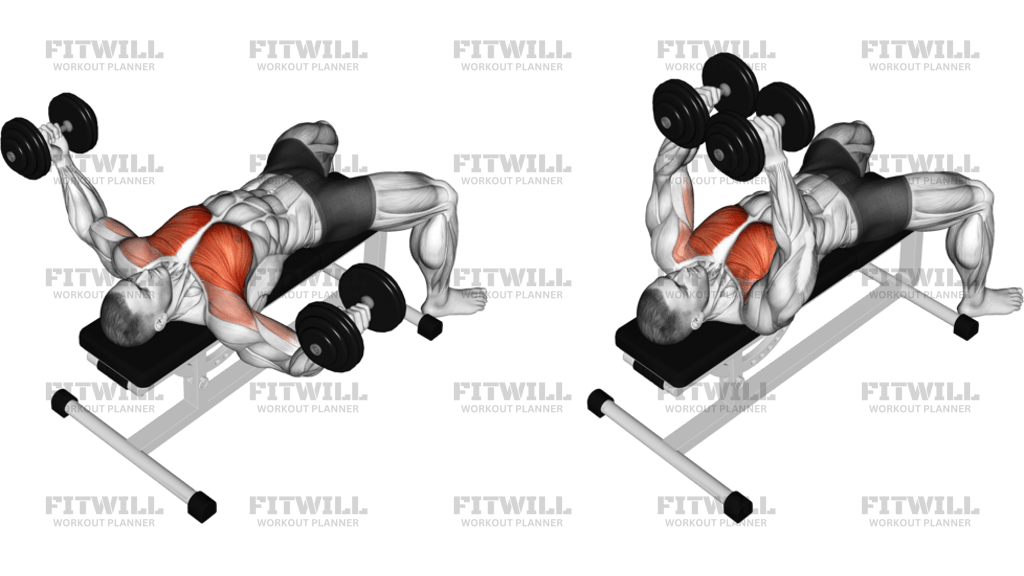
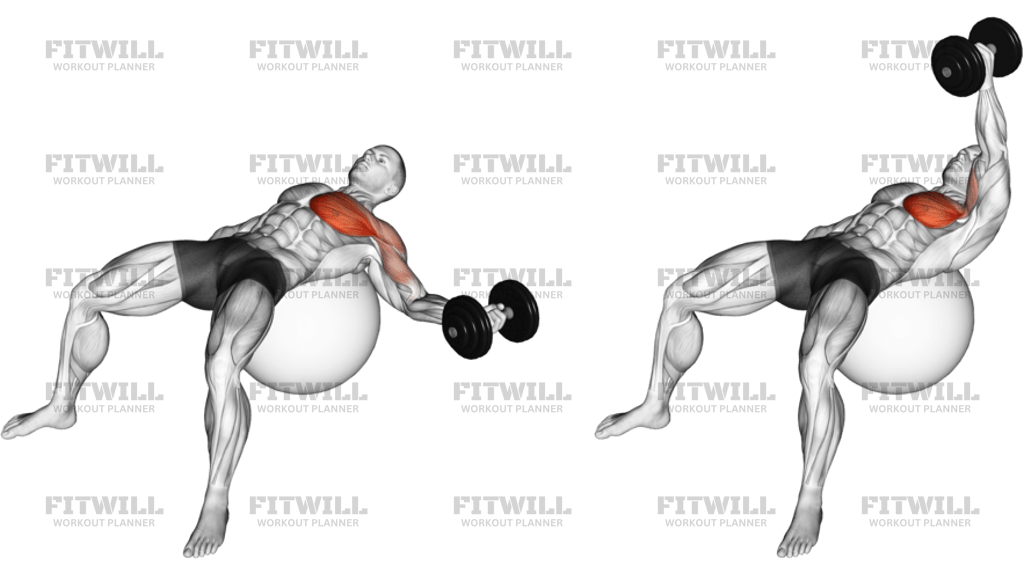
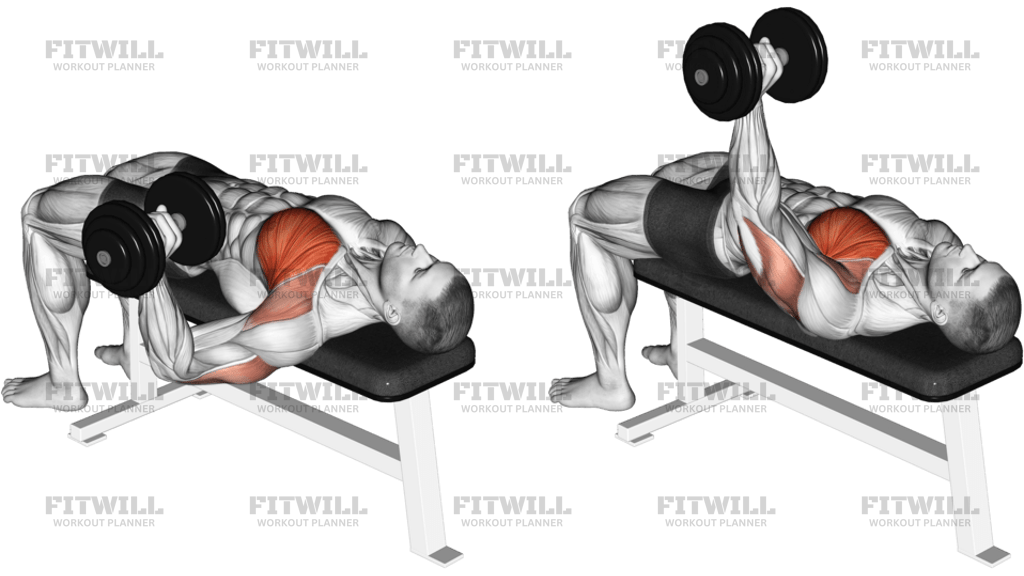
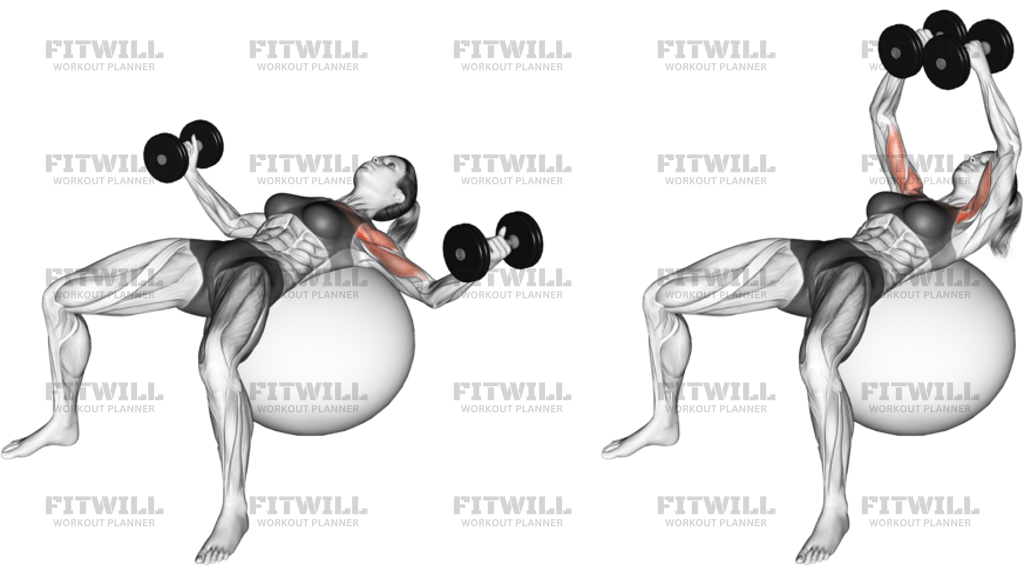
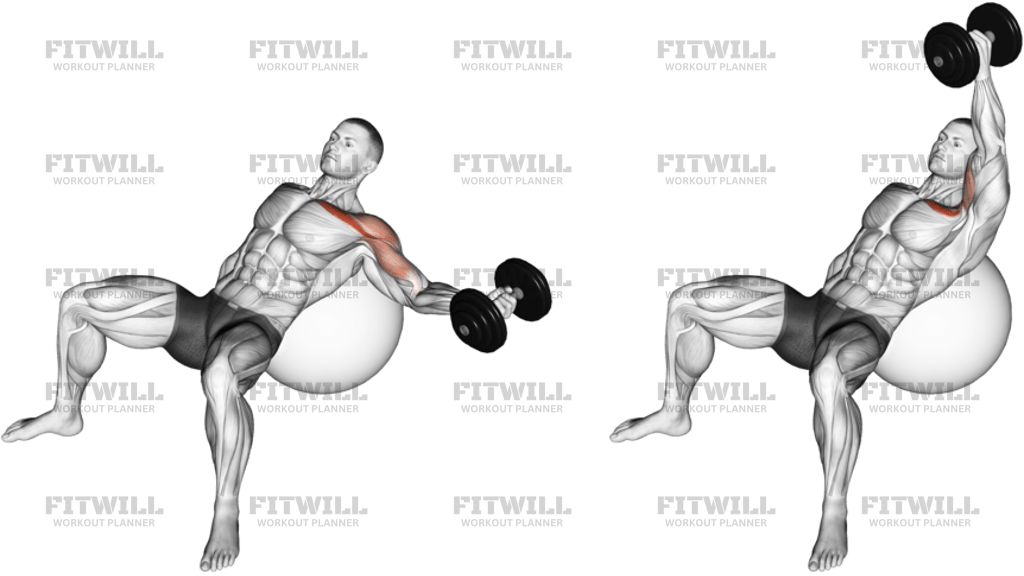
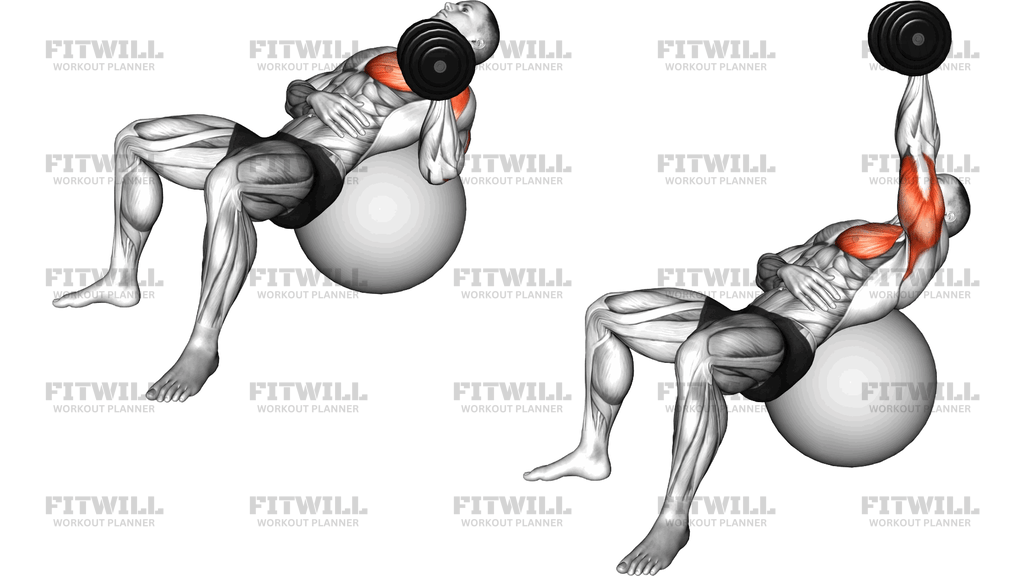
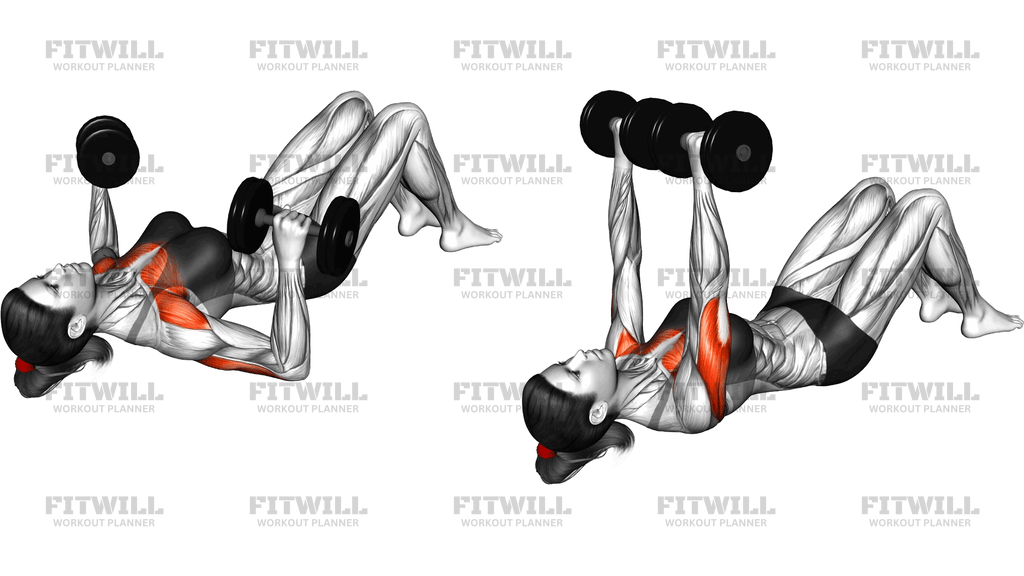
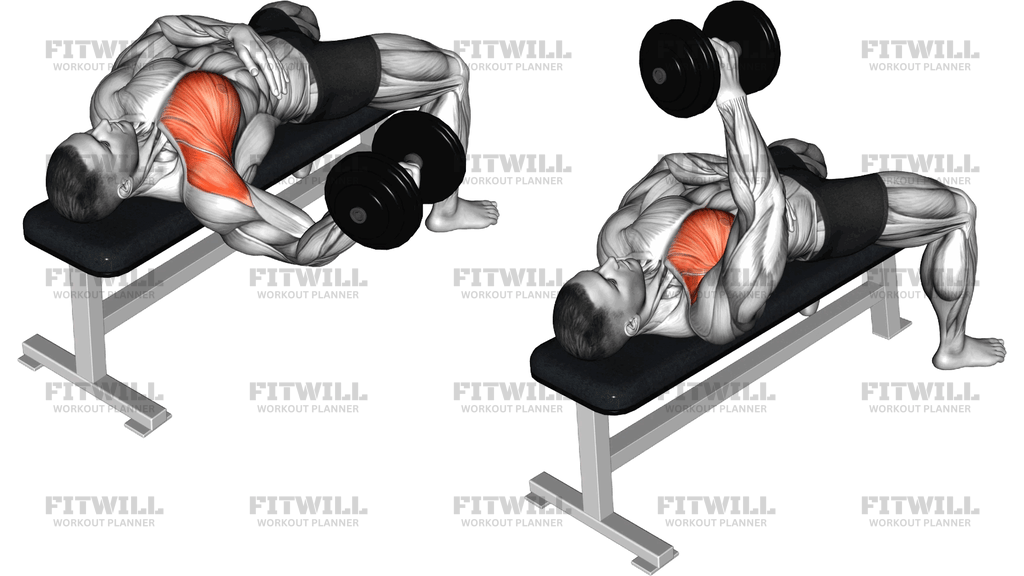
Dumbbell Bent Arm Pullover With Knees Bent
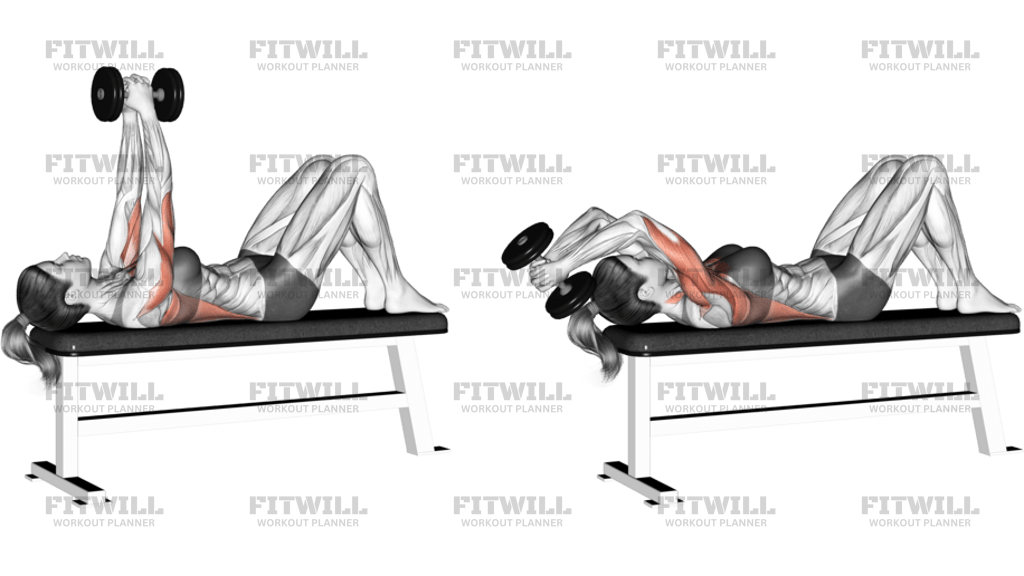
Dumbbell Bent Arm Pullover With Knees Bent is a flat-bench pullover performed with a fixed, soft bend in the elbows and both knees bent to keep the torso stable. The dumbbell starts above the chest, travels in a controlled arc behind the head, and then returns over the chest without turning into a press or a triceps extension. The movement is meant to load the chest through a long, controlled shoulder path while the shoulders, arms, and core help keep the position organized.
The bent-knee setup matters because it helps reduce low-back arching and makes it easier to keep the ribs down while the dumbbell moves overhead. With the feet planted and the pelvis steady, the torso stays quieter and the chest can do the work instead of momentum or a flared rib cage taking over. A flat bench gives enough support to let the shoulder joint move through a big arc while still keeping the body anchored.
On each repetition, the elbows should keep nearly the same angle from start to finish. Lower the dumbbell slowly until the upper arms approach a comfortable stretch, then pull the weight back along the same arc until it is stacked over the sternum again. The best range is the one that gives you a chest stretch without forcing the shoulders to tip forward, the elbows to flare hard, or the lower back to arch excessively. Breathing should stay simple: inhale on the way back, exhale as the dumbbell comes back over the chest.
This exercise is usually used as accessory chest work, a controlled finish after pressing, or a technique-focused movement when you want tension without very heavy loading. It works best with a moderate or light dumbbell that lets you keep the same elbow angle, a neutral neck, and a smooth tempo. If the shoulders feel pinched, shorten the lowering range rather than trying to force the dumbbell farther behind the head.
[ Workout Log & Planner ]
Put your next workout in Fitwill
Keep your plan and training log ready when you are.


Instructions
- Lie on a flat bench with your head and upper back supported, feet planted on the floor, and both knees bent.
- Hold one dumbbell over the middle of your chest with both hands and keep a soft bend in the elbows.
- Set your shoulders down, keep your ribs from flaring, and brace your midsection before you move.
- Lower the dumbbell in a smooth arc behind your head while keeping the elbow angle nearly fixed.
- Stop the descent when you feel a strong chest stretch without losing control in the shoulders or lower back.
- Pull the dumbbell back along the same arc until it returns above the sternum.
- Keep your neck relaxed and your feet planted so the bench position stays steady throughout the rep.
- Exhale as the dumbbell comes back over the chest and repeat for the planned reps.
Tips & Tricks
- Keep the bend in your elbows almost unchanged so the movement stays a pullover instead of turning into a press.
- Plant both feet and keep the knees bent to stop your lower back from taking over the rep.
- Lower the dumbbell slowly behind the head; the eccentric is where the chest stretch and control matter most.
- Do not let the ribs pop up as the weight goes back, or the exercise turns into a lower-back arch.
- Choose a range where the upper arms can travel back without the front of the shoulders pinching.
- Hold the dumbbell centered over the sternum so the load does not drift toward one side.
- Use a lighter dumbbell than you would for a press; this movement rewards position and control more than load.
- If the elbows keep bending and straightening, reduce the weight and lock in a softer, consistent arm angle.
Frequently Asked Questions
What muscle does Dumbbell Bent Arm Pullover With Knees Bent target most?
The chest is the main target, with the shoulders, triceps, and core helping to stabilize the pullover path.
Can beginners perform this exercise?
Yes, if they start with a light dumbbell and keep the elbow bend, rib position, and range of motion under control.
How deep should I lower the dumbbell behind my head?
Lower it only as far as you can keep the shoulders comfortable and the lower back flat on the bench.
Why are the knees bent on this version?
Bent knees help keep the pelvis and ribs steady so the chest can work without excessive low-back arching.
Should my elbows bend and straighten during the rep?
No. Keep a soft bend that stays nearly the same from the start of the descent to the finish of the return.
Where should I feel the exercise?
You should feel a strong stretch and contraction across the chest, with the shoulders and arms assisting the motion.
What is the most common mistake with this pullover?
Letting the elbows flare, the ribs lift, or the dumbbell drift too far back with no control.
What is a good way to progress it?
Add a little load only after you can keep the same arm angle, tempo, and bench position for every rep.