Cable Standing Crunch
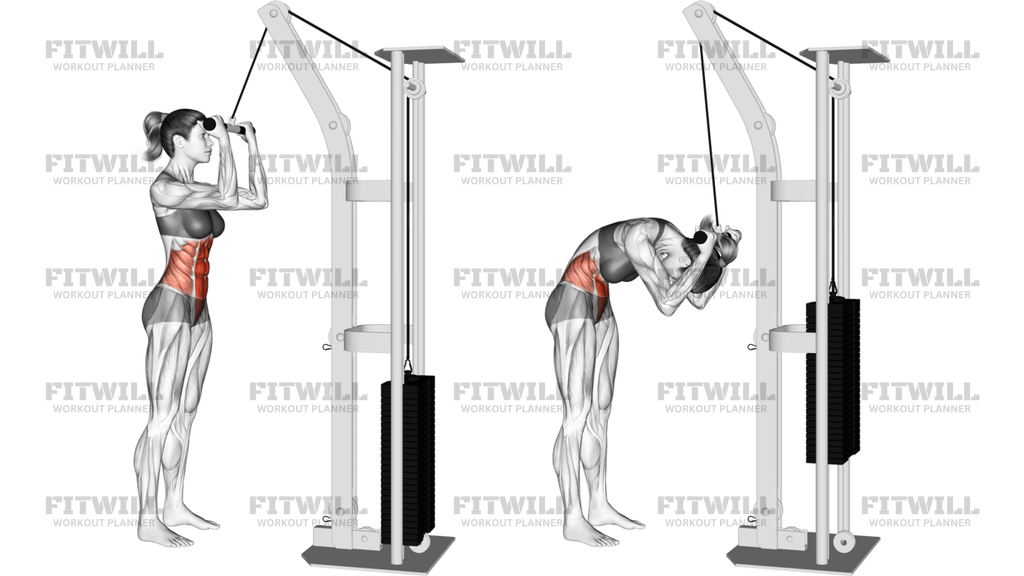
Cable Standing Crunch is a standing cable core exercise that uses a high pulley and handle attachment to train trunk flexion under constant resistance. The cable keeps tension on the abs throughout the rep, so the exercise is less about moving a heavy load and more about making the rib cage curl toward the pelvis in a controlled, repeatable way. It is most useful when you want direct abdominal work without lying on the floor or using a machine that fixes your body position.
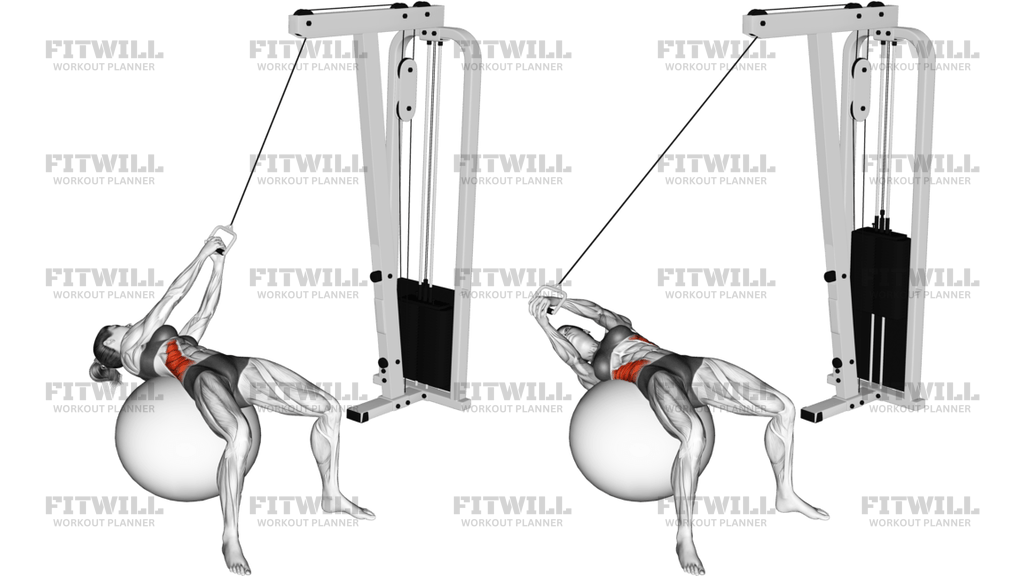
The image shows the cable set high, the handle brought up near the forehead, and the torso starting tall before curling forward. That setup matters because the cable should encourage the spine to flex, not force the hips to fold or the arms to do the work. A strong setup gives the abs a clear line of pull, keeps the pelvis stable, and makes it easier to feel the shortening phase of the movement instead of just hanging on the attachment.
This exercise is primarily for the rectus abdominis, with the obliques and deeper core muscles helping stabilize the torso and pelvis. If you let the elbows drift, the neck collapse, or the hips hinge backward, the effort moves away from the abs and into the shoulders, arms, and lower back. Keeping the knees soft, the chest controlled, and the neck relaxed lets the crunch happen through the trunk rather than turning the rep into a standing pull-down.
Perform each repetition by starting tall, exhaling as you curl down, and then returning slowly to the top under control. The bottom position should feel like the abs are fully shortened, not like you are yanking the weight stack with your shoulders. The return is part of the training effect, so do not spring back upright or let the cable drag you. A smooth eccentric makes the exercise safer and much more productive.
Cable Standing Crunch fits well in core-focused sessions, accessory work, or the end of a strength workout when you want direct abdominal tension without loading the spine with large external compression. It is beginner-friendly if the load is light and the range stays strict. Use it to train clean trunk flexion, better bracing, and more awareness of how the ribs and pelvis should move together under resistance.
Fitwill
Log Workouts, Track Progress & Build Strength.
Achieve more with Fitwill: explore over 9600 exercises with images and videos, access built-in and custom workouts, perfect for both gym and home sessions, and see real results.
Start your journey. Download today!




Instructions
- Set the cable to a high pulley and attach the handle.
- Stand a step or two in front of the stack facing away from it, and hold the handle close to your forehead with both hands.
- Place your feet about hip-width apart, soften your knees, and keep your elbows bent and slightly in front of your shoulders.
- Stack your ribs over your pelvis, lift your chest tall, and keep your neck long before each rep.
- Exhale and curl your upper torso forward by bringing your ribs toward your pelvis.
- Keep your hips mostly still so the movement comes from spinal flexion, not from hinging back at the waist.
- Finish the crunch when your abs are fully shortened and your elbows have stayed in the same bent shape.
- Pause briefly at the bottom, then inhale and return slowly to the tall starting position under control.
- Reset your posture at the top before the next rep instead of letting the stack pull you backward.
Tips & Tricks
- Set the cable high enough that it stays taut when you are standing tall; slack at the top usually means the rep starts too loose.
- Hold the handle close to your forehead or temples so the arms stay as hooks, not as the drivers of the rep.
- Keep a soft bend in the knees so you can flex the torso without the whole body rocking backward.
- Think about curling the rib cage toward the pelvis instead of trying to touch your head to your thighs.
- Do not let the hips slide behind you on the way down; that usually turns the crunch into a standing hinge.
- Keep your chin slightly tucked so the neck does not extend when the resistance gets heavy.
- Use a load that lets you pause in the shortened position without jerking the stack or bouncing out of the bottom.
- Let the return phase be slow enough that the abs stay loaded the whole way back to standing.
- If the lower back feels pinched, shorten the range and reduce the weight before trying to force a deeper crunch.
Frequently Asked Questions
What does the cable standing crunch train?
It mainly trains the rectus abdominis, with the obliques and deeper core muscles helping stabilize the torso.
Where should I hold the handle attachment?
Keep it close to your forehead or temples so the cable stays connected to your trunk and your arms do not take over.
Should my elbows move during the rep?
Keep the elbows bent and mostly fixed. The torso should crunch forward around the cable instead of turning into a pressing or pulling motion.
Do I need to bend my hips a lot?
No. The hips should stay mostly quiet while the spine flexes and the ribs move toward the pelvis.
Is this exercise suitable for beginners?
Yes, if the weight is light and the movement stays controlled. Beginners usually benefit from a smaller range before adding load.
Why do I feel it in my neck or shoulders?
That usually means you are pulling with the arms or craning the head forward. Keep the neck long and let the abs create the motion.
How heavy should I go on this movement?
Use a load that lets you finish the crunch cleanly, pause at the bottom, and return without the stack snapping you upright.
What should I do if the cable pulls me backward at the top?
Step a little farther from the stack or lower the resistance so you can start each rep in a tall, stable position.