Dumbbell Lying One-Arm Supinated Triceps Extension
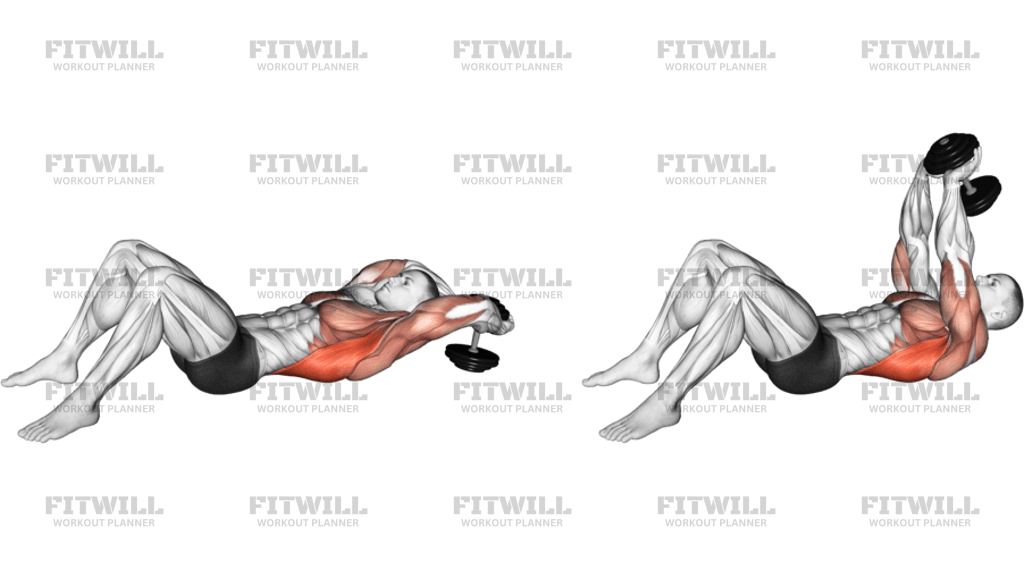
Dumbbell Lying One-Arm Supinated Triceps Extension is a single-arm triceps exercise performed lying on a flat bench with the working hand turned up and the elbow moving through a controlled bend-and-straighten path. It is designed to load the triceps through a long range of motion while the shoulder and torso stay quiet, which makes it useful for building elbow-extension strength, improving lockout control, and exposing side-to-side differences that can be hidden in two-arm pressing work.
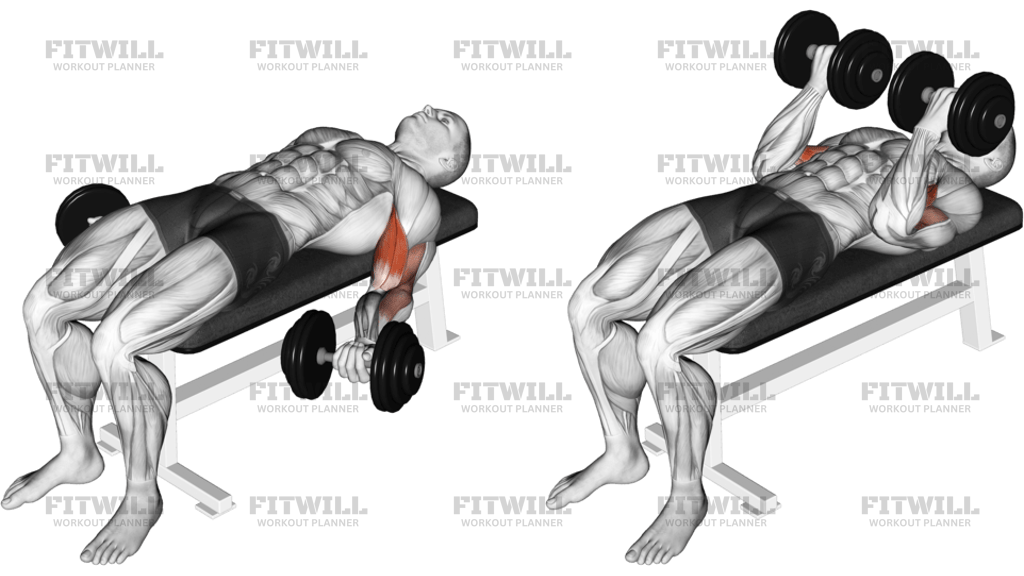
The setup is what makes the movement effective. Lie back with your shoulder blades settled into the bench, both feet planted, and the working arm positioned so the upper arm stays mostly vertical. The dumbbell should sit over the elbow and forearm rather than drifting toward the chest, and the wrist should stay stacked instead of folding back. A stable bench position matters here because any rolling of the rib cage, shoulder, or hips reduces triceps tension and turns the lift into an unstable shoulder exercise.
From the start position, lower the dumbbell by bending only at the elbow until the weight moves beside the temple or just behind the head, depending on shoulder comfort and arm length. Then extend the elbow to bring the dumbbell back to the start without swinging the upper arm or shrugging the shoulder. The best reps feel deliberate: controlled lower, brief stretch, firm press back up, and a smooth finish that keeps the triceps under tension instead of relying on momentum.
This exercise fits well as accessory work in upper-body strength sessions, arm-focused training, or any program that benefits from unilateral triceps volume with minimal equipment. Because the arm works independently, it can also help clean up asymmetries and improve awareness of elbow path on each side. Light-to-moderate loads are usually enough to make the exercise productive; the goal is not to force a huge range, but to keep the upper arm quiet and make the triceps do the work.
Use conservative loading if the elbows or shoulders feel irritated, and shorten the range slightly if lowering the dumbbell all the way behind the head causes discomfort. The exercise should feel stable, controlled, and repeatable from the first rep to the last. If the working shoulder starts to drift, the ribs pop up, or the wrist bends back hard, the set is usually too heavy or the setup has slipped.
[ Workout Log & Planner ]
Put your next workout in Fitwill
Keep your plan and training log ready when you are.


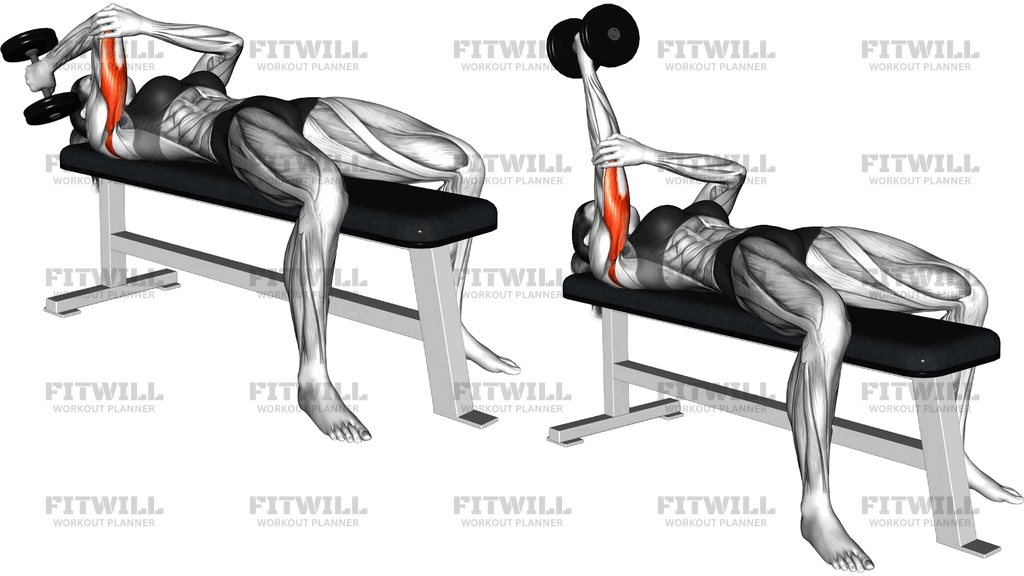
Instructions
- Lie back on a flat bench with your shoulder blades settled, feet planted, and the working dumbbell in one hand with the palm turned up or mostly up.
- Stack the wrist over the elbow and raise the working arm so the upper arm is nearly vertical above the shoulder.
- Let the free arm rest on the bench or across the torso so the rib cage stays quiet and balanced.
- Brace your ribs down and keep the upper arm still before you start the rep.
- Bend only at the elbow to lower the dumbbell beside the temple or just behind the head.
- Pause briefly in the stretched position without letting the shoulder roll forward.
- Press the dumbbell back up by straightening the elbow until the arm is nearly straight.
- Keep the shoulder quiet on the way up, then lower the weight again under control for the next rep.
Tips & Tricks
- Use a lighter dumbbell than you would for two-arm skullcrushers, because one arm has to control the whole lever by itself.
- Keep the elbow pointing mostly toward the ceiling; when it flares out, the shoulder starts stealing the work.
- Lower the dumbbell slowly enough to feel the triceps lengthen, not drop so fast that the elbow loses position.
- If the weight drifts toward your chest, reset the upper arm closer to vertical and keep the shoulder pinned to the bench.
- A slightly shorter range is fine if the dumbbell behind the head irritates the elbow or shoulder.
- Keep the wrist straight over the forearm so the dumbbell sits in line with the elbow instead of folding the hand back.
- Do not slam into the top position; finish the extension with tension so the triceps stay loaded.
- Match both sides with the same bench setup, range, and tempo so one arm does not get a freer rep.
Frequently Asked Questions
What muscles does this dumbbell lying one-arm supinated triceps extension work?
The triceps are the main target, especially the long head, with the shoulder and forearm helping to stabilize the arm.
Why use a supinated grip on this bench triceps extension?
The palm-up position can make the one-arm path feel more natural and can help some lifters keep the elbow lined up cleanly over the shoulder.
Where should the dumbbell travel on each rep?
It should lower beside the temple or slightly behind the head, then return to the start by straightening the elbow.
What is the most common mistake with this one-arm triceps extension?
Letting the upper arm swing or the shoulder roll forward usually turns the exercise into a sloppy press instead of an elbow-extension movement.
Can beginners do Dumbbell Lying One-Arm Supinated Triceps Extension?
Yes, but start very light and keep the range controlled until the elbow path feels stable.
Do I need a flat bench for this exercise?
A flat bench is the standard setup, but a slight incline can work if it feels better on your shoulders.
How do I know the load is too heavy?
If the wrist bends back hard, the elbow flares wide, or the ribs pop up to finish the rep, the dumbbell is too heavy.
How should I progress this movement?
Add small jumps in load only after you can keep the same elbow path, bench contact, and tempo on every rep.