Dumbbell One-Arm Upright Row
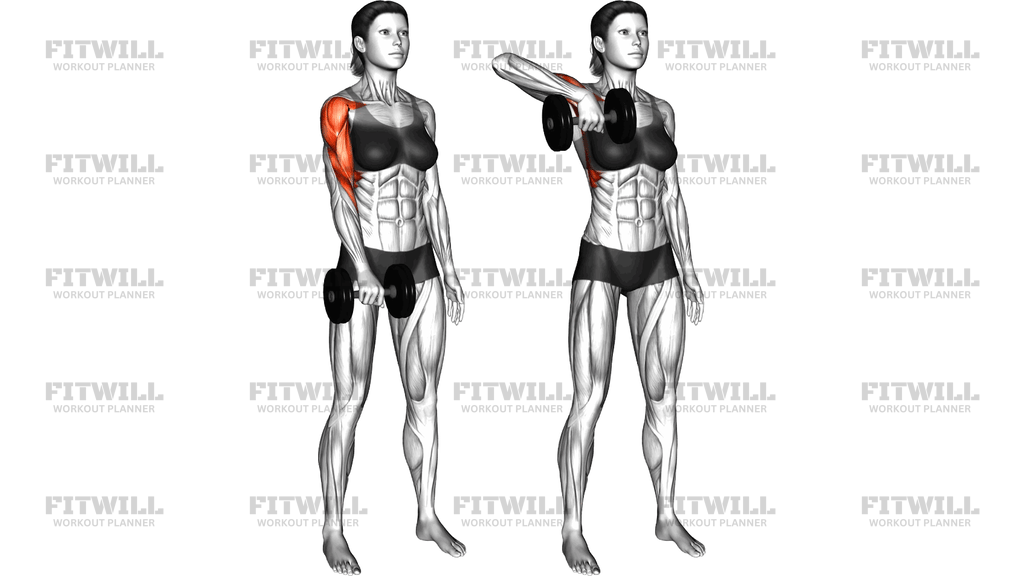
The Dumbbell One-Arm Upright Row is a standing unilateral shoulder exercise that asks you to pull one dumbbell upward along the front of the body while the elbow leads the motion. It is commonly used to train the side delts, upper traps, and the muscles that stabilize the shoulder blade and torso while one arm works at a time. Because the movement is done one side at a time, it also makes left-right differences easy to notice, which can be useful when you want cleaner shoulder control rather than just more load.
The setup matters because the dumbbell should travel close to the body without turning into a shrugging, swinging, or leaning exercise. Start tall with a balanced stance, the working arm hanging straight down, the wrist stacked over the handle, and the opposite arm relaxed at your side or lightly braced for balance. Keep the ribs down and the neck long so the shoulder can move instead of the whole torso trying to help.
On the pull, the elbow should travel up and out before the hand, and the dumbbell should stay near the midline of the body. Think about drawing the weight upward to lower chest or upper-rib height rather than forcing it into an extreme range. The top position should feel controlled, not jammed into the shoulder. Lower the dumbbell smoothly until the arm is fully extended again and reset before the next rep.
This exercise is useful in shoulder-focused sessions, accessory work, or upper-body workouts when you want a simple loaded pattern that emphasizes shoulder elevation and scapular control. It can be a beginner-friendly choice when the load is light and the range stays pain free, but the upright-row path can aggravate some shoulders if you pull too high or let the elbow flare aggressively. The safest version is the one you can repeat with the same posture, tempo, and shoulder comfort from the first rep to the last.
Treat the movement as a precision drill. Use a weight you can guide without momentum, keep the wrist neutral, and stop the set as soon as the shrugging, twisting, or pinching starts to appear. When done well, the Dumbbell One-Arm Upright Row gives a clear shoulder and upper-trap stimulus without turning the rest of the body into the limiting factor.
[ Workout Log & Planner ]
Put your next workout in Fitwill
Keep your plan and training log ready when you are.


Instructions
- Stand tall with your feet about hip-width apart and hold one dumbbell at your side in the working hand.
- Let the dumbbell hang in front of the thigh with a neutral wrist, a soft bend in the knees, and the opposite arm relaxed for balance.
- Set your shoulder down and back slightly, keep your ribs stacked over your pelvis, and brace before each rep.
- Begin the pull by driving the elbow up and out while keeping the dumbbell close to the front of the body.
- Lift until the upper arm reaches about chest or lower-rib height, or stop earlier if your shoulder feels cramped.
- Pause briefly at the top without leaning back, shrugging hard, or letting the wrist bend back.
- Lower the dumbbell in a smooth line until the arm is straight again and the shoulder has reset.
- Exhale on the pull, inhale on the lowering phase, and keep the torso still for every repetition.
Tips & Tricks
- Keep the dumbbell brushing close to the torso; if it drifts forward, the shoulder loses a clean line of pull.
- Lead with the elbow, not the hand, so the upper arm does the work instead of the forearm and grip taking over.
- Do not chase a high pull if it creates a pinch in the front or top of the shoulder; a lower top position is often better.
- Keep the neck long and avoid craning the head forward when the weight gets heavier.
- Use a lighter load than you would for a bilateral row, because one arm has to control rotation and sway on its own.
- Let the opposite arm stay quiet so it does not swing for momentum or twist the rib cage.
- Pause for a moment at the top only if you can keep the shoulders level and the torso upright.
- Lower under control; the eccentric is where the shoulder position gets sloppy first.
- If the wrist folds back, reduce the load and keep the knuckles stacked over the handle throughout the rep.
Frequently Asked Questions
What does the Dumbbell One-Arm Upright Row train?
It mainly trains the side delts and upper traps, with the shoulder stabilizers and upper back helping keep the dumbbell path controlled.
Why do it one arm at a time instead of both arms together?
A single-arm version makes it easier to feel shoulder position, spot side-to-side differences, and avoid twisting the torso to finish the rep.
How high should I pull the dumbbell?
Pull until the upper arm is about chest or lower-rib height, or stop sooner if the shoulder starts to pinch or shrug out of position.
Should the dumbbell stay close to my body?
Yes. Keeping it close helps the elbow lead the lift and reduces the urge to swing the weight away from the torso.
Is this exercise safe for everyone’s shoulders?
Not always. If upright rows bother your shoulders, shorten the range, lower the load, or choose a different shoulder exercise.
What is the biggest form mistake?
The most common mistake is turning the rep into a shrug with body sway instead of a controlled shoulder-led pull.
Can beginners use this exercise?
Yes, if the load is light and the range stays comfortable. Beginners should focus on a smooth path and a stable torso before adding weight.
What should I do if my wrist bends back at the top?
Reduce the load and keep the wrist stacked over the handle so the forearm stays aligned with the line of pull.